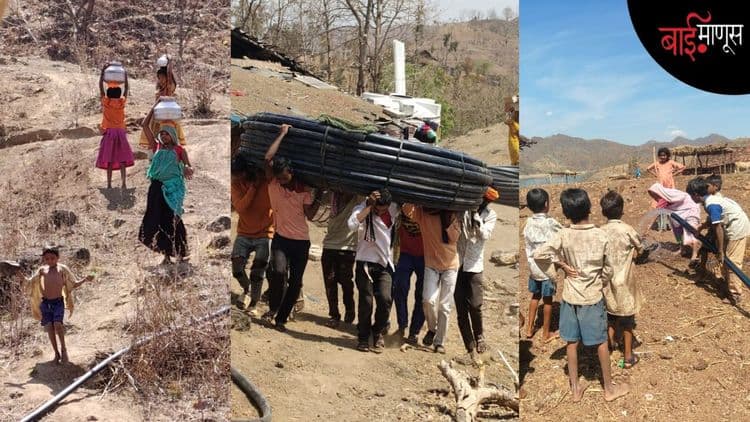
Some food crops require a large amount of water. Hence, in terms of water, these grains occupy the largest share of the market, making it impossible to strike a balance between food security and water availability. Global warming is not only about having a far-reaching impact on water availability but is also beginning to affect agriculture and food security. Rice, wheat, and sugarcane are the most water-dependent crops. These crops account for 90 percent of India's crop production.
India is the largest exporter of rice. Almost 3,500 liters of water are required for every kilogram of rice. Therefore, its production cost increases rapidly. Rice is responsible for 10 percent of global methane emissions and accounts for about 30 percent of methane emissions in Southeast Asia. Despite this, the promotion of the Green Revolution in India increased the production of rice and wheat. With India's food security at risk, rising temperatures, and dwindling water reserves, we must reintroduce climate-adaptive crops into our cuisine, which means that dry crops like millets should be preferred to avoid wastage of food and water.

We say that India is an agricultural country, but behind it is the accumulated knowledge gathered by the experience of many generations. Those generations bestowed divinity on nature. Each move, by nature, was closely monitored by them. They were patient enough to let nature's art grow at its own pace.
Rather than rushing to get everything 'instantly', they had the wisdom to hold on to what they had for a long time. This wisdom is now slipping away from us. Today's prosperity is costing forever. In such a situation, even in this instant era, traces of that wisdom are still remaining in some villages and in the tribal areas. Pure seeds from the soil are being preserved in those remote areas. It is being grown the old way, without mixing chemicals in the soil.
Sorghum (Jowar), Pearl Millet (Bajra), Finger Millet (Ragi), Little Millet (Varai/Kyuki), Foxtail Millet (Rala/Kangni), Barley, Kodo, Sama, and Sawa are known as millets. Neelima Jorwar felt that something has to be done for these millets. What to do exactly was not realized in the beginning. But that answer was slowly found in some villages in the area of Kalsubai.
…anxious farmers due to hillside farming
As agriculture is on the hill slopes, crops are harvested here only once when it rains. Although they placed emphasis on rice, finger millet (ragi), and barnyard millet (vari), finger millet (ragi) vanished from their diet. So they survived eating the rice and barnyard millet (vari) that came once a year. In that too, paddy was grown on mules and rice was grown on the hillsides. Rice was eaten at home, and barnyard millet (vari) was sold. But they never got the desired price for barnyard millet (vari), which was a matter of concern. Neelima began visiting some villages there. In fact, she wanted to work on the water issue in this area.
That year, there was not even a single drop of rain after Bhadrapad (August–September) in this area. Those who were dependent on hybrid seeds and fertilizers failed in their calculations. Their crops withered. But those who planted conventional seeds got 80 percent of the crop even in low rainfall.
Akole taluka in Ahmednagar district... Forts like Ratangad, Madangad, Kulang, Azobagad, Bitangad, Pabargad, Vishramgad, Harishchandragad, the highest peak of Maharashtra, Kalsubai, and Bhandardhara are known in Akole taluka. At the base of all these forts are the Mahadev Koli and Thakar tribal communities. Their main occupation is agriculture. Finger millet (ragi) and little millet (varai) used to be the initial crops, but as they did not fetch good prices, farmers switched to paddy and wheat. But due to the vagaries of nature, the farmers there are always worried.

Neelima Jorwar, the new 'seed' mother of Akole Taluka
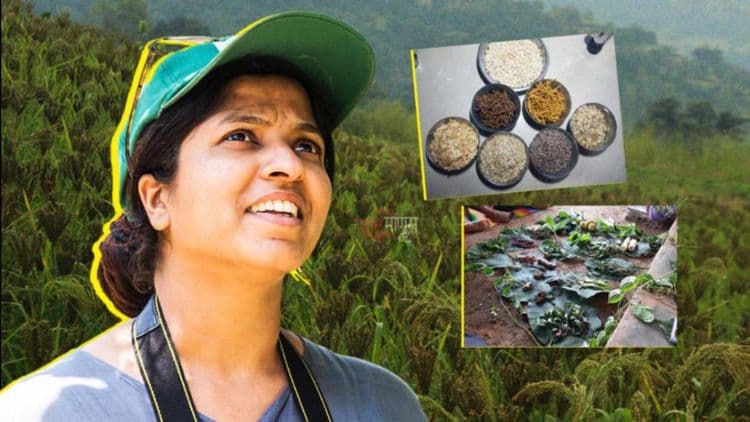
Neelima Jorwar hails from Devthan village in Ahmednagar's Akole taluka. Both her parents are teachers. Neelima did not get a job without paying money, even after doing her D.Ed. That's how she got married, and photography came into her life along with her husband. Her husband had a photography business. While the photography business was going well, Neelima's life suffered a huge blow.
The elder of their two children lost his life in an accident. He was only seven years old. After somehow digesting this trauma, Neelima once again started trying to get up through 'Saurabh Pratishthan'. She started the Saurabh Pratishthan in the name of her child, who died in the accident, and started working in the field of environmental improvement. The work of Neelima's organization was to understand the biodiversity of the Bhandardhara area of Akole taluka and devise measures to conserve it.
While doing photography on the one hand and studying Deorai on the other, Neelima got to know indigenous varieties, wild vegetables, and some millet grains; talked to local tribal women; studied their traditional agriculture; and very soon, Neelima got to know the situation in the tribal areas of Akole taluka.

Although jowar and bajri are common crops, other staple grains are mostly grown in the tribal belt. The major changes that took place in Indian agriculture after 1960 were that as the irrigation facilities increased, the horticultural area of the people also increased, and as a result, the millet fell behind. That is, around 1940–50, it was noticed that the crop called 'Dengli' in the Akole area was actually a millet crop.
There was a scarcity of food in June–July; at that time, these seeds sown in the first rains would germinate in 2 months, and the people would have food during the scarcity; hence, these seeds were cultivated everywhere. Moreover, even if the rainfall was low, crops would grow. Later, water from the river Pravara was circulated all over Shiwar, electricity was connected, and these crops fell behind. Something similar happened in other areas too. As irrigation came, agriculture began to change, and millets fell behind.
The reason for the persistence of millets in tribal areas...
The reason for the survival of pulses in tribal areas is the cultural context, and another reason is their geography: dryland farming on the hillsides, water limitations, and light soil. They have no alternative to these crops. Apart from this, their cultural significance also varies from region to region. For example, in Jawhar, Dahanu, and Nashik areas, the millet 'Nagli' is considered 'Kansari Devi'. It is worshiped with devotion and is regularly consumed at home.
Neelima Jorawar says, "One thing that I noticed during all these studies is that this area has everything but is not organized properly. Apart from crops such as wheat and rice, unless we link millets to the people's livelihood and enable them to earn even a single penny from them, they will remain unaware of the significance of indigenous varieties and millets."
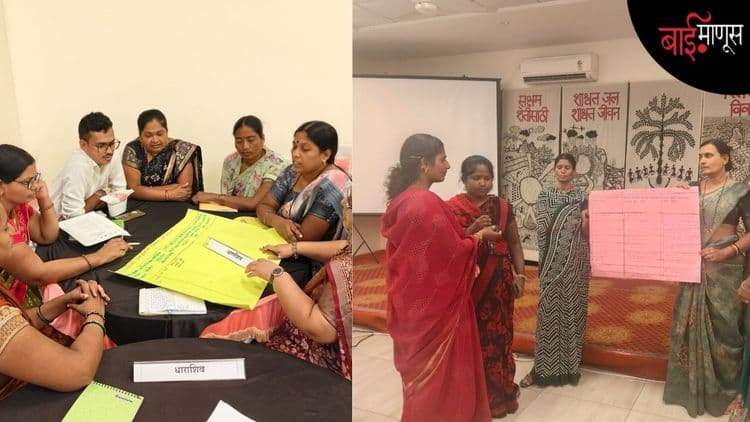
I started going to villages and collecting all the women. First, the importance of native rice and millets, its economic math, and then the different processes of wild fruits such as black current (karavand), mango, and java plum (jambhul) were taught to those women. They were taught how to process fruits, how to prepare juice from black current (karvanda), how to prepare pickles from mango (kairi), and that's how the work started gradually'', Neelima Jorwar was telling the story of the birth of Kalsubai Women Self-Help Group.

In 2013, Neelima started the first bulk grain processing center in the state with the help of local farmers in Bari village at the foothills of Kalsubai. As there are a lot of tourists in this village, the women of the village started to arrange their accommodation and use traditional food for meals. Farmers started feeding them all the traditional foods, such as barnyard millet (Varai) upma for breakfast, finger millet (ragi) bread for lunch, black current (karvanda) curry, and jackfruit curry. Tourists also liked it, and local women got employment.
... and the people's plates filled with millets again!
Neelima Jorwar conducted millets camps for three years in a row, took the youth along, and started the Nisarg Sanvad (a talk with nature) program. While going to the villages and doing street plays about biodiversity, she did a 'seed mapping' of how many seeds of millets are available in the state. In the first year, 17 different types of seeds were collected from the Kalsubai Women's Farmers Self-Help Group.
Then Neelima Jorwar started a seed bank there. Today, it is the only seed bank in the entire state. Because of the seed bank, the finger millet (ragi) crop grew again in those areas. Be it native rice or foxtail millet (rala), all these things started growing in the fields there. The people there started having millets again.
A total of nine types of major millets are part of Kalsubai millet today. For this, farmers who grow all grains like foxtail millet (rala), finger millet (ragi), and sawa were added along with little millet (varai). By finding them, they were guaranteed a suitable market. In September 2020, 'Kalsubai Millet' was transformed into 'Kalsubai Millet Producing Farmers Company'. All 300 registered members of the company are tribal farmers from Ahmednagar, Nashik, and Dhule areas, of which 230 are women. All these farmers do their farming on a very small scale.

All these farmers grow millets. Even with traditional, chemical-free farming, the income of our farmers has increased. Since 2014, other farmers in the area have followed suit with chemical-free farming. Very few farmers who used to grow finger millet (ragi) today have largely switched to older crops. People are understanding the importance of millets in their diet. Therefore, millets are also being used in the diet.
Kalsubai offers more than 70 natural products to its customers. All ingredients used in this recipe come from traditional recipes to ensure minimal processing of nutrients, e.g., all 'unpolished millet', which is freshly milled in our own processing center, and all available indigenous rice, which retains its bran and maintains its nutritional value.
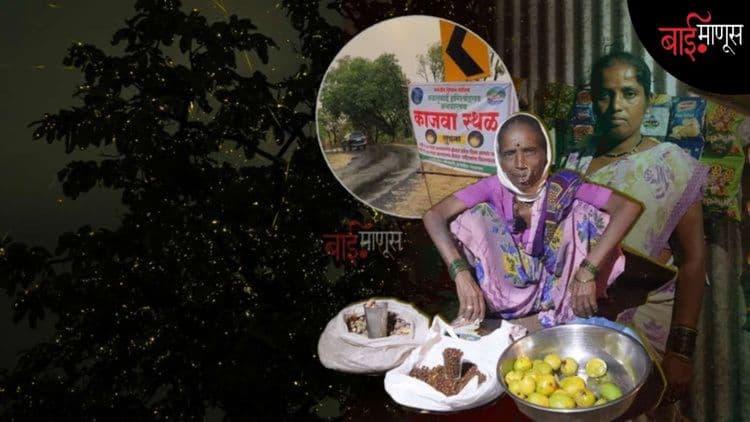
Along with all these, we are also providing ready-to-eat products like finger millet (ragi), multi millet cookies, sorghum (jowar), finger millet (ragi) shev, bundi, chivda, ragi laddu, moh flower laddu, wild black current, java plum, amla pickles, and juice to suit the taste of the new generation. Local women and artisans are preferred when making all these products.
...Now you don't have to beg in front of anyone, says Manda Burange.
Manda Burange, a beneficiary of this initiative initiated by Neelima Jorwar, expressed her thoughts. Manda, who lives in Kalmusta village, says, "We used to cultivate millets earlier. Ever since we started getting wheat and rice at the ration shops, we gradually reduced the cultivation of millets and started growing wheat and rice in our fields as well. Sometimes it rained so much that these crops were damaged, and sometimes there was no rain at all, and the question was: what to eat?
These cereal crops are hardy under any conditions. It is equally good for health. So we again started to grow finger millet (ragi), foxtail millet (rala), and little millet (varai) crops. Today, we also eat millets at home and sell them in the market. Now, whether it rains or not, we have plenty of food on our plate and money in hand.

Dinabai Gangad also lives in Uddavane village, at the foot of Kalsubai Peak. While talking to BaiManus, she says, 'Since our land is rocky, we have no choice but to buy grain. If you don't do millet farming, then what will you eat? The time will come to die. Because wheat and rice do not grow on rocky ground, we also eat finger millet (ragi) at home, and at Kalsubai Millet Company, we also make different dishes from that grain. From the time I started working for the company, money came directly into my hands.
It feels good when there's no need to ask for money. When I feel sick, I myself go to the hospital and bring pills. There is no need to ask anyone for money. I take whatever the grandchildren need. What else do you need if you get paid to work?"
Millets: magical grain
Along with food security, millet provides the country with nutrition security, health security, livelihood security for farmers, fodder security, environmental balance, and ecological security.
1. Food Security: Millet is a grain type with a variety of grains. Rather than relying on only two cereal crops (rice and wheat) for food, millets that can withstand changing temperatures can surely satisfy India's hunger.
2. Nutritional Security: Millet is rated as 'Excellent' in the Global Food Rating System. According to this, the amount of nutrients and micronutrients that are required by the body is in the correct proportion. Copper, phosphorus, manganese, and magnesium are also some important micronutrients. Besides, it is high in carbohydrates and energy. Today, we have a very large number of people with anemia. Millet grains like finger millet (ragi) are the best food for that too.
3. Health and Safety: Millet is gluten-free. Also, no special chemical fertilizers are required for the growth of this crop, and due to the absence of pests and diseases, millets are not sprayed with pesticides, so it is a healthy food.
4. Safety of fodder: The husk of these grains is used for animal fodder, which contains a large amount of cellulose and other substances. Animals eat this fodder with interest. Therefore, in some areas, millet crops are also grown for animal fodder.
5. Livelihood security: millet crops produce good yields in dry, light soils in areas where irrigation is not available. It needs less water and no fertilizers, and this crop brings guaranteed income to the farmer. These crops grow in any climate. Along with this crop, the farmers can also grow pulses, oilseeds, and vegetables, thus providing them and their family members with a sustainable livelihood.
6. Environmental Security: In fields where millet is grown, the nitrogen content of the soil increases and improves soil texture and density. Crop diversity is also maintained on the farm. It is also a favorite food of some birds. Also, in the fields where millet is grown, many wild vegetables and other plants are flooded. Thus, the balance of the environment is maintained. Hence, it is also called 'Magic Grain'.

Tribal women farmers should be included in the millet campaign
India celebrated the year 2018 as the National Millet Year. Since then, India's Millet Mission started from 2018 to 2023. As more than 70 countries agreed to India's proposal in this regard in 2021, the United Nations declared 2023 the International Year of Millets. And that's why
Now, many businessmen and agricultural entrepreneurs have started getting new opportunities. It is because of this that a big market is going to be created within the country and outside the country. Those who have wealth will surely seize this opportunity. But it is essential to make a conscious and planned effort so that the small landholding farmers (mainly tribal farmers) who have managed and cultivated the pulse crops even in very difficult and adverse conditions can get the benefits of the 'millet campaign'.

In today's market system, the price of grain is determined by traders; the farmer has no right to do so. The prices of millet grains have increased at present on the occasion of the millet year, but the farmers are wondering whether this situation will remain the same. Well, they are not wrong when they wonder about this situation. For this, it has become the need of the hour for the government system to be prompt, make appropriate policies accordingly, and make substantial financial provision. In order to produce quality grains, training farmers on limited mechanization is also gradual.
Mainstream horticultural farmers may not be too keen on growing this crop. But keeping in mind the traditional knowledge, experience, and biological relationship of the smallholder and dryland farmers who cultivate large quantities of grains, the effect will be long-lasting only if they are strengthened by taking them and the farmers' producer organizations and companies working for them from time to time and supporting them.
(A special series on 'Climate Change and Gender' under 'Project Dharitri'—an initiative by the joint association of Asar and BaiManus)