Apsara Aga
- The Nathpanthi Davari Gosavi community is a nomadic and denotified group in Maharashtra; most people keep moving for their livelihood and do not have a permanent home.
- Due to climate change, they face intense heat in summer, heavy rain or drought in monsoon, and cold and irregular rain in winter, making life extremely difficult.
- Women carry a double burden of managing the home, caring for children, and finding water and food; their health is seriously affected.
- Earlier, there were fixed migration routes and seasons; now floods, droughts, and heat have made migration dangerous, and children’s education is breaking.
- Climate change is no longer just an environmental issue but a question of survival for this community; stable housing, safe livelihoods, and protection are urgently needed.
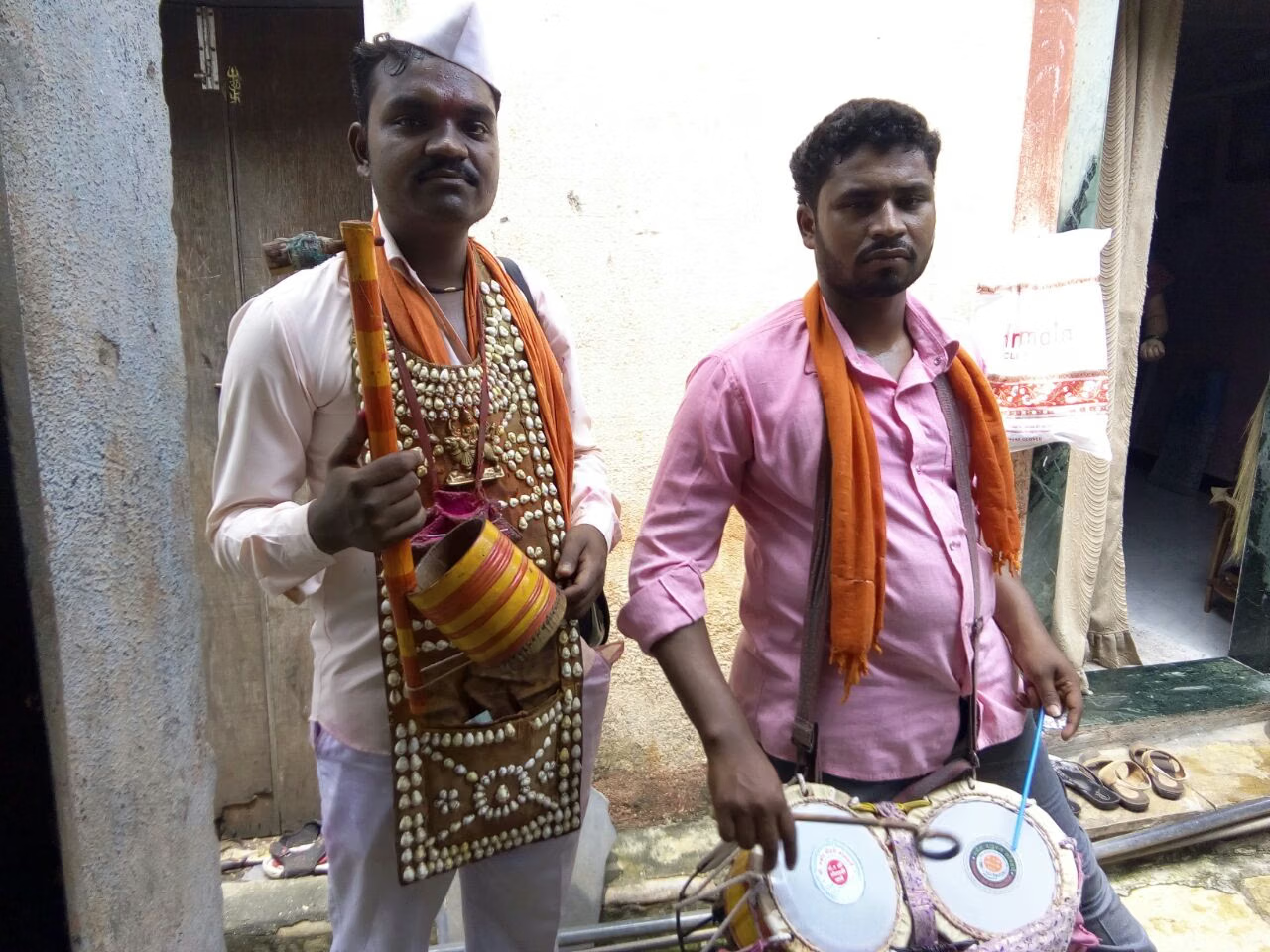
With a small drum in hand, a big cloth bag on the shoulder, ash on the forehead, and the chant of “Alakh Niranjan”… This is the Nathpanthi Davari Gosavi community, which has been wandering and begging for generations. Begging is the last helpless option in life. This helplessness comes from an economic and social system in crisis. Such a life is accepted due to the lack of basic means of survival, the rejection of skills, and the distrust shown towards certain social groups. The Davari Gosavi, who belong to the nomadic category, have become victims of this very social system.
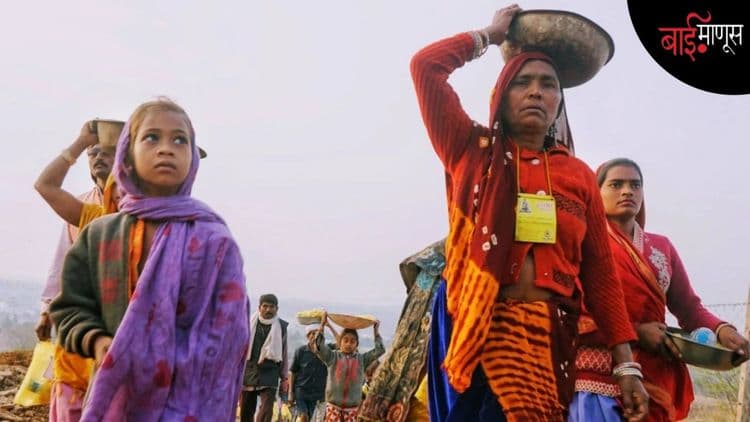
The Nathpanthi Davari Gosavi is a historical nomadic tribe. In Maharashtra, their estimated population is around four to five lakh. About half of them survive only on begging. They travel to every corner of India to earn their living. Husbands, wives, small children, parents, and relatives — almost everyone travels together. They make a small chariot with idols of gods and seek alms. Sometimes they carry palanquins of deities like Kalubai, Durga Mata, Sai Baba, or Swami Samarth while begging. They also take along unusual animals — cows with five or six legs, animals with three horns, three eyes, or other deformities — and use them while seeking alms. All travel is done on foot. They walk ten to twenty-five miles a day, stopping in settlements and towns along the way to beg using these methods.
Ignoring heatwaves, heavy rains, floods, and droughts, their life has continued like this for generations.
Nomadic communities have a very close connection with environmental changes. Around the world, research is being conducted on how climate change is seriously affecting marginalized groups, especially women. At international climate conferences like COP, many researchers publish reports on this issue. However, in all these agendas, the nomadic and denotified communities, who were already outside the village boundaries, are hardly seen. Many years have passed, yet this community still appears trapped in a defeated mindset and traditional patterns. With no land to call their own and carrying their belongings on their backs, they continue to wander from village to village. Social prejudice, political neglect, harassment by the police, and customs like caste councils have kept them oppressed for years. Now, the crisis of natural disasters has added to their suffering.
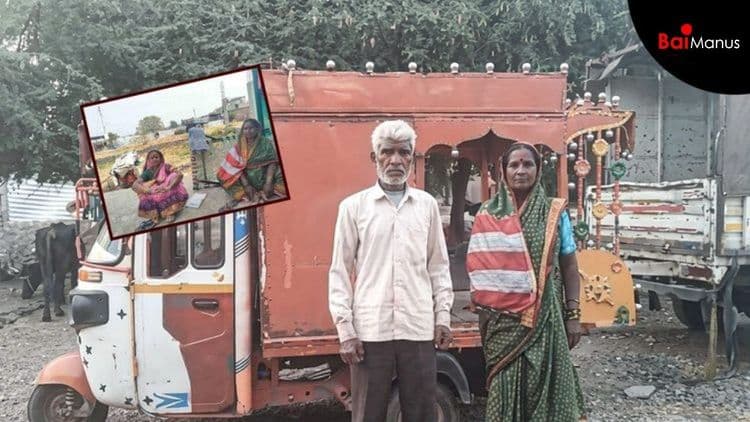
Bamani is a small village on the banks of the Man River in Sangola taluka of Solapur district. It is about five kilometers from Sangola. When you stand at the entrance of Bamani, you notice the struggle on people’s faces even before you see the settlement. In this colony of the Davari Gosavi community — elderly people, women, and small children — everyone has the same question in their eyes: how will tomorrow be? They may not know the term “climate change,” but its effects are part of their daily lives. Climate change has disturbed all the calculations of their survival.
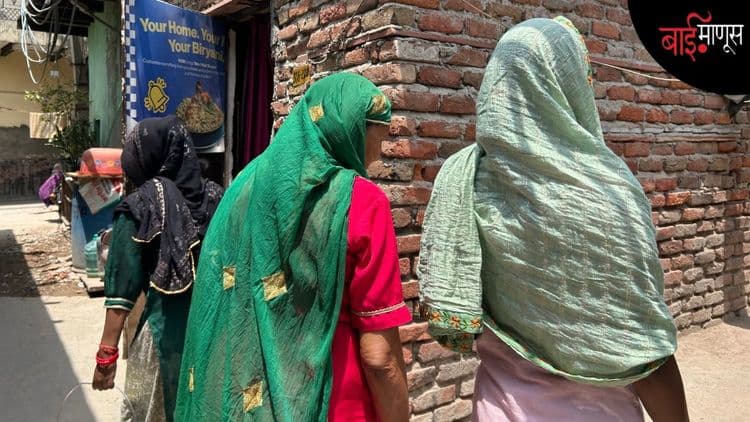
As you enter the village, you see scattered small houses of the Davari Gosavi community, mud roads, sugarcane fields and bushes on the roadside, and a forgotten settlement of thirty to thirty-five houses. Some families are still trying to build tiny houses to stay there. One family was living temporarily in the village gym building. A stove was placed just outside the door, small children were playing in front, and a cloth cradle hung outside with a six-month-old baby in it. The mother was gently rocking the baby, sitting with her head in her hand. Nearby stood a four-wheeled cart prepared for begging. Under the harsh sun, blowing wind, and dust, worry about the future was clearly visible on her face.
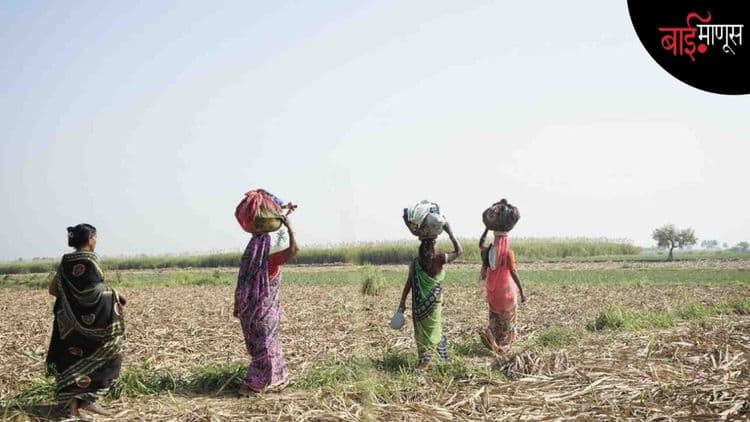
While talking to people in Bamani, it became clear that climate change has had a very severe impact on this community. Earlier, rain used to come on time. In June and July, fields would turn green. People had grain and would share it. Now rainfall has become irregular. Sometimes there is too much rain, sometimes none. Drought occurs. Villagers themselves remain hungry — what will they give us? Irregular rains damage roads and cause floods. Extreme heat makes it impossible to walk long distances. While walking in summer, they feel exhausted and cannot find water. Their bodies overheat, their heads ache. Sometimes they roam all day and still get nothing. During drought, there is less fodder. Animals die or have to be sold. Families who once depended on animals have lost everything. There is water scarcity everywhere. Searching for water and walking with children has become very difficult. Women bear the greater burden — managing the home, caring for children, bringing water, and finding food. Children often remain hungry. They do not get the chance for education because migration has become irregular — sometimes they must leave early, sometimes stay longer.
Climate change and the question of survival
Women’s health has also been badly affected. Heat causes weakness; rains bring infections; lack of water increases diseases. There are no health facilities. Climate change increases illness, but treatment is not available. Climate change is not only an environmental issue but a question of survival for this nomadic community. It is affecting their culture, art, and way of life. While leaving the settlement, an elderly man said, “If this continues, our wandering will stop. But if there is no place to stop, where will we go?” This question still hangs in the air.
This community has preserved folk arts — their costumes, songs, and instruments are part of a fading cultural tradition. But cities have grown and entertainment options have increased. With TV, mobile phones, and the internet, people no longer have time to watch their performances. In cities, they are often not allowed inside gated areas. So they go to villages and urban slums. But even there, drought has made people’s situation difficult, and getting alms has become harder.
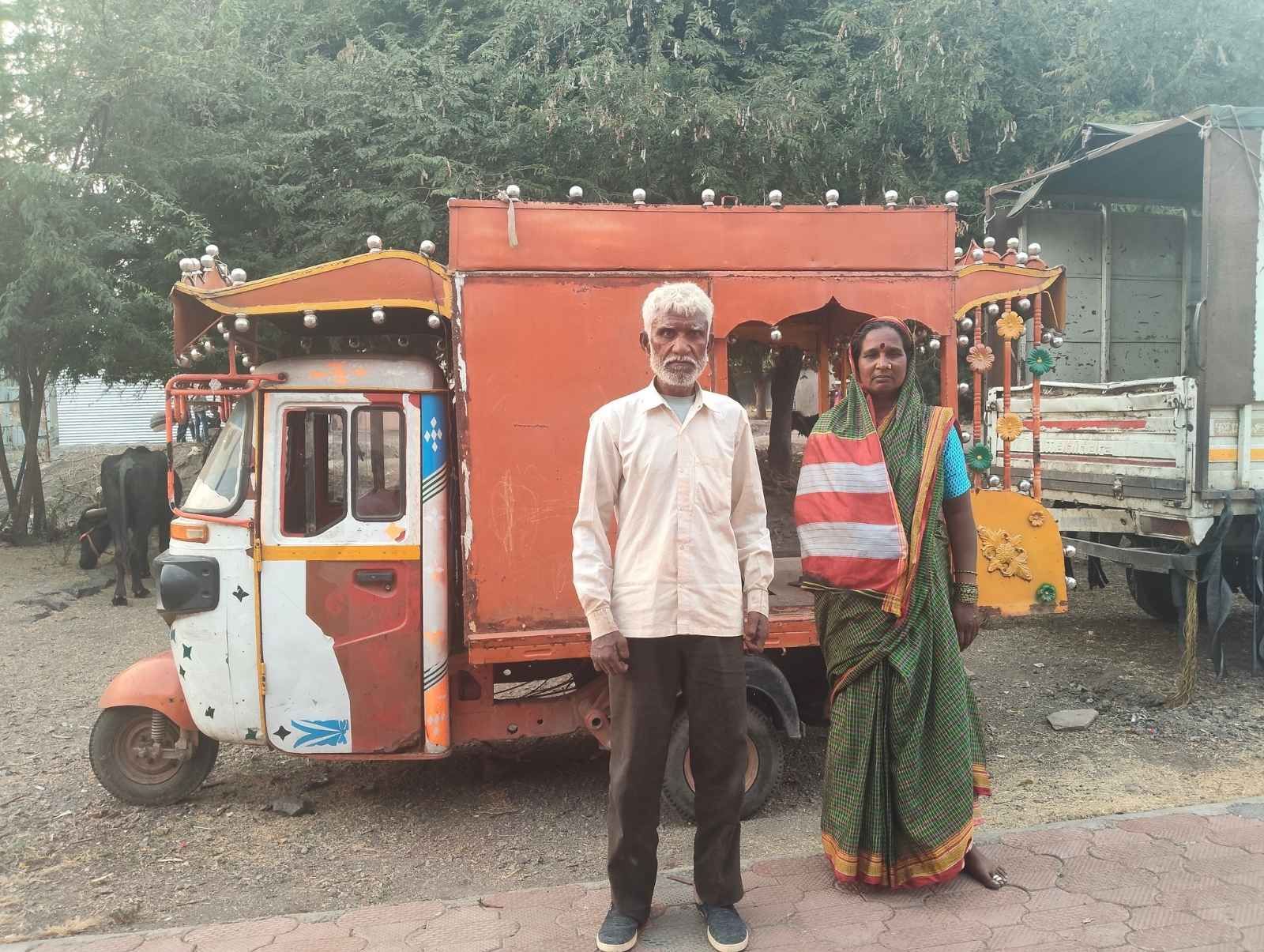
Earlier, they had fixed migration cycles before the monsoon or during religious fairs. They followed certain routes and visited familiar villages where they received grain, clothes, or some money. Now villagers themselves are troubled by crop loss, reduced income, and water scarcity, so the practice of giving alms is declining. Due to irregular rains, fairs and religious events are postponed or cancelled. Thus, climate change is directly disturbing their traditional livelihood cycle.
A farmer said, “Earlier we used to give grain. Now our own house is empty. There is no rain, no crop — what can we give?” An elderly woman said she feels sad seeing these people — women and children wander in the hot sun. She believes the government should provide them a place to settle. A young woman said she feels afraid because of rumours, though not all of them are bad. Children watch them with curiosity — they like the drum and songs — but wonder why they keep wandering. Such questions show their pain.
“We carry a double burden” — Laxmi Ingole
Nearby lives the Ingole family. Janannath Ingole, his wife Laxmi, their son Narayan, and other relatives together manage their small family. Laxmi Ingole (50) says while holding her grandchildren, “We carry a double burden — begging, bringing water, caring for children. If it rains, the hut leaks. If the sun is harsh, children burn with fever. I look for work, but there are no opportunities. When we go out to beg, heat and rain make everything difficult. Then we have to stretch our hands — this is our fate. During drought, water is not available in villages. We have to walk long distances. Sometimes people shout, ‘Don’t come here.’ Where should we go?”
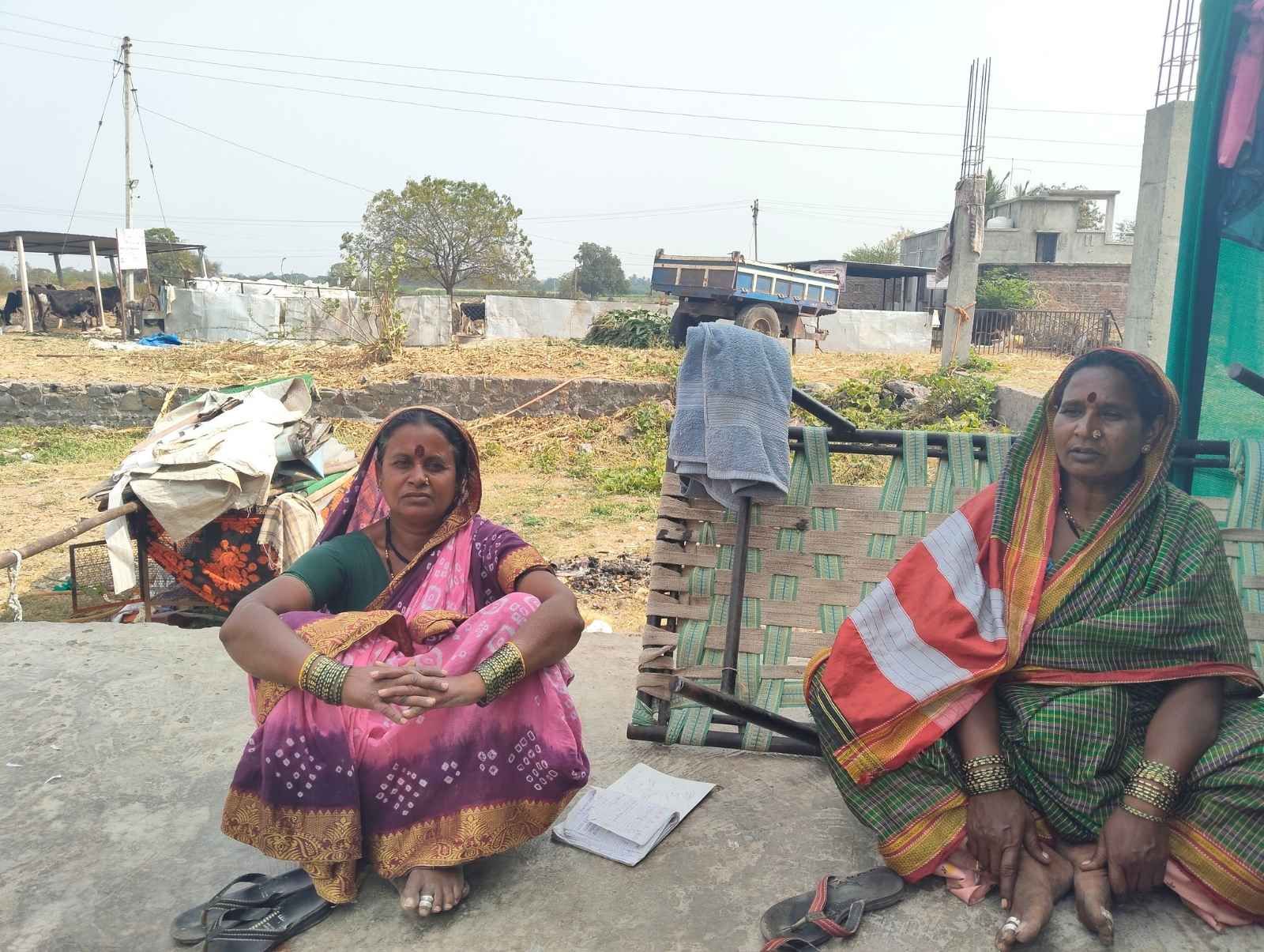 Lakshmi Ingole and Savitri Tai
Savitratai from Bamani says,
We have no work in the village, so we survive by begging with our children. We even go to Uttar Pradesh and Rajasthan. In Rajasthan, there is desert everywhere. The heat was unbearable; our bodies got burned. We had gone there 10–12 years ago too, but it was not so hot then. This time, the heat was extreme. We had no footwear. Our feet developed blisters while walking. The next day we could hardly walk. Our feet turned red. Still, we had no option but to beg. We tied leaves to our feet and continued begging in the heat.
Young women in the community fear the future. Ashwini Bhosale says, “Where will we stop? We have no land, no house. If the climate keeps changing like this, even begging will not fill our stomachs.” Her words clearly show the link between climate change and livelihood crisis. Earlier there were fixed routes and seasons. Now floods, drought, and heat have blocked those routes. Roads have worsened, and walking has become dangerous. Elderly people and small children suffer the most.
Spending nights in the open in cities like Pune
Most Davari Gosavi families in Pune still do not have permanent homes. So they do not stay in one place throughout the year. They go out early in the morning or on festival days like Tuesday and Thursday to seek alms. Sometimes they wander in the city, sometimes in suburbs or villages. During the monsoon, they spend nights in the open wherever they find shelter. They stay for some time in areas along the Pune–Solapur road, Hadapsar, Mundhwa, Wanowrie, Kondhwa, Yerawada, Dhanori, as well as Alandi Road, Wagholi, and Lohgaon. They live near railway lines, on open government land, riverbanks, under flyovers, or at construction sites.
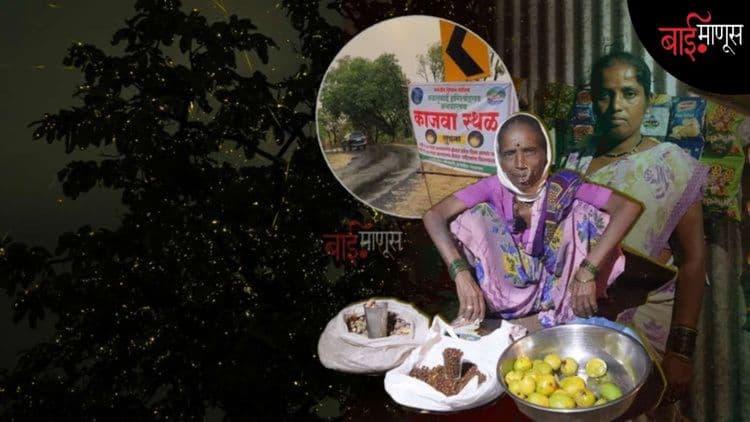
An elderly woman, Parubai Gosavi, says, “Begging is the only way to survive. But what we get is not enough. Families are large — small children, elderly people, and sick members. There is no certainty about daily earnings. Constant walking in sun and rain affects our health. Foot pain, body aches, fever, cold, and skin diseases have become common. We do not have money for treatment, and reaching government hospitals is also difficult. If we had a home or one place to stay, our wandering would stop.” Many families in Pune live with financial shortage, unstable lives, and social neglect.
Why are women most affected?
During migration, responsibility for home, children, animals, food, and water mostly falls on women. When temperatures cross 40 degrees in summer, living under the open sky or in temporary tents becomes a major health risk. Heatstroke, diseases due to lack of water, and lack of hygiene facilities during menstruation become serious problems. Women have to walk longer distances to fetch water, which increases migration routes. As water sources dry up, they must find new paths, which are unfamiliar and sometimes dangerous.
According to international IPCC reports (2024–25) and the Indian Meteorological Department, climate change is mainly caused by human activities. The large use of fossil fuels like coal, petrol, and diesel has increased carbon dioxide and other greenhouse gases, raising the Earth’s average temperature rapidly. Deforestation, fast urbanisation, and industrialisation have intensified the impact. As a result, extreme weather events like rising temperatures, irregular and heavy rainfall, heatwaves, floods, and droughts are increasing. Without urgent action, the effects on agriculture, water supply, health, and the economy will be serious.
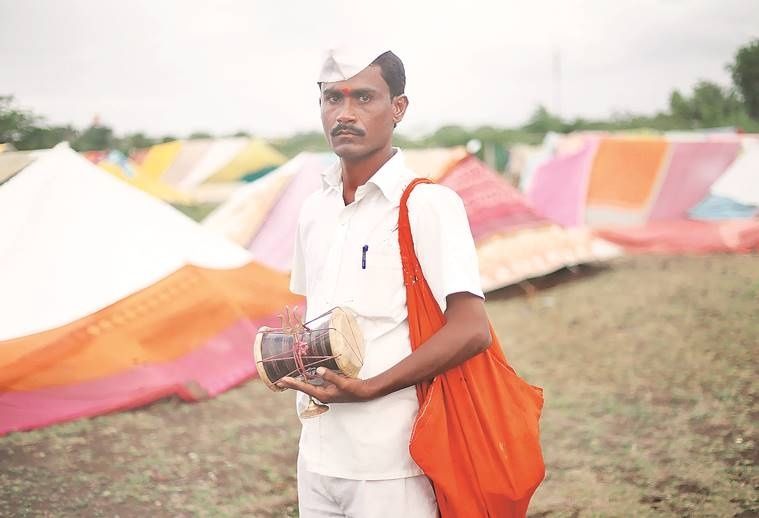
The IMD states that irregularities have increased in all three seasons in Maharashtra. Summer temperatures have risen by about 1–1.2°C, causing frequent heatwaves. During the monsoon, rainfall has become uneven — some areas face heavy rain, others drought. Winter has become less cold. These changes have reduced agricultural production, decreased water resources, and negatively affected lifestyles, causing more suffering for vulnerable groups.
- Increased risks due to heat: Many people without permanent homes live in open or temporary shelters. High heat makes begging or earning a livelihood difficult. Dehydration, dizziness, weakness, and heatstroke risks increase. Reduced income leads to food shortage and malnutrition. Lack of clean drinking water causes vomiting, diarrhoea, skin diseases, and fever. This situation is especially dangerous for children, the elderly, and pregnant women.
- Impact of heavy rain and drought: Irregular monsoon reduces water sources and makes earning difficult for farmers and nomadic communities. Without temporary shelters, people must live in the open, increasing infections due to moisture. Floods and heavy rain submerge roads and bridges, making migration harder.
- Cold and health risks: Though winters feel less cold overall, sudden rains occur. For people without homes, even mild cold is troubling. Lack of body warmth, infections, body pain, trembling, and mental stress increase. Food shortage and lack of safe shelter affect their living conditions.
Professor Narayan Bhosale, who belongs to this community, says their lives depend on villages and cities. Their arts — Bharud, poetry, dance, tamasha, performances — survive on donations from villagers. But climate change has disturbed everything. When villagers themselves struggle due to drought or floods, they cannot spend money on entertainment. Many depend on livestock, but lack of fodder and water reduces milk and income. Earlier people exchanged old utensils and clothes; now such practices are declining. With TV, mobile phones, and the internet, traditional art has lost its audience. Machine-made goods have reduced demand for handmade crafts. In short, climate change, technology, and changing habits have made survival difficult for nomadic communities.
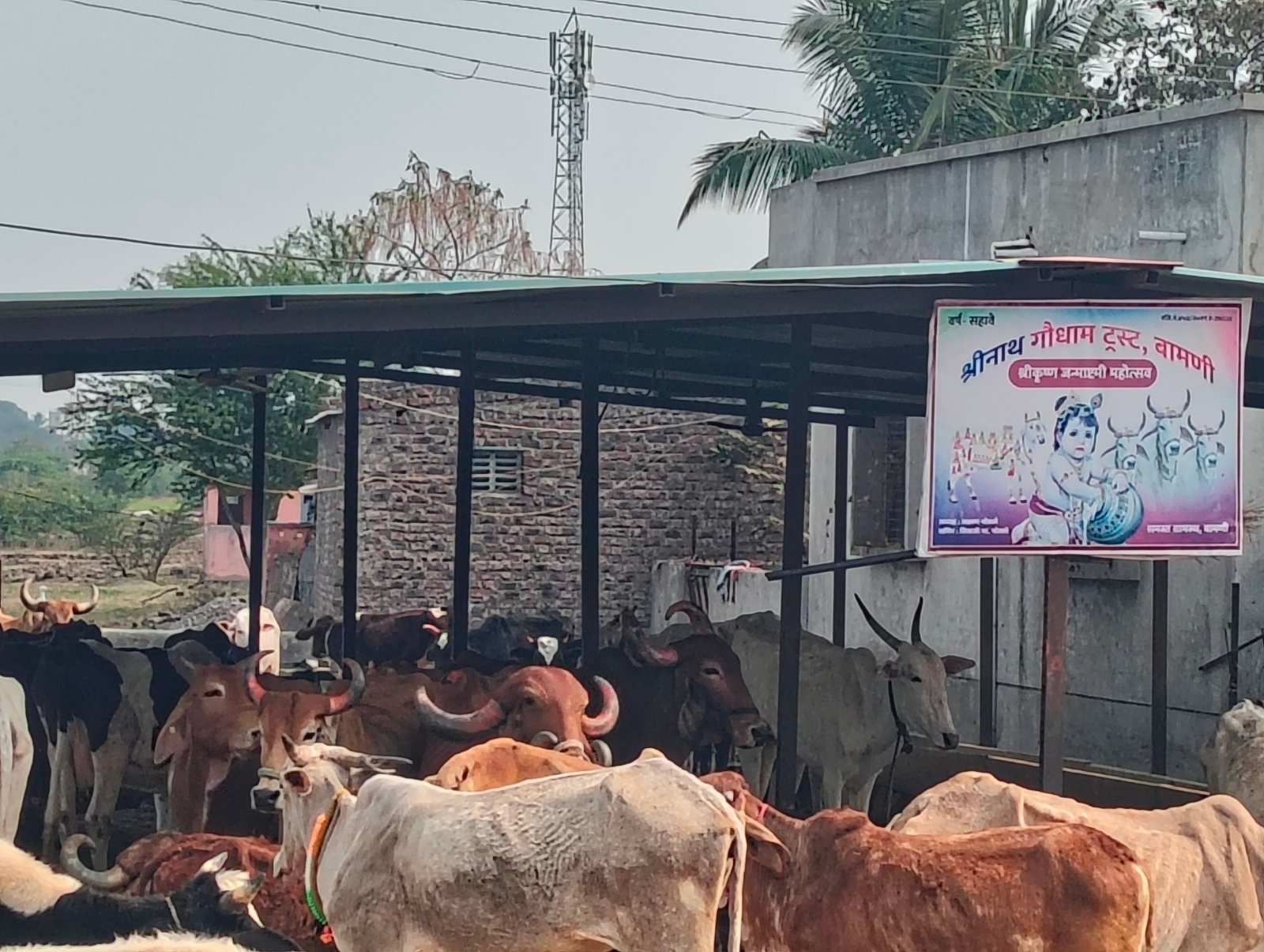
Nature is changing, seasonal patterns are breaking, roads are becoming dangerous, and life is becoming more insecure. Climate change is no longer just an environmental issue — it is a survival issue for nomadic communities like the Davari Gosavi. Alms are decreasing, water and food are harder to find, children’s education is breaking, women’s health is at risk, and violence is rising due to rumours and suspicion. In such a situation, when will the government, administration, and society come forward to provide stable housing, safe livelihoods, education, and protection to a community that has lived on the roads for generations?
(Apsara Aga is a mentee at the Climate Change Media Hub of the Asian College of Journalism. The program is supported by Interlink Academy, Germany.)
(This is a special series on “Climate & Gender” under the joint initiative ‘Project Dharitri’ by Asar and BaiManus.)