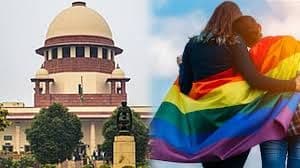
The Indian family system and marriage system are fluid. On the face of it, a civilization of a very ancient civilization, despite being involved in many yokes such as custom-tradition, caste-faith, faith-superstition, social consciousness-social fear, has undergone hundreds of changes in the last thousand years. And that is why it is fluid, it is emphasized. However, in the elixir of freedom, a petition for the battle of rights was settled in the Supreme Court and, once again, the gathering of justice and rights began in front of India, one of the best democracies in the world. The Supreme Court is the sovereign, the largest center of justice in this country.
The Supreme Court, while deciding this petition, did not delete a single line of justice of the petitioner. But still it is the work of the Legislature, rather than giving a verdict, rightly conscious of its original existence, the Court reminded the Legislature of an important change left behind by warning Parliament to change with the times. In view of this, the tradition of strengthening the progressive system, many laws, such as the law of fetal protection, the law of bringing third parties into the flow as original human beings, is being consistently presented in the Indian judiciary. The Indian legislature has always made laws for the safe living of not only humans but also animals and even poisonous insects in this country. Basically, the Supreme Court is not a button of justice. Many drafts made from time to time by legislatures at various places in the Parliament, Rajya Sabha, Legislative Assembly and even the grassroots level are placed under this category of law, and it is the Indian Penal Code that implements it and its judgments in the country's judiciary.

Therefore, whether gay marriage is a nature, a disorder, an adjustment, a relationship, the need for time or something else, the country should make a committee and submit a study essay and make laws for the future of this gay community. The Supreme Court has taken a positive view so far as to implement their development plans, register them and prepare a special marriage act for them. But it is not in our hands to give orders to the Parliament or to give orders to the Legislature. Keeping this in mind or advancing its cause, the Supreme Court has very cleverly put the ball in the court of the legislature, i.e. Parliament.
Now how quickly this law is prepared in the near future is the focus not only of the country but of the whole world. As the court battle over the age of marriage and sex enters its final stages, the question of what to do with same-sex marriage has opened new doors. Homosexual relationships are not a disease, attitude, trend, nature and abnormality of some time ago, but since the beginning of time, homosexual relations between men and women have been established and are happening. It is only that its scale and sublimation has increased in recent times. But this attitude is not regarded as abnormal in half the world. Then whether the understanding of those countries is high or it is difficult for a country like India which is heavily burdened with traditions, should also be openly considered.

In a country where, for 200 years since the invention of the condom, even the word prevention was not possible to pronounce properly, in the same country, third parties were not even recognized as human beings, in a country where same-sex relations were pre-existing, how did their reading speed up and why did it reach the institution of marriage. Before deciding whether to accept or reject her, her origin, lineage and future should also be shed light on.
Related circles :
- https://baimanus.in/news-about-supreme-court-verdict-on-same-sex-marriage/
- https://baimanus.in/news-about-more-than-half-of-indians-support-same-sex-marriage/
- https://baimanus.in/group-of-retired-judge-wrote-open-letter-to-oppose-gay-marriage-in-india/
Homosexuality became widespread during the Mughal period in general due to the war imposed on military colonies in India and depression in the military. Many years ago, there was no such big opposition to these relations in the world. Perhaps that is why many countries have laws against same-sex marriage. Some nations' rulers, senior leaders, and officials were exposed to same-sex relationships, and public support for same-sex marriage began around the world. It is also true that the nature of countries like India was not receptive to such a change then and is not even today. However, this does not mean that those souls, communities or the number of people who want to become a society have no place in this country. It cannot be said that there is no law for them in this country.
There is no doubt that this law of same-sex marriage recognition, which was far-reaching in Justice Chandrachud's time but very close in the future, will be a milestone of this century.