Shonali Samarth
- Ava Cordero, a transgender woman who faced childhood adversity, was lured by Jeffrey Epstein at age 16 with false promises of Victoria's Secret modelling, leading to sexual assault and prolonged harassment.
- Her 2007 lawsuit against Epstein was dismissed due to the statute of limitations, while outlets like the New York Post sensationalized the case, misgendering Cordero and weaponizing her trans identity to discredit her.
- Excluded from the broader #MeToo movement and the support given to other Epstein survivors, Cordero's life spiraled into incarceration, homelessness, and illness, highlighting severe media bias against transgender victims.
The names Jeffrey Epstein and the "Epstein Files" continue to evoke shock and outrage across the world. The allegations and testimonies that emerged from the Epstein scandal exposed a system of exploitation that left countless individuals traumatized. For many people, merely learning about these events has been emotionally distressing. It is therefore difficult to comprehend the profound psychological impact on those who directly experienced such circumstances.
Among the many individuals whose names surfaced in connection with Epstein's network, one story has remained largely absent from public memory. While numerous survivors received extensive media attention, few were overlooked or discussed only through the lens of controversy. One such person was Ava Cordero, a transgender woman whose life was marked by adversity long before her name appeared in court records and newspaper headlines.
Born on November 15, 1983, into a Latino family, Ava began expressing her transgender identity at a young age. By the age of twelve, she was wearing girls' clothing and had chosen the name "Avarele" for herself. However, her gender Identity was not accepted within her family, leading to a difficult childhood that included separation from her parents and time spent in foster care.
During the early years of social media “myspace” was popular in United states. Ava used to write on this platform. Once she shared her aspiration of becoming a model. According to law suit, a user called sherry a lady in her 40’s replied to Ava’s post saying one of her richest friend can help her out with Modelling. That friend was none other than Jeffery Epstein.
Sixteen-year-old Ava met Jeffrey at his home with her modelling portfolio. To lure Jeffrey wanted her to model for Victoria's Secret. He told her to give me a massage in exchange for $300. Somewhere along the way, Ava needed the money, but after the massage, she was sexually harassed and forced by Jeffrey.
Since Jeffrey's misdeeds had not come to light at the time, Ava had little idea what Jeffrey was really like. Over the next year, he chased Ava and tried to flee with her in Thailand to recruit her into his "ladyboys" gang.
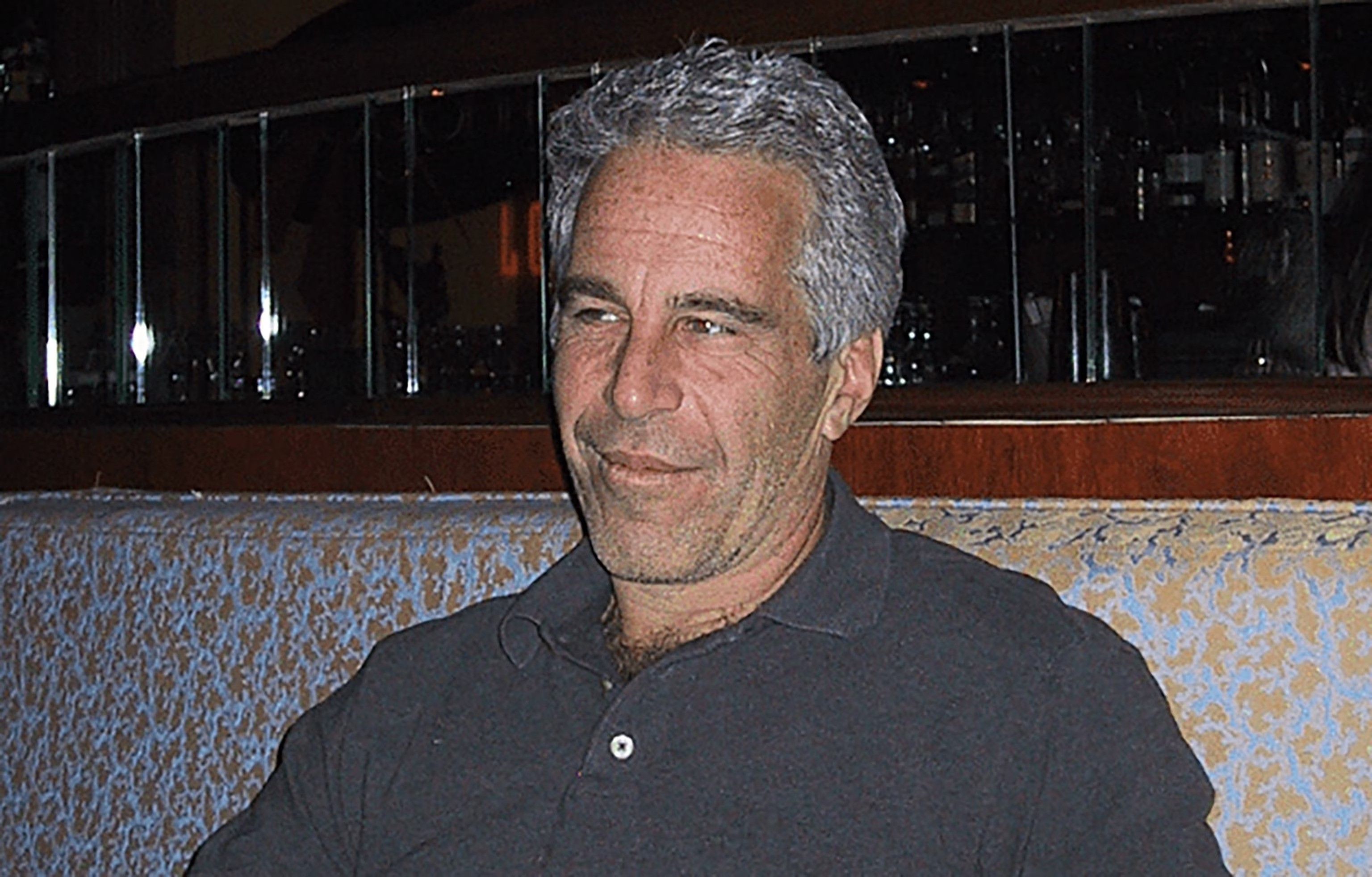
When Ava filed law suit against Epstein..
In October 2007, Ava filed a lawsuit against Jeffrey in a U.S. court, alleging that he sexually assaulted her. "I was ready for a massage, but then he sexually harassed me," Ava said in the lawsuit.
At the time, U.S. law required plaintiffs to file a lawsuit within six years of being sexually harassed. Only if a plaintiff is mentally incapacitated, “Insane” this period of six years can be extended for her.
By the time Ava filed the lawsuit, more than six years had passed since the incident with her. “But this harassment affected my mental health and since I am mentally incompetent, I was delaying the case and requesting the court to accept it”-said Ava
In 2002, Ava met with a lawyer named William Unroch, who had previously represented Ava in a rape case against Gentile. And in this Epstein case, it was Unroch who was Ava's lawyer. it was argued that since Ava was a minor at the time of sexual harassment, her consent was not admissible and the consensual act amounted to harassment. The court conducted a psychiatric examination of Ava by psychiatrist Dr. Robert Goldstein and found that Ava was mentally capable of handling the case.
Robert said that in the last few years, Ava had been admitted many times due to mental problems, but their reasons were different, Ava being a drug addict, her hospitalization had little to do with the Epstein case, so she was capable to file this case earlier.
Further, Epstein's lawyer claimed that Ava had made numerous affidavits and contracts over the years, which meant she was able to handle legal matters as well, so this claim of mental incapacity is invalid.
Further, this lawyer took Ava's case very lightly and did not pay much attention to it and constantly demanded money. Once, fed up with this, Ava became angry, and in a dispute over money, she angrily pointed a knife at unroch. She spent the next few days in jail on Rikers Island.
The court dismissed the case as it was filed after six years of sexual harassment and where it could not be proved that Ava was mentally incompetent.
The media gave the Ava-Jeffrey case a negative and sensational turn
Subsequently, some of the American mainstream media began to write unilaterally and negatively about the case. Transgender community have never been given proper coverage by the mainstream media around the world. Probably, the news about trans people does not come in the mainstream media and those who come are always shown in a negative way. Wherever there is a riot or in which trans persons have been named in a crime, the media publishes those things as sensational news, but when a trans person is a victim, the same media does not bother to mention about it and this is what happened in the case of Ava.
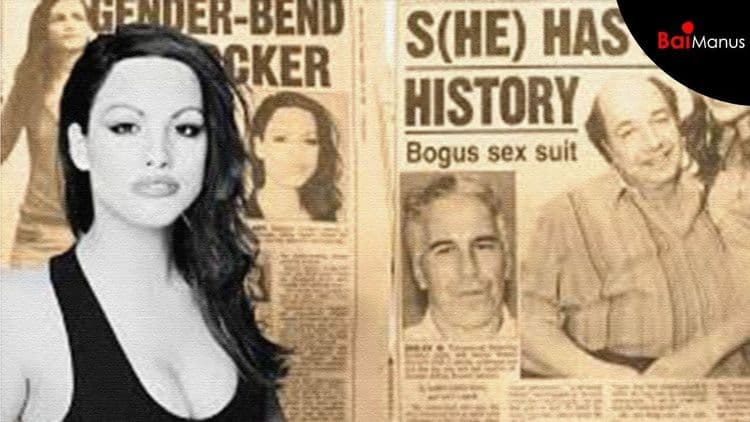
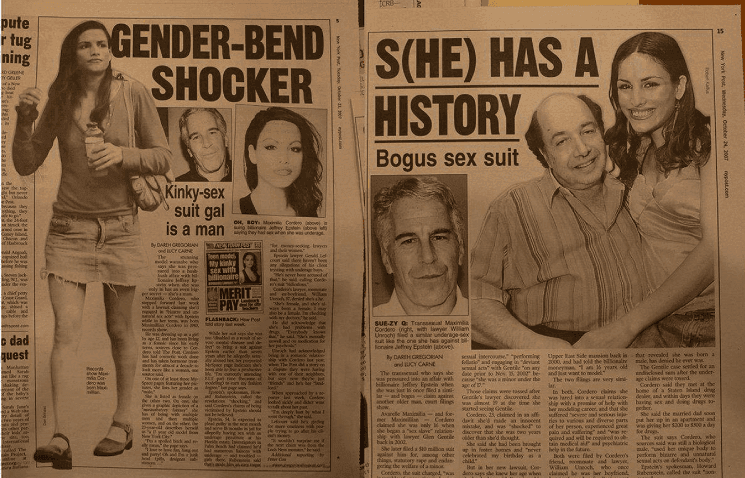
After the lawsuit against Jeffrey, the New York Post published two articles in which, instead of showing sympathy for the victim, they focused on Ava being transgender, misgendering her (pronouncing her as a He/Him) and defaming her for being trans.
They also published unilaterally allegations made against Ava by Jeffries lawyer, saying that she had filed the case because his client was rich and she was only after his money.
In a follow-up article, they referenced Ava's lawsuit against the Gentile before Jeffrey, calling it a "bogus sex suit." And also wrote, "S (HE) HAS A HISTORY" and "GENDER-BEND SHOCKER-KINKY SEX SUIT GIRL IS A MAN." NYP also posted pictures of Ava with Jeffrey and Gentile.
On this, she again filed a defamation case against New York Post and Jeffrey In 2008. Later Jeffrey settled the case in court with Ava for
$28,000.

Ava was imprisoned on various charges
In 2014, Ava was sentenced to seven months in prison for burglary.
According to a report published in the New York Daily News on March 2, 2017, police found a broken glass door at a Victoria's Secret store in Manhattan and inside, Cordero was caught stealing push-up bras, G-strings, thongs and makeup worth about $1000. The place chosen for this theft seemed somewhat ironic, because Jeffrey Epstein for many years worked as a financial manager and trusted associate of Les Wexner, the founder of Victoria's Secret. So he had a deep connection with that brand - the same brand was also put in front of her in the past as a lure. By observing her previous criminal record, Cordero is likely to have faced jail time once again.
Since the first meeting with Jeffrey Epstein, Cordero's life has continued to deteriorate. Many other men sexually and mentally harassed her. She had to suffer the consequences of a life of disgrace. The courts never gave her justice, and the mainstream media also participated in further discrediting her without taking a sympathetic journalistic stance towards her.
Many in the #MeToo movement also forgot Cordero, while others of Epstein's victims supported women who came forward and publicly testified about their abuse. You saw them in front of the cameras of news channels, testifying with teary eyes, standing with their famous lawyers. And there's no question that those victims have every right to millions of dollars in damages from Epstein's estate, as well as others involved in his crimes. But Cordero received nothing more than the $28,000 she received from her settlement agreement.
Where is Ava today?
Annie Arbour, a journalist, wrote in an article for Pride Source:
It took me a long time to find Ava Cordero, but I finally found her. She was currently living in a shelter that provides accommodation to people who are homeless and living with HIV or struggling with addiction issues. I called the shelter and contacted the security department. I introduced myself as a journalist and explained to them to let me talk to her.
Finally, they connected me with her on the phone.
The other end of the phone responded with a soft and feminine voice. I introduced myself. I wanted to tell her that my purpose was not to discuss the Epstein case, but simply to tell her that people had not completely forgotten about her. But she stopped before I could finish.
"I'm sorry, but I can't." And with that, she hung up the phone.
This was a somewhat disappointing end to my search. But I could understand her frustration. She had suffered a lot due to the previous coverage of the media. And even though I had told her that I was a trans journalist, she had no reason to believe that I wouldn't take advantage of her either.
Ava Cordero's story raises important questions about the responsibilities of journalists and media organisations. How should vulnerable individuals be portrayed? What happens when certain stories receive widespread attention while others are forgotten? And how can reporting be conducted in a manner that prioritises accuracy, dignity, and humanity?
Due to the wrong coverage of the media around the world, prejudices and misconceptions about trans people have increased. In fact, many journalists working in this media do not have in-depth knowledge about the trans community, so they write what they think is right about them, assuming the prejudices about them, but it completely ruins the lives of many trans people. Will these media outlets take responsibility for such consequences in the future?