When there is a discussion about gender equality, educational institutions, public morals, books, goods, clothes and social norms also come up. As soon as a child is born, we are told what clothes to wear at family, social, and public level. What their color will be, how they will be sewn is all based on gender. So our gender is identified by our clothes. But when it comes to clothes, do we ever think beyond the usual gender stereotypes? Ever feel that the clothes worn in Bollywood will not work in the village or in your home? The new generation in the metros is generous with such clothes, and it is helping to break the gender norms in fashion. Historically, gender distinctions in the decoration, style, and use of clothing have been disappearing. However, the idea of so-called gender-fluid fashion in India is not very old.

Clothes are said to be only for women and men...
In terms of clothing, we generally have two divisions, womenswear and menswear. On the one hand, the discussion of gender equality is going on and people's attention is slowly moving towards it, but in fashion, the emphasis is on maintaining gender inequality in clothing. Gender identification by clothes is our social perception and it has not changed yet. Of course, it is also true that there have been many changes compared to the past. But the difference between men and women has not decreased. E.g. Heels i.e. high heels were worn by men earlier. Their upper class identity could be seen from them. These pairs were worn by people who did not need to work. Because this class could bear the cost of making such unusual additions financially and commercially. But now if you search on Google, you will find that heels are used only by women.
Although the term fashion is new, it has never been limited to clothes only. It is also a part of our existence. Be it kings, maharajas, leaders, actors, we can identify their class, their socio-economic level by their clothes. People, especially the young, choose their clothes with a lot of thought, which will give a distinct look to their personality. A look at the history of clothing fashion in India shows that gender equality is generally observed. The idea of the hypermasculine or hyper feminine emerged much later but still persists.
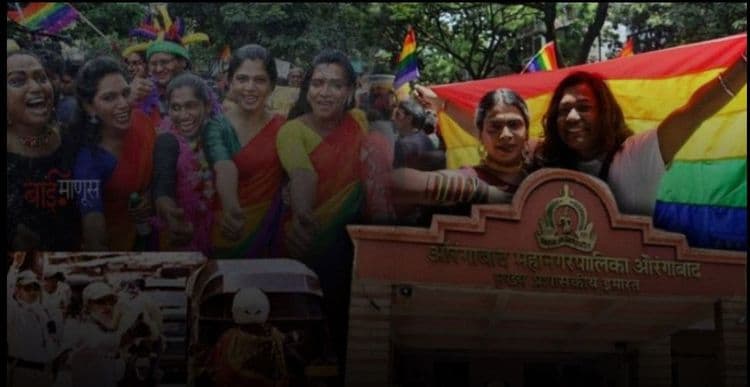
Gender equality is often found in Indian clothing. Earlier people used to wear different types of clothes which did not show much difference. E.g. Although the saree was a women's garment, there were variations in it. Men's dhoti is similar to saree. A neck band or Nehru jacket is the same for both men and women. Angarkha was popular during the Mughal period. It was also worn by both men and women. In those days, men were as fond of jewelry as women. Mughal women used to wear many types of jewelry. Their clothes used to include pajamas, angarkha, kurta, salwar, ghagra, todhani, etc. The clothes of Rajputs used to include angarkha, jacket, turban, kurta, pajama, salwar. The Ahir community also generally wore the same dress. Dhoti was worn by all but the methods of wearing it were different. The transgender community increasingly wears women's clothing. Gender-neutral clothing is not a trend. It is a dream that challenges traditional gendered clothing, as well as represents the desire to create a more inclusive society.
During British rule, Indian clothing underwent many changes and European influence began to be felt. The British had strict rules about clothing. Because the thought of showing their cultural and social superiority was hidden in it. Along with clothes, they came with their ideas about sexuality. He planted the idea of western femininity and masculinity in Indian society through clothes. This brought changes in Indian society. Upper and middle class Indian men wore western clothes in public. It also had a fusion of Indian and western clothing. It was fashionable to wear a coat and tie with a dhotara. Some people wear English frock coats and jackets with Sherwani. Later, the fashion of wearing pant-suits started. The same happened with women's clothing. They also started wearing a petticoat inside the saree and a blouse on top. The gender equality that was evident in Indian clothing began to disappear due to western gendered clothing. People also started to observe gender discrimination in clothes. The same tradition took place and clothes were also made according to gender.

Gender equality in fashion
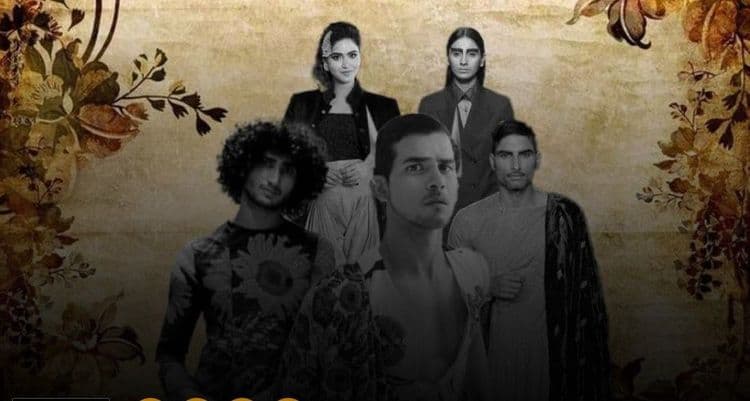
Fashion designers Rohit Bal and Arjun Saluja used inclusive principles in their collections in the 2000s. Rohit's male models were mostly dressed in dhoti and skirts. In a 2003 show, his male models walked in lungi and sindoor. Saluja's gender-flu fashion is also loved by people. Although gender neutral fashion may seem new, it started in the 21st century. Different adventurous experiments were started in fashion in India as well. This was a time of gender equality in fashion. Of course, people didn't like it at first. When it comes to Indian fashion trends, it has seen a particular pattern in the past decade. In 2016, Ranveer Singh wore a septum ring and blouse with a bow for the cover of L'Official. It is considered to be the most powerful gender-fluid act by any Indian male celebrity of the era. Subsequently, actors like Ali Fazal, Vijay Verma, Jeem Sarbh also popularized fashions that challenged conventional fashion choices and went beyond hypermasculine fashion. It is still a long time before this gender neutral fashion moves from the metropolis to the villages. Because this is not just a trend. This is something that challenges traditional gender ideas. It would be wrong and unrealistic to hope that society's gender ideas will change through clothing alone. But it cannot be forgotten that this is an important thing to take in that direction.
Translation – Pratik Puri
(Courtesy – Feminism in India)