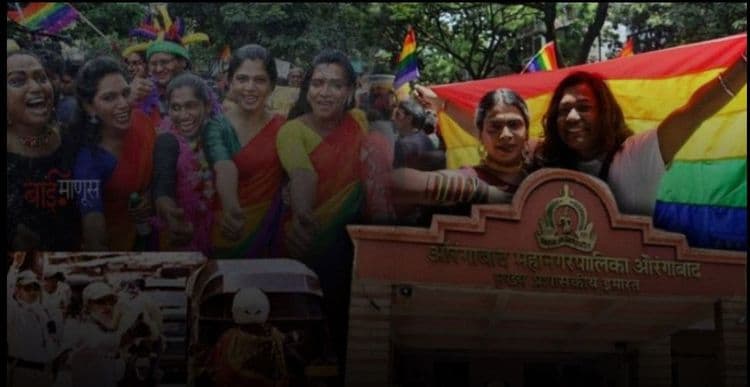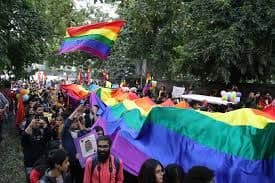
Pune, the cultural capital of the Marathi nation, has organized two pride marches for the LGBTQIA community this summer. Now why are two marches or parades or processions of the same community being taken out? What exactly is the significance of this 'Pride March' which is taking place in places like Pune? What exactly are the two separate schools of thought within the LGBTQIA+ community? Who exactly organized these processions, and why should everyone living in Maharashtra know about this Pride March? This is an attempt to find out what transsexuals, transgenders and people of other genders in the Marathi region think about the hearing currently going on in the Supreme Court regarding the legal recognition of same-sex marriage.
It has to be said that the planning of two pride marches in Pune in this manner is a very positive thing. Because the growing LGBTQIA community and the diversity of roles and thoughts within this community can lead to many positive things for the development of the community as a whole. It goes without saying that the measures taken at the governmental and social levels for the empowerment of this community will add various dimensions, broadening the perspective of this community.

The Pride March organized this Sunday was organized by MIST Foundation and some other organizations. While the second march of the LGBTQIA community in Pune will be organized in the month of June under the leadership of Anil Ukarande of Yutak Charitable Trust. Both the marches have gained significance as the Supreme Court's five-judge constitution bench headed by Chief Justice of India DY Chandrachud hears petitions seeking legal recognition of same-sex marriage.
If you are hearing or reading about the Pride March in Pune for the first time, then you should know that the first Pride March in Pune was organized in the year 2011. About 12 years ago, Sampathik Trust in Pune started this March. Bindumadhav Khire, who left his job in the US and returned to Pune in 2000 to work for the empowerment of the LGBTQIA community in Pune, is now 55 years old. He has been working for this community in Pune for the past 23 years. Reminiscing about the first Pride March, Khire told The Indian Express, "The idea of organizing a Pride March was first mooted in 2011 to give our rights to a marginalized community like us." In 2002, Khire founded the Sampathik Trust to work for the health of individuals in the 'gay' community.

After that, Khire organized ten Pride Marches in Pune in the last two decades. Only in 2019, however, did they encourage members of the LGBTQIA community to organize such marches. Due to the corona epidemic that followed, there was no Pride March in Pune for two years and the last Pride March was organized on June 5 last year.
For Bindumadhav Khire, the Pride March is an opportunity to increase the acceptance of the LGBTQIA community in society. According to him, political slogans should have no place in this march. Khire says that he has not allowed the platform of the Pride March organized by him to be used for political purposes till date. Speaking about this, Khire says, "I have preferred to keep any political ideology, right and left, away from the organized Pride March, and it is important that while allowing such marches, the police will not prefer political slogans in these marches and the members participating in the march will wear proper attire." There were two important conditions. Both these conditions were strictly followed by us in the marches we organized.”
While thanking the police for their special support of these marches, Khire says that former police commissioner Dr. Senior officers like Meera Chadha-Borvankar and former ACP Bhanu Pratap Berge understood the challenges faced by the LGBTQIA community.

The Pride March organized till now in Pune has received support from many, but at the same time, many sections of the community have also opposed these marches. Supporters of the march have so far praised the Pride march for its 'apolitical' and inclusive approach. But members of the LGBTQIA community who oppose these marches have alleged that the marches are not inclusive at all, that only the privileged few have access, members from all economic strata of the community, and members of various religious persuasions have not been included in the pride marches.
Shyam Konnoor, founder of the MIST LGBTQ Foundation, says his decision to hold a separate Pride March was made to make the Pride March 'more inclusive' and 'more open' in terms of dress and politics. Konnoor says his stance on 'politics of movements or marches' is inspired by the 'Why Loiter Movement'. The purpose of the 'Why Loiter Movement' was to allow women to enter public spaces regardless of what they were wearing. “That's why we planned a separate Pride March to include community members dressed in different costumes,” says Konnoor.
Konnoor put his finger on the condition of simple and typical dress in the pride march held in Pune so far. He says, “Pride March is a movement, it's a march, and why should it have a dress code/restriction? That's my question."

Khire, who now heads the Bindu Queer Rights Foundation, says organizing pride marches is not his sole monopoly. He says, “Of course, there are many other people who want to organize these kinds of events. Perhaps, my conservative nature in dressing led to the appearance of my heterosexual mindset. It is also true that once upon a time, I opposed students who wanted to use the platform of Pride March to raise slogans against a FTII director who was leaning towards a particular party. And we've also sought support for same-sex marriage from political parties and heavily advertised a certain group's support for us — but it's never hijacked an LGBT pride walk until today."
Konnoor said that the Pride March organized on Sunday will be the result of the combined efforts of MIST, Queer Republic, Qutcast and many individuals. "A total of 20 organizations have come together for this march," added Sham Konnoor. The special thing is that the members participating in this march will also be allowed to hold the placards of political parties and All India Professional Congress and Aam Aadmi Party political parties will also participate in this pride march. Sham Konnoor, who also works for a political party, says, "Pride and politics cannot be separated anymore."