There was pandemonium in and around Pune, who ran around shouting 'Paani Aal.. Paani Aal...', the incident itself was like that. Because there was a big crack in Panshet Dam. The Indian soldiers worked tirelessly and piled thousands of sandbags throughout the night and stopped the bursting dam till morning. If the water had come at night when the Punekar were sleeping, there would have been a huge loss of life in Pune.
But in the end it happened. Panshet Dam finally burst in the early morning and the next small Khadakvasala dam burst due to it. More than a thousand people were killed in this incident. In Pune water became water, chaos ensued, he was trying to save his life. Many people were affected by this. Lives were turned upside down. The dreams of many were dissolved like lumps in that muddy water. This flood broke the backbone not only of the generation of that time but also of the next generation.
This is the generation of the Bhoi community... Bhoi community was living in large numbers at that time along the river Mula-Mutha. In the year 1961, there was a flood in Panshet, at that time water entered these settlements and the settlements were leveled and houses were washed away. 62 years of this tragedy are being completed today. In the subsequent period the city expanded to 400 square kilometers.
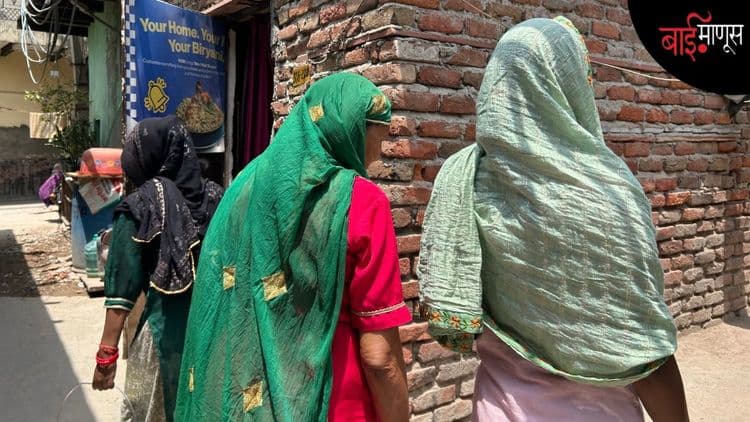
However, the problems of those who became homeless in this accident have not been resolved yet. At that time, the Municipal Corporation relocated the Bhoi community to Kasba Mandai. Some of the displaced people stayed in the town while some people came and stayed in their own place. The Sangamwadi road passes along Patil Estate in Pune to Sangamwadi village. This is the current settlement of Bhoi community on both sides of the road.

Earlier Palkhi Bhoi Now Zinga Bhoi…
'Bhoi' is basically a tribal and nomadic tribe. The people of Bhoi community have survived with the help of forest, water and natural resources. In the past, the main work of the people of the Bhoi community was to carry passengers to and from across the river and to carry royal palanquins, candles and dolya on their shoulders. Historians have also recorded Bhoi community in history. During the Mughal Sultanate, Shiv Shahi and Peshwa periods, the rulers' ranks were 'reserved places' for Bhoyas. At that time, it was the job of bhoyas to transport the daughters, daughters-in-law and nannies of the rich, and to transport the goods with great care, honestly and faithfully, by boat, doli or wax. There is no instance in history of Bhoyas ever engaging in unethical behavior or unethical acts while transporting women far and wide in palanquins or menyas. 'Sevabhava' is the nature of people in Bhoi society.
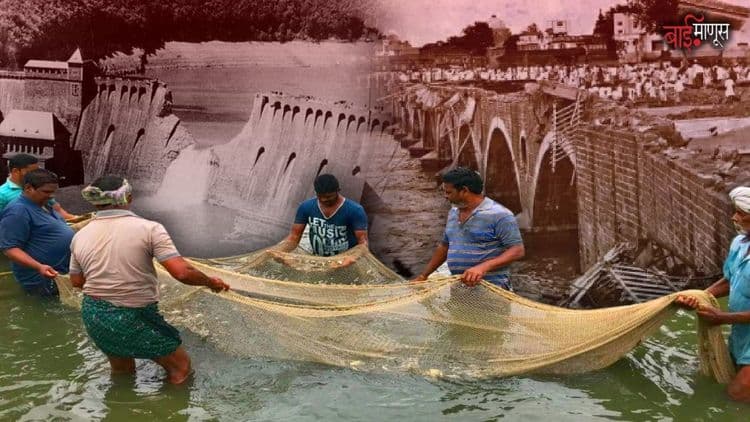
Later, after the time of Raja-Mahaja, the work of lifting the palanquin ended. Rajashray has gone. These people also started wandering to other states to meet their basic needs of food, clothing and shelter. So the Bhoi people turned to fishing and they started fishing in the sea, creeks, rivers, lakes, valleys etc. The Bhoi people earned their living by catching fish and selling them in the market. Hence they came to be known as 'Zingabhoi'. Today 'fishing' is the main occupation of the Bhoi community. In Maharashtra, the Bhoi community mainly lives in the districts of Mumbai, Thane, Pune, Nashik, Dhule, Jalgaon, Satara, Kolhapur, Solapur, Sangli, Ahmednagar, Ratnagiri, Nagpur, Bhandara, Wardha, Nanded etc. and is also found scattered elsewhere.
Bhoi community lost their jobs due to Panshet flood
Within a few days, the dam burst and all the bridges in the city were submerged except the Bundgarden bridge as the flood water entered the city of Pune. Shaniwar Peth, Narayan Peth, Kasba, half of Pune was washed away. The life of the people living along the river was destroyed by the flood water. The flood changed the map of Pune. The families devastated by the flood were rehabilitated. New settlements such as Sahakar Nagar, Padmavati, Erandavan, Dattawadi, Parvati were created. They were shifted to different parts of Pune. The Sangamwadi road passes along Patil Estate in Pune to Sangamwadi village. Both sides of the road are inhabited by Bhoi community. At that time, the Municipal Corporation displaced the people at Kasba Mandai. Some of the displaced people stayed in the town while some people came and stayed in their own place. The Bhoi community on the banks of the Mula-Mutha river had suffered a lot due to the flood of Panshet. There was no house to live in, no clothes to wear. In such a situation some people sold their lands. Those lands were their agriculture. The main occupation of the Bhoi community was agriculture and fishing. Due to Panshet flood, agriculture was lost. In the current situation, fishing business has declined and the livelihood of the Bhoi community is gone.

Eighty-year-old Ajji Monabai of the Bhoi community living in the slum says, “Our days were strange. We had a three acre farm. In agriculture, vegetables, wheat, maize were growing. Was doing watermelon farming. There were buffaloes, cows, bullocks. Milk was sold by filling big cans. We have never imported anything. We were using the river to come and go to Pune city, our boat was ours. I was coming and going by boat. The river was deep, the water storage was abundant so boats could be used. River water becomes clean, river water becomes drinkable. We used to go to the market and sell watermelons, Kaligad and sweet potatoes in sacks from the boat. Watermelon, Kalingad used to be so juicy and sweet that we used to fill our stomach just by eating it.
Bye tells you, "You don't taste what you are eating now." Kalingad, if you cut a watermelon, there is no juice and no sweetness. It is worn as animals are worn. In the field, we were growing various types of vegetables such as rice and sweet potato. Now how many times the vegetables brought from the market smell like sewage. Now it has become worse. We had a good time. All the women in the house were engaged in agriculture. All men used to fish. Fishing was a very popular business. There were plenty of different types of fish in the river. Never went to the employment of others. Our household was running on fishing and agriculture. We lost everything due to Panshet flood.
The Sangamwadi bridge passed through our farm, so farming was impossible. Our land went under the Sangamwadi bridge. Remunerated as per government rates. At present three brothers have eight guntas of land. Monabai Aaji informs that since agriculture has gone, everything has to be brought from outside.
'If you leave a net in the river for the whole day, you will not get any fish'
56-year-old Ramchandra Kachi of the same settlement says, “Ours is the sixth generation of the Bhoi community. Till date we have done fishing only. Fish was sold by the sack. There were different types of fish in the river. Now the situation has changed. Now the rivers in Pune are no longer rivers, now the rivers have taken the form of sewers. The river was deep. Fish were spawning. Now there are not enough fish in the river. Different species of fish were destroyed. Chemical factory water is discharged into rivers. Paper company water is released in Ujani Dam. There is no waste water planning in Pune, they release the waste water into the river. How can fish survive in polluted river water? If you keep a net in the river for a whole day, you won't get just one or two kilos of fish."
The house was washed away due to Panshet flood. At that time, the Municipal Corporation had given letters only to the house. At that time, our father built a mud house, we are still living in the same house, in the meantime, an attempt was made to raise the settlement when the Sangamwadi bridge was built. We opposed it. If not a slum, give us a cot. Ramchandra expresses regret that we did not get a house, we did not leave that place.
He further says, "Sucker fish has been found in the river for a few days. Sugar fish eats fish eggs, fish, so the number of this fish increases more than other fish. After the sugar fish gets stuck in the net, it does not come out easily, so the net has to be torn. This causes great damage to the nets. Mangur fish is also being found in large numbers in Ujani Dam. We have applied for the Municipal Corporation to take some measures to destroy Sugar, Mangur fish, but the Municipal Corporation has not yet come up with any solution."

35-year-old Ajit Kachi, who represents the new generation of the Bhoi community, says that seventy to eighty people live in the slums on both sides of the Sangamwadi Bridge. There is a dirt road leading to the settlement. When it rains, it becomes muddy immediately. There are difficulties in commuting. It is difficult for children to go to school during monsoons. Many times applied for the road, but still no road. There is no drainage line in the settlement. Even after applying, they do not take any notice. We don't get jobs because of lack of education. There is no fish in the river. On the other hand, if you go fishing, the people there do not allow you to fish. Nets have to be kept in the river for the whole day. In the evening, we used to sell as much fish as we could get. Others go to work if they find work. Otherwise they stay at home.”
Jalbiradari is an organization working for the Bhoi community. Sunil Joshi, a social worker of this organization, says, “Bhoi society is an under-educated and minority society. This society is unorganized. Society working with nature. Fishing is their main occupation. These communities probably have settlements along the river. After the year 1947, the business related to industry and technology flourished. These industries flourished where there was abundant water. In the city of Pune, industries have stood up only at water places. This affected the people living along the river. Could not work in industries due to lack of education. Society could not adapt to this environment. The society could not progress due to lack of financial stability. The government has not taken any steps for the progress of the society. So this society remained backward. A political party is seen as an electorate. Concrete steps are not taken for their progress. Due to the disappearance of traditional occupations and low education, they are forced to work. On the other hand, daily wage. The government should now give scope to their talents. Work should be done on education. Society needs to get organized."

Rekha Joshi, an activist of the Pune River Revival organization, which works to 'save Mula-Mutha Nadi', informs that, “The frequency of heavy rains and cloud bursts is increasing. Water is released by the Irrigation Department during heavy rains. Due to the increasing impact of global climate change, heavy rains, cloud bursts have occurred. Due to the increasing unauthorized constructions in the riverbed, the width of the riverbed is decreasing, thus reducing the water storage capacity. The city is likely to face a major threat. Also, increasing industrialization and urbanization in the city is the main cause of river pollution. The rivers have been polluted due to the large amount of polluted water released from the factories in the river basin, the ever-increasing algae kingdom. People living along the river are hit hard by this situation. Many families are destroyed, villages and villages are destroyed. It is important to look at what causes persistent flooding.”
National Convenor of Indian Network on Ethics and Climate Change Dr. Priyadarshini curves shed light. According to him, the cycle of rain itself has been disturbed, so the water suddenly rises unexpectedly. This is the result of climate change. Rain cycle is broken. Rainy days have decreased but the amount of rain has increased. So it rains more in less time. The area along the river which should be left for flood water is not left. There is no proper planning in the cities, encroachments have increased in the flood plains of the river. But buildings are standing where they are not supposed to be built officially. Roads are built. If we think of Pune, the metro pillars are standing at the place where the river spreads its water. Pillars reduce the space for water to spread. Currently, the 'river improvement project' brought by the Municipal Corporation is going to further reduce the river level. Walls are going to be built. Due to all these, the natural flow of the river is obstructed and the water accumulates.

Due to this, the water spreads in the settlements around the river. Due to all these projects, the amount of water entering the settlements will increase. The solution is to understand the changed cycle of rain and manage the dam accordingly. The official settlements on the banks of the river are protected by law. Unauthorized settlements are not protected by law. At present, the option of creating an official settlement for all the houses and settlements located in the riverbed while moving them from there, should also be considered.”
(This is a special series on 'Climate Change & Gender' under 'Project Dharitri' jointly run by Asar and BaiManus)