Are Tawaifs, known as Kothewalis, genuinely part of India's independence movement? If so, why are their contributions missing from historical records? If not, does that make Sanjay Leela Bhansali's popular OTT series 'Hiramandi' a work of fiction? This article delves into these questions, bypassing debates about historical biases and tampering, to uncover the true involvement of Tawaifs in India's freedom struggle, revealing an often overlooked chapter of history.
Banaras, a city aflame with the enthusiasm of India's freedom struggle, holds the historic Dalmandi Galli within its heart. Once home to the renowned Tawaifs, whose melodious bells echoed through the kothas, shaking the very foundations of British rule, Dalmandi has now transformed into a bustling trade center. This lane is also the birthplace of the Banaras Gharana of classical music, intertwining art with rebellion. Beyond being a haven for the dances of the wealthy Nawabs, Dalmandi was a strategic hub to oust the British. Among its legendary figures is Vidyadhari Bai, a Kothewali Tawaif celebrated for her pivotal role in the freedom movement.
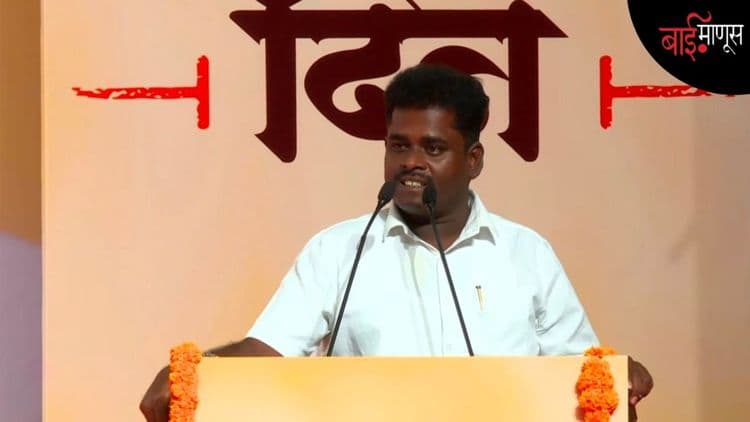
Dr. Mukund Kule, a scholar of folk art and culture, highlights Vidyadhari Bai's contributions in an article in Saamna, illustrating how the Kothewalis were directly involved in India's fight for independence.
India shall never feast on chains,
The time approaches when freedom reigns.
Our homeland calls; we are her kin.
For Mother India, we’ll our heads rescind.
In one of her vibrant concerts, Vidyadhari Bai sang a mujra of Azadi at the kothi, sending the audience into a frenzy. This performance, attended by prominent landlords, nobles, and wealthy merchants, took them by surprise. It was unexpected for them. They were bewildered, but Vidyadhari Bai was deeply moved by the Indian freedom struggle. Previously singing for admirers, she now wishes to sing for her country. Her songs resonated across India's institutions, captivating millions with their powerful voices and melodies. Yet, to all, she remained a Kothewali Tawaif of Banaras. When the chance to join the mainstream arose, she embraced it with a smile.
Someone had appealed to him to sing freedom songs along with your usual songs. Let the spark of Indian freedom struggle reach the people through your song-voice... and the person who made this appeal was not easy, but it was Mahatma Gandhi!

Mahatma Gandhi: 'Let the Spark of Freedom Reach the People Through Your Song...'
In 1930, Mahatma Gandhi visited Banaras with a mission: to ignite the spark of the freedom struggle through the power of song. Recognizing the importance of involving women in the movement, he reached out to the Banaras Kothewalis, urging them to join the fight for independence. Gandhi appealed to them to abandon their traditional roles as tawaifs and contribute to the nation's liberation. His call was clear: let the melody of freedom inspire and mobilize the masses.
In response to Gandhi's call, renowned singers Husnabai and Vidyadharibai from North India immediately joined the freedom struggle. Under Husnabai's leadership, they established the 'Akhil Bharatiya Tawaif Sangha' with a mission to reject the traditional Kotha culture and empower women to lead dignified lives.
The future of this movement faced significant challenges. White women involved in the freedom struggle opposed their participation, raising a major social question: How would general society accept these women? Despite the uncertainty, their bold step marked a pivotal moment in the fight for independence, symbolizing the transformative power of unity and determination.
Vidyadharibai earned money through her performances and generously donated a substantial portion to the freedom movement
Vidyadharibai did not immediately close her kotha. Instead, she began performing even more fervently, earning money through her shows. Remarkably, she donated more than half of her earnings to the freedom movement. It was unthinkable for many that a revered leader like Gandhi would appeal to them to join the struggle and sing songs of freedom. Yet, Vidyadharibai embraced this call wholeheartedly. Until independence, she sang "Mujra of Azadi" at every performance, blending her art with activism. In support of Gandhi's 'boycott of foreign goods' policy, she even sold her foreign clothes, further cementing her commitment to the cause.
The house in Banaras became a secret refuge for underground freedom fighters. The British raided her home multiple times, but they never found anything. The freedom fighters cleverly disguised themselves as musicians—sometimes as sarangiyas, sometimes as tabliyas. Yet, despite their significant contributions, Vidyadharibai, Husnabai, and others like them were largely overlooked. Why should anyone acknowledge their work in the freedom struggle? They were women from a marginalized, middle-class society, often dismissed by the mainstream. But their courage and sacrifice played a crucial role in India's fight for independence, proving that heroes can come from the most unexpected places.

Establishment of the 'Akhil Bharatiya Tawaif Sangha'
Mukund Kule further writes that society has never taken the lives of women in the kothas seriously. Instead, their neighborhoods were forever branded as 'Badnam Gali.' But had anyone looked into the homes of Tawaif women, they would have seen not just artists but individuals with a deep desire to contribute to society. These women were never embraced by the mainstream, and no one ever called them their own.
Mahatma Gandhi was the first to include these women in a nationwide movement like the freedom struggle. Given this opportunity, why would they have held back? Dancing, singing, jewels, and royal splendor were integral to their lives, but this didn't mean they lacked interest in society or their country. Gandhi truly understood this. He recognized their potential and their yearning to be part of something greater. This foresight allowed the Tawaif women to transform from entertainers into powerful contributors to India's fight for independence.
Rasool Bai vowed not to marry until India gained independence
Rasulan Bai, a legendary Tawaif from Dalmandi, known for her mesmerizing Thumri songs like 'Fulgendwa Na Maro, Maika Lagat Jobanwa (Karejwa) Mein Chot...,' took Gandhi's Swadeshi movement to heart. She stopped wearing ornaments, a significant gesture for a high-profile Tawaif. Rasool Bai kept her vow until India achieved independence. In recognition of her contributions, she was honored with the Sangeet Natak Akademi Award in independent India. Her life stands as a testament to the profound impact of the freedom movement on individuals from all walks of life.
Senior journalist Amitabh Bhattacharya notes that revolutionaries not only frequented Dalmandi but also participated in dance and song concerts held in Rajadarbars, Nawabs' palaces, and temples during the Indian freedom movement. Tawaif Jaddan Bai, the mother of actress Nargis and grandmother of Sanjay Dutt, played a crucial role in this struggle. Her room often served as a sanctuary for revolutionaries, and the British frequently raided her kotha. Despite these challenges, Jaddan Bai never wavered. Forced to leave her home in Dalmandi, she continued to secretly send money from her concerts to support the revolutionaries. Her unwavering dedication highlights the significant yet often overlooked contributions of Tawaifs to India's fight for independence.

Dulari Bai's defiance echoed through the halls of history, foretelling the fate of the British Empire
Dulari Bai's courage and influence among the Tawaifs of Dalmandi were legendary. During Warren Hastings' attempt to control Banaras, a bully named Nanhku Singh frequented her house. When British soldiers entered Banaras early one morning, chaos erupted in Dalmandi as fighting ensued until dawn. Upon learning of the British invasion, Dulari Bai swiftly removed the bells from her feet and sought out Nanhku Singh. She urgently informed him, "The British have surrounded the Maharaja of Banaras, and Maharani Panna's life is in danger."
Nanhku Singh, despite his reputation, was incensed at the mention of the British. He rallied his companions, and together they swiftly dealt with the British soldiers, resulting in many casualties. Warren Hastings narrowly escaped disguised as a woman, thanks in part to Dulari Bai's timely warning and Nanhku Singh's fierce retaliation. Many overlooked aspects of the Kotha culture deserve to be illuminated once more. Their lives and artistic contributions, including their dancing, have often been unfairly discredited and should be revisited to appreciate their true significance.
Translation : Raj Patil