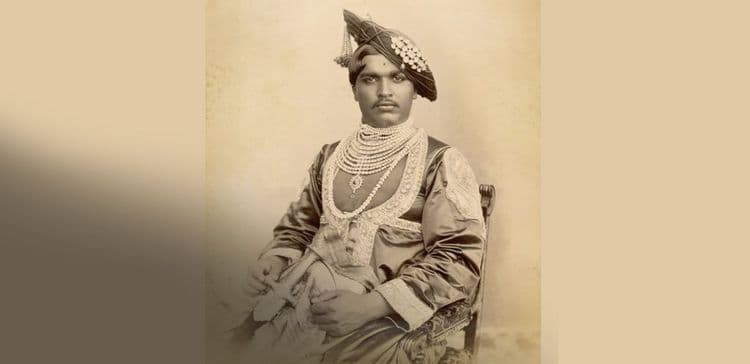
Unfortunately, even today, some people get goosebumps when Shahu Maharaj's name is mentioned. Some people have nothing to do with Shahu's thoughts but like to mention Shahu's name while waking up. While some think Shahu's ideas are great only in line with reservation, those people think Shahu is only the originator of reservation.
Some people love Shahu only for his caste ornaments! Some people feel close to Shahu due to political convenience. The entire Shahu Maharaj is digested by very few people! There are a large number of people in the society who both admire Shahu without knowing the full extent of it, and those who break their fingers on his behalf in private. But there are very few people who have wholeheartedly accepted Shahu without any intervention!
It is a situation that needs to be researched to know how much the people running their shops in the name of Shahu know their history and ideology. Even today, Shahu is known as the source of inspiration for many people's social consciousness. Paper sweetness of equality and fraternity is still sung everywhere but the experience is that noses are turned up when doing real work, that's why even after one and a half hundred years of Shahu's birth, a leader who walks exactly according to his ideal throughout his entire life does not exist today.

Shahu's anniversary today! Several years before independence Rajarshi Shahu Maharaj implemented the principles of equality, fraternity, secularism, equal opportunity for development in Karveer Sansthan. That is why he is glorified as "Maharaj of Maharajas" all over the country. Shahu Maharaj was given the title "Rajarshi" by the Kurmi Kshatriya community of Kanpur. Rajarshi Shahu Maharaj's original name was Yashwantrao. He was born in Ghatge family of Kagal in Kolhapur district. Maharaja ruled for about 28 years. Rajarshi Shahu Raja was very passionate about the education of Bahujans.
Because education is an effective weapon that frees man from animality and brings him to humanity. Therefore, he said that without education, we will not be liberated. That is why he enacted the law of compulsory free education in the state of Kolhapur. Not only this, schools were built in villages with a population of 500 to 1000. And if Maharaj did not stop at this, the parents who will not send their children to school will be given Rs.1 per month. Legal provision for levy of penalty is made. He made primary education compulsory and free in his state.
In order to eradicate untouchability, he stopped the evil practice of running separate schools for upper castes and untouchables in 1919. He also implemented activities such as Patil schools that provide education, schools that provide practical vocational education, and schools that teach techniques and skills for the village patla to run its affairs well. Shahuraje remained successful as his name suggests due to his achievements. Rajarshi Shahu Maharaj established himself as a great humanist king who carried on the legacy of Chhatrapati Shiva Raya's thoughts and work with great ability.
Even though the King of this broad vision was a monarchy at that time, social fraternity, equality, rescue of Dalit and marginalized brothers, education, agriculture, industry, arts, sports and health are not possible even in today's democratic government. Such a unique work was done.
If the people of castes who are considered backward are to be brought into the stream of overall development, provision of reserved seats should be made for them. Keeping this broad vision in mind, this hard-nosed social reformer announced on July 6, 1902 that 50 per cent seats would be reserved for backward castes in the Kolhapur state. He was not a king who stopped by just announcing, but quickly implemented and called for a report from the concerned officer. Shahu's decision was opposed by many upper caste leaders who were then called social activists. Many kinds of accusations were made against Rajarshi.
He provided reserved seats to the untouchables (a caste considered untouchable at that time) and got them government jobs. He passed an order in Kolhapur State that the (then) untouchables should be treated equally in schools, hospitals, water bodies, public wells, public buildings etc. In 1917, he passed the Remarriage Act and legalized widow marriage. He also created a law to stop the practice of devadasi. In the year 1916, the organization 'Deccan Ryat Association' was established at Nipani.

At that time, the religious system kept women very marginalized. Their rights, rights, were denied, women meant only the hearth and the child. At that time, in the name of religion, a very strange practice of giving children to gods was going on in our country. But the kings stopped this practice by passing the Jogtya-Murali Prohibition Act in their state.
nter-caste and inter-religious marriages were legally approved in our institution to eradicate caste discrimination. He passed such a law and while actually implementing it, he arranged the marriage of his cousin to Yashwantrao Holkar from the Maratha community. Not only this, almost a hundred Maratha Dhangar marriages were conducted in the Sansthan.
Through many such activities, he gave respect and status to women. On the contrary, today in the twenty-first century and even in the democratic system of government, women are being victimized on a large scale through many means like female feticide, downa sacrifice. Today, if we want to get women out of this crisis, it is the need of the hour that we adopt Rajarshi Shahu's comprehensive approach to women.
Many tribes who were victims of the caste system in that time were following wrong ways like thieves and robberies. The orthodox caste system marginalized them and denied them the right to education, power and wealth, making their lives miserable. As a result of that, they followed the path of thieves and robberies. Therefore, the British government branded this tribe as criminals. He had to attend the village worker every day. Shahu Raja was fond of these people. Because they were truly kings of the underprivileged. So Shahu stopped the attendance system.
The people of these castes and tribes were united and discouraged from crime. They were given jobs in the institute. Guards, guards, charioteers were created from them. Houses were built for them. Accommodation was provided to the people who wandered in the forest. Food was provided. Therefore, people who were branded as criminals started to behave with dignity in the society as human beings.
Rulers ruling over criminals will be seen everywhere. But the king who makes them his own with love and affection and gives them social status in the society and creates self-respect in them is rare.
The Vedokta conflict over the right to recite the Vedokta mantra took place during the reign of Rajarshi Shahu. It was a storm in the social life of Maharashtra. The truth-seeking movement was further inspired by this case. In a sense, he carried forward the tradition of Mahatma Phule while working to achieve the all-round development of the Bahujan, untouchable society. He directly supported the Satyashodak movement.

Establishment of 'Shahu Chhatrapati Spinning and Weaving Mill', establishment of Shahupuri market place, establishment of jaggery market, establishment of cooperative societies of farmers, construction of Radhanagari Dam, providing loans to farmers in his institute, he implemented activities which were extremely successful. Rajarshi made new experiments in the fields of agriculture, industry and cooperation. He supported research to modernize agriculture, established the 'King Edward Agricultural Institute' to increase the use of cash crops and technology.
At that time, Shahuraj considered the importance of water and built a project called Radhanagari. Radhanagari dam was constructed with the vision that the ryots will not have to face drought in the future. Rajarshi Shahu did the honor of encouraging artistes in the fields of music, film, painting, folk art and wrestling in Kolhapur State by providing royal shelter to them.
Maharaja gave financial and other help to the freedom fighters of Kolhapur, Belgaum from time to time. Shahu Maharaj and Bharat Ratna Dr. Babasaheb Ambedkar's relations are well respected. Dr. Babasaheb first published the weekly 'Mooknayak' on 31 January 1920. But due to financial problems, it was later closed. But when Rajarishi Shahu Maharaj noticed this, he immediately provided financial help.
Today Shahu Raja's birth anniversary is celebrated everywhere. But only this will not be the essence of their thoughts and work. Shahu's fight was for equality. It was for self-esteem. It was against the egoistic tendency of caste supremacy. Today, after the Shahu kings, the rulers who are cheering for them and enjoying power in their name are torturing the poor people. Even today, a class is jealous of them. Nowadays corruption and hooliganism are rampant.
Shahu's reigns are restricted only to birth anniversary and death anniversary. We have forgotten their legacy, thought, work. Rajarshi Shahu enacted many laws for public interest in his state under adverse conditions. Criticism, insults and infamy were ignored on occasion. Today's rulers do politics in the name of Shahu. But they are afraid of keeping their thoughts. This is unfortunate….
Greetings to this great folk king on his birth anniversary...