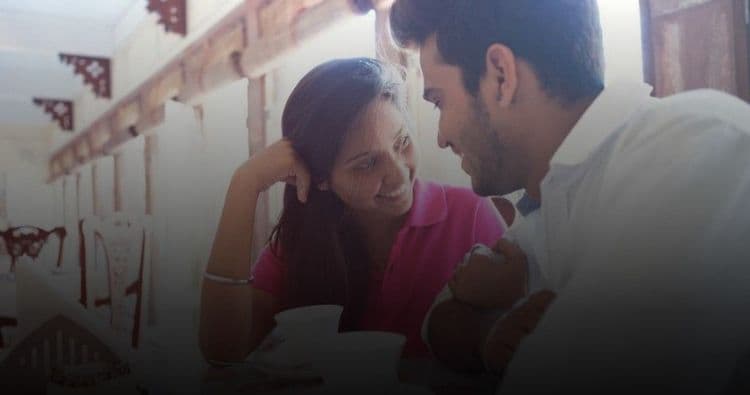
The way of giving a name to the relationship depends on the ideas of that time. As these ideas change over time, other socio-cultural contexts also play an important role. To give an example, the young people we spoke to during the 'Youth in Transition' research were living in Pune. It was obvious that they would have come to study and work but were now living in the Pune environment and would be looking at their relationship with the frames of ideas about relationships of the youth there. These boys and girls presented their views to us about many types of relationships.
Those who said the relationship was 'serious' admitted that there was an emotional investment in the relationship, not only that, but that neither partner wanted to be in a relationship with the other person. A relationship with a third person is a betrayal of a previous relationship! It will not only affect the relationship, but it will affect the mind very deeply. There was also such an understanding. He also assumed the duration of this 'serious' relationship to be long-distance. Marriage (or something similar) is often intended to result from this relationship. Due to differences in caste and class, some expected opposition from the householder and decided not to pursue the relationship, even considering it as 'serious', or ended the relationship due to fear of opposition.
Related circles :
- https://baimanus.in/article-about-prayas-institute-program-of-youth-in-transition-about-sexuality-relationship-and-mental-health/
- https://baimanus.in/article-about-prayas-institute-program-youth-in-transition-about-sexuality-and-relationship/
In contrast, when the relationship was said to be 'casual', there was less emotional investment from both parties, and lower expectations of commitment and durability of the relationship. 'Friends with benefits' is a relatively new form of friendship. This friendship may involve sexual intimacy. These relationships are not necessarily sexual, but sexual intimacy does not necessarily mean that they consider each other to be 'partners'.

Often, at the beginning of a relationship, there is a desire for freedom. It is assumed that in the type of relationship is 'open relationship'. In this arrangement, both partners have mutually agreed that they can be interested in other people, even have sexual relations. They don't necessarily have a relationship with each other. Sometimes the emotional investment will be there and sometimes it will be more or less. We are still unraveling the fabric of this relationship – such a situation is called an open relationship.
This relationship may end or even result in a 'serious' relationship if the nature of each other matches. In all these types of relationships there were, of course, many assumptions. Both sides do not necessarily have the same understanding of the relationship, not necessarily the same expectations, but the creation of a language about it is also a definite complement to communication.
Many also said that they cannot give any name to the relationship. They were in no hurry to name the relationship. Once a name was given, the framework of ideas and expectations that came with that name came to be accepted. It seems unwelcome. Eki said, “Standing on my own feet became a priority for my father when he was financially devastated. I never really thought about marriage. I have been in relationships with three people so far, but those relationships had no names. We were verifying the nature of the relationship. When the relationship broke up, it didn't even affect me that much. I don't allow myself to get too caught up in anyone."
This does not mean that today's young generation - they just want to have fun, not at all, quite the opposite. We realized that the behavior of young boys and girls was an attempt to understand exactly what we feel and to communicate clearly in our relationship, to say what we feel, to know the other's mind. This has led to an openness, at least an awareness, of the relationship, reducing the chances of relationship turmoil and, in turn, abuse (not that this ever happened at all, of course). Today's generation does not want to get involved in the entanglements of relationships, but is trying to look at those relationships seriously and try out the possibilities of understanding them. There was also a sense of equality in it. They want this awareness to be more reflected in their actions, as well as to be accepted and respected by people of other generations around them.
One participant says, “After my very difficult breakup, my best-friend and I became very close. He, too, had just broken up, and we were both alone. We used to talk to each other constantly. In that, we decided to come closer physically without any commitment. I love him, we tell each other everything in our hearts, in life. He also takes great care of me if my health or mood is not good. We meet at least once a week. Physical intimacy happens once in two-three months. But I don't feel possessive or passionate about him beyond that. I don't mind if he has someone else in his life. Also, our caste is different. Although it didn't matter to us, from a family point of view, we couldn't have taken the relationship seriously - even if it had been decided. And according to the family, marriage has to be done. What is the use of thinking about marriage to myself? My parents want me to marry a boy from our caste. I will do the same going forward. A decision to spend your life with a stranger is true, but what choice do I have? My best-friend and I have both talked about this. He, too, will listen to his family and have an arranged marriage.”
Listening to this, one feels that despite being aware of one's own wants and-don'ts, one has to accept the reality of traditional, caste and untouchability-based marriage institutions either against one's mind or its presence at the bottom of the mind is not wiped out, even if there is a change in the surface life. Considering marriage as an important stage, other thought processes, decision processes are taking place on its side. Out of 1240 boys and girls, almost 50% of boys and girls had 'serious' relationships. (Married people are also included in this 50%.) 20% were in other types of relationships mentioned above.
Apart from all this, many also talked about dating for a very short period of time, (less than a month) spending an hour, a day or a night together, or for a temporary period—a week or two weeks. Only 80% of all participants reported that they had ever been in at least one relationship (of the above types).

Some, however, said that they have never been in any relationship, and the main reason behind that was the question. Were they not in the relationship by choice? Or because of someone's pressure? Or was it difficult for them to find a partner? The answer to this was seen to be different between boys and girls. Boys said that despite trying to find a partner, they were unsuccessful, and for girls, a family background of old ideas was the main reason for not forming a relationship. He said that his family would not tolerate him being in a relationship, and he knew that very well. However, 16% of boys and 19% of girls who were not in a relationship said that they themselves did not want to be in a relationship.
“I feel these things are not for me. I still don't think I'm 'from Pune' and don't know how to talk to girls. If a girl comes to talk, I feel sexually aroused, and then I avoid talking altogether. Even so, how can I find a girl here who will adapt to the village house?” A boy said this during an interview.
Was there a difference between those who decided to be in a relationship and those who decided not to be in a relationship? We have a growing perception that sex education will lead to an increase in irresponsible behavior. In our research, sexuality education only increased information and knowledge. It was seen that having a sex education had no effect or influence on any decision about whether to be in a relationship or what kind of relationship to have.
However, growing up experiences played a major role in these decisions. He said that the financial situation of the family, the level of addiction in the home, discord, constant fighting between parents all affect the decisions of the young.
Youth who were heavily restricted during adolescence (ages 10 to 18), such as not dressing up, meeting heterosexual friends, or staying out late at night, were children who stayed at home. Those boys and girls were more than three times more likely to decide to move into relationships as soon as they got the chance than boys who had no restrictions imposed on them. Of course, the participants had different opinions on whether these things should be considered 'constraints' or not. Some also reported that parents' saying about time/dress/whom to meet/whom not is 'for our own good' and should not be considered binding.
Childhood sexual abuse was also found to be associated with relationship choice in some places. The effects of sexual abuse can be long-lasting. Two mutually exclusive outcomes were observed: being afraid to pursue intimacy and not being able to get into a relationship at all, or, conversely, having multiple casual relationships. But it cannot be said that only one of these had an effect.
The current conventional wisdom is that social media, Facebook, are the most likely to start relationships, but of the 1,240 people we spoke to, only 14% had started relationships this way. The number of people who actually meet and start a relationship is much higher than those who meet on dating apps.
Those who spoke about polyandry also spoke with full awareness and strength about it. Norms for polygamy are still forming, people are talking about it. This process will not happen quickly. The process of expanding the socio-cultural framework is a slow one, but there is definitely room to imagine a picture where the meanings and definitions within them will become less gray. But the context of everyone's life is different. We have to interpret our own contexts, like education, work, migration, friends, spouses in different places, home background, childhood experiences etc., what we want and what we don't want.
This generation has moved forward on the path of understanding that we should not make decisions just to continue what has been going on so far. It is, of course, connected to the space created by technology, social media, urbanization.
All this reality certainly cannot be given the name of irresponsibility that is so recklessly given today.