- Sanjana Khandare
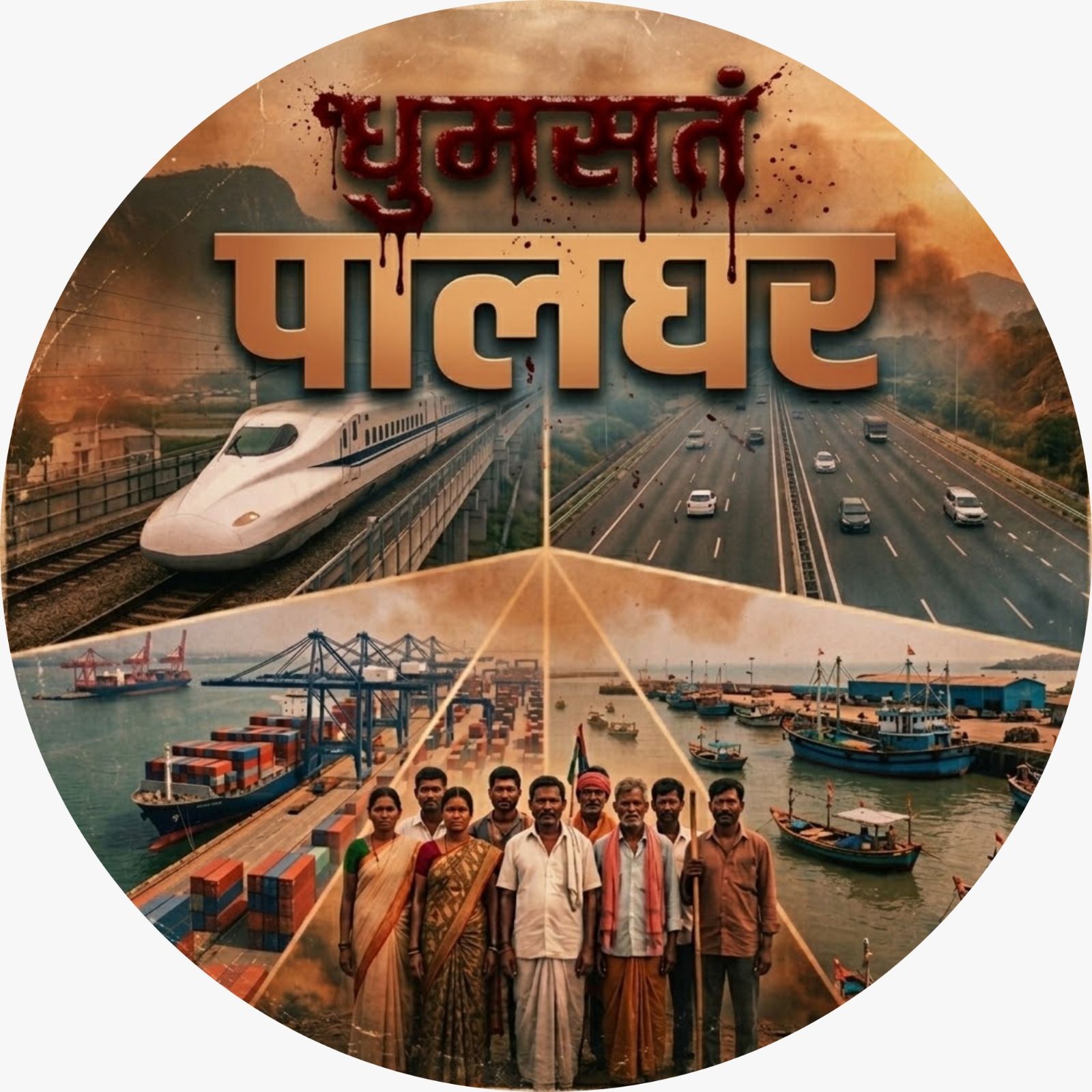
- Palghar district is Smouldering… With projects like the bullet train, expressway, Vadhvan Port, and now the vision of a ‘Fourth Mumbai,’ development is accelerating but it is also giving rise to several fundamental challenges. BaiManus has launched a special series to take a closer look at this issue.
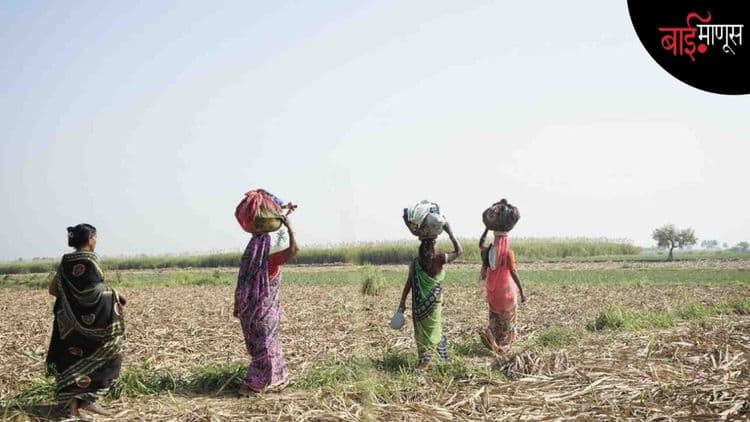
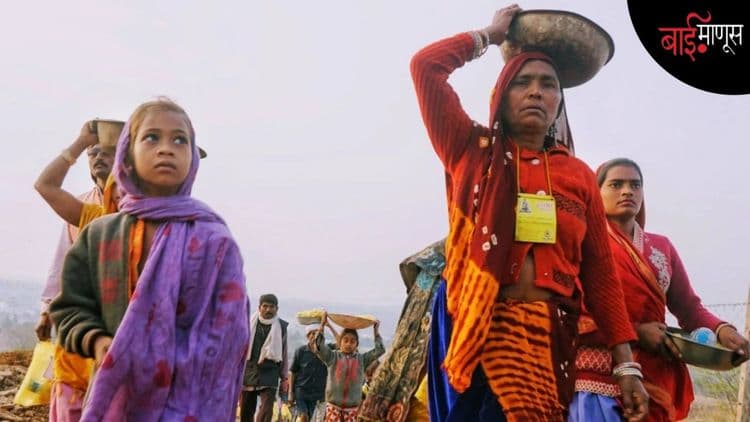
- As projects like the bullet train and expressway pass through the talukas of Dahanu and Talasari, they are disrupting the homes, farmlands, and everyday lives of local farmers and Adivasi communities.
- Several families are yet to receive compensation. While some struggle with layers of dust settling inside their homes, others say they have lost their sleep entirely.
- Projects undertaken in the name of development are leaving a deep impact not just on the lives of local Adivasis, but also on the surrounding environment.
Projects like the Mumbai-Ahmedabad Bullet Train look impressive on paper. It feels like the country is moving forward. But for the people of Dahanu and Talasari, the reality is far from simple.
Land cultivated over generations, the very thresholds of their homes, everything is being pushed under the margin of this project. Some families are yet to receive any compensation, while others are uncertain whether the amount they received can secure their future.
Dust-filled homes, cracked walls, sleepless nights and a constant anxiety about what lies ahead. The project may be completed in the coming years, and the bullet train may run at full speed. But what about the lives it has disrupted?
Who will answer their questions, and who will heal the uncertainty they are left with? Over the past few years, large-scale land acquisition has been taking place in the Talasari and Dahanu talukas of Palghar district. Concrete pillars lining the roads, yellow markings across farms, and hills being dug up at several locations. together, they clearly signal that development work is in progress. But behind this visible progress lie some pressing questions:
“Did anyone ask us?” “What happens to us after losing our farmland?” “We haven’t even received compensation, how are we supposed to survive?”
These are not just questions rather they are voices from the tribal hamlets of Talasari. Two major national projects cut through this region, the Mumbai-Ahmedabad Bullet Train and the Mumbai-Ahmedabad Expressway. While they are projected as symbols of India’s infrastructural growth but on the ground, they are triggering a very different conversation, one of displacement, uncertainty, and survival.
Conversations with farmers, women, youth, and local representatives who have lost their land reveal a clear gap. the government has failed to fully understand the difference between the idea of development on paper and its real impact on the ground.
For Adivasi families here, land is not just property but it is their primary source of livelihood. Their lives are built around farming, seasonal work, livestock, and a deep connection with the forest.
In such a situation, when a project line cuts through the middle of their farms, it is no longer just a question of land, it becomes a question of their future, their survival, and their way of life.
How do these projects, carried out in the name of development, actually look from the ground? How transparent is the compensation process? What impact are they having on the environment? And most importantly, to what extent are local voices being heard? This ground report by BaiManus seeks to find answers to these questions.
LAND, CONFLICT AND FEAR… THE REALITY OF THE BULLET TRAIN
“This bullet train has cut through the lands of thousands of farmers. People resisted strongly, but the land was ultimately acquired with the deployment of police forces,” says Lahane Dauda, President of the Janwadi Mahila Sanghatana in Palghar district. There is anger in her voice but even more than that, a deep sense of disappointment.
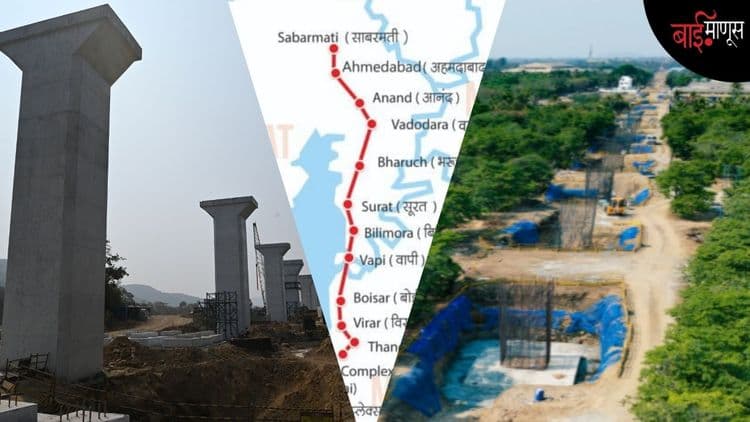
The Mumbai-Ahmedabad Bullet Train project stretches up to approximately 508 km, passing through Maharashtra, Dadra and Nagar Haveli, and Gujarat. A total of 12 stations have been proposed along this route, including Mumbai, Thane, Virar, Boisar, Vapi, Surat, Bharuch, Vadodara, Anand, and Ahmedabad. land has been acquired from around 28 villages in Palghar district for this project, which directly impact several Adivasi villages in the Talasari and Dahanu talukas. the project was initially estimated at around ₹1.1 lakh crore. However, due to various factors, the cost is now reported to have escalated to nearly ₹1.98 lakh crore.
This project is being implemented as a collaboration between India and Japan. Japan is providing low-interest funding along with ‘Shinkansen’ technology. Shinkansen refers to Japan’s advanced high-speed bullet train system, considered one of the fastest, safest, and most efficient railway networks in the world. Introduced in 1964, these trains run at speeds of 300 to 320 km per hour. With dedicated tracks, advanced signalling, and earthquake detection systems, the network is known for its precision and high safety standards.
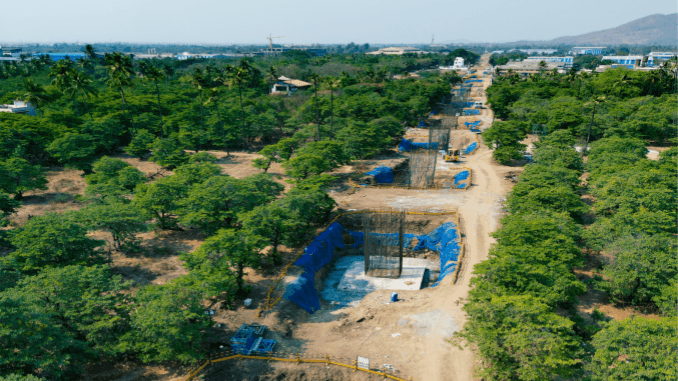 Bullet Train Route Passing through Adivasi Community Land
According to official sources, the first phase of the project is planned to be operational by 2027. the entire project is expected to be completed in phases over the following years.
In Dahanu taluka of Palghar district, large-scale land acquisition has taken place in Dhamangaon, Kavthepada, and nearby hamlets for the bullet train project. According to locals, while the land acquisition process appears transparent on paper, several concerns remain unresolved on the ground.
“The government fixed the rates, but the compensation was neither fair nor adequate. In some cases, less land was shown on paper while more was actually acquired. Some received notices, but the compensation was transferred to someone else’s account,” several villagers claims.
The situation is even more complicated for farmers cultivating forest land. “The land is mine, the notice comes to me but the compensation goes directly to the forest department,” says Laxman Kakad.
As a result, many families are forced to visit government offices repeatedly, trying to navigate a system they say they barely understand.
“WE RESISTED… BUT NO ONE LISTENED TO US”
Govind Ladke, a resident of Dhamangaon Kavthepada in Dahanu taluka, says,
“When the police came here, I strongly resisted. But no one listened to us. We were put under pressure. The officials and police warned us that if we opposed, we would be arrested. During the initial measurement, we were told that only 17 metres of land would be taken. But later, additional land was used to unload materials and for machinery related to the project. We have not received a single rupee as compensation for that extra land.”
A generator has been installed right outside Govind Ladke’s house. He says, “We can’t sleep at night. The noise from the generator is so loud that even small children are unable to sleep. Heavy vehicles and trucks keep passing right in front of our house. The dust is so intense that it becomes difficult to even sit inside the house.”
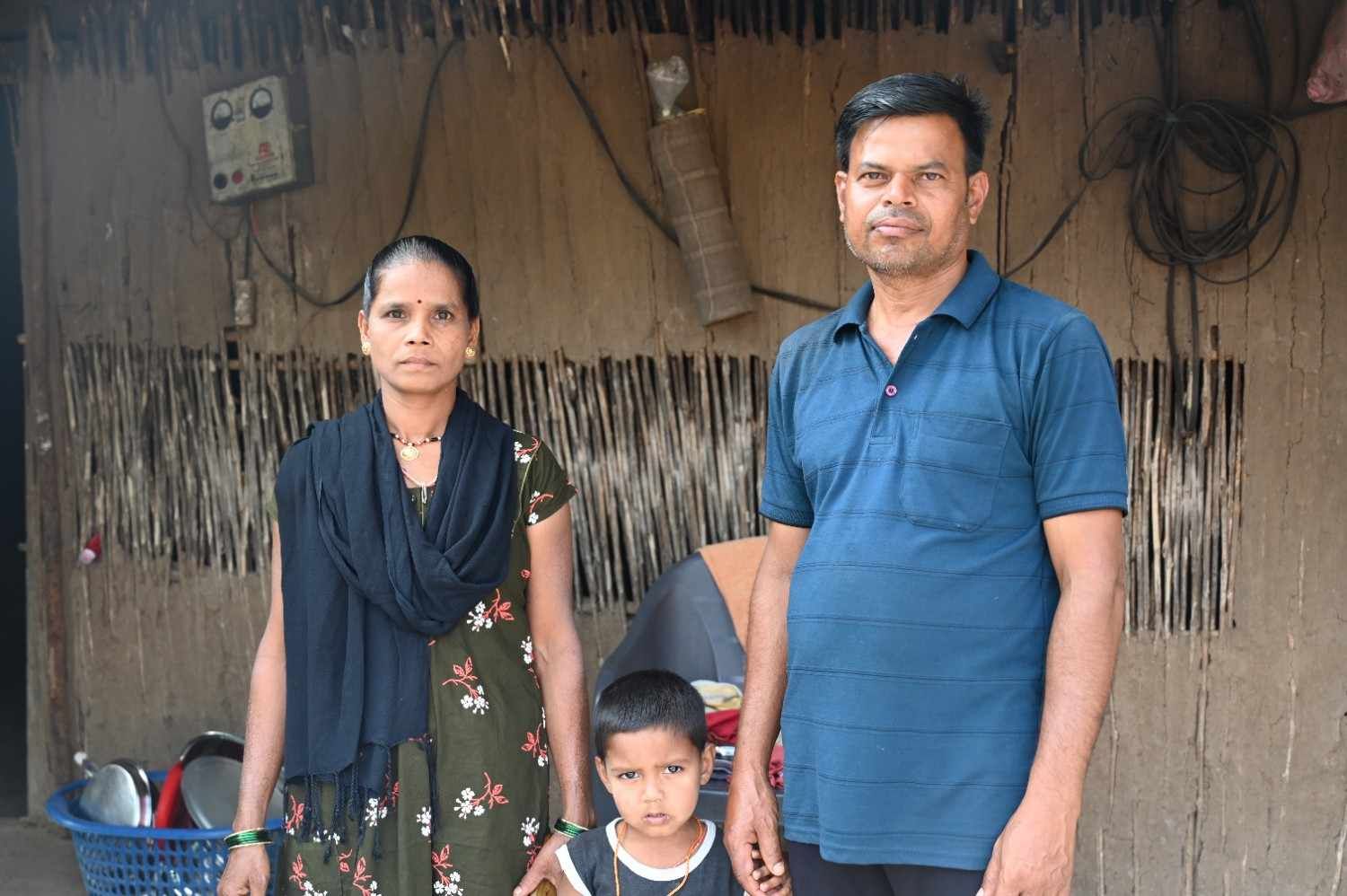 (Govind Ladake and His family, Photo Credit - Komal Thombare)
This region, once nestled in the hills, was known for its greenery. However, locals allege that large scale tree cutting has taken place for the bullet train project.
“Trees are being cut down in huge numbers. The hills are being stripped bare. Due to excavation, land filling, and constant movement of vehicles, dust levels in the area have increased significantly. This dust enters our bodies through our nose and mouth. There are already no proper healthcare facilities here and even for minor illnesses, we have to travel to Gujarat or Mumbai,” says Priyanka Ladke.
STRONG RESISTENCE TO THE BULLET TRAIN PROJECT CONTINUES IN CHARI - KOTBI
In Chari-Kotbi village of Dahanu taluka in Palghar district, work on the bullet train project remains incomplete, even as strong opposition from locals continues. Speaking to BaiManus, Lahane Dauda, President of the Janwadi Mahila Sanghatana, says,
“In several parts of Chari -Kotbi, only concrete pillars have been erected, while further work remains pending. This is because there are multiple issues in the land acquisition process. Some farmers have not received proper compensation, while in certain cases, payments have allegedly been made to other people rather than those actually cultivating the land.”
Against this backdrop, locals in Chari- Kotbi have continued their resistance in an organised manner. Villagers have held meetings, questioned the administration, engaged in discussions with officials, and raised objections directly at project sites.
Notably, representatives from the Japanese company involved in the project had also visited the village for inspection. During their visit, locals strongly raised concerns around displacement, demolition of homes, and rehabilitation.
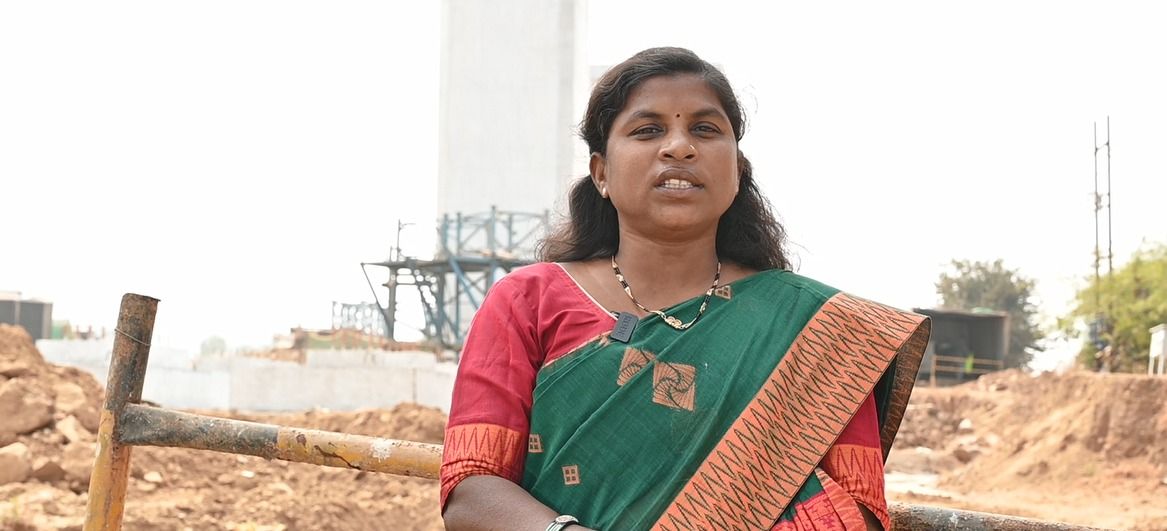 Lahane Dauda (Photo Credit - Komal Thombare)
“How will families who are losing their land and homes be rehabilitated?” this direct question was put to the officials. However, no concrete assurance has been given to them so far.
Moreover, the absence of a clear rehabilitation plan for effected families has further deepened local resentment. As a result, opposition to the bullet train project continues to persist in Dahanu, including Chari -Kotbi. Villagers have warned that their protest will continue until they receive fair compensation and rehabilitation.
MIDDLEMAN, LAWYERS, AND CONFUSION OVER COMPENSATION
According to locals, middlemen and some lawyers have become increasingly active in this time. “There have been cases where people were told, ‘If you’re supposed to get ₹1 lakh, we’ll take ₹50,000 and you’ll get ₹50,000,’” locals allege. The complexity of documentation, confusion around bank accounts, and bureaucratic procedures have led to financial losses for many.
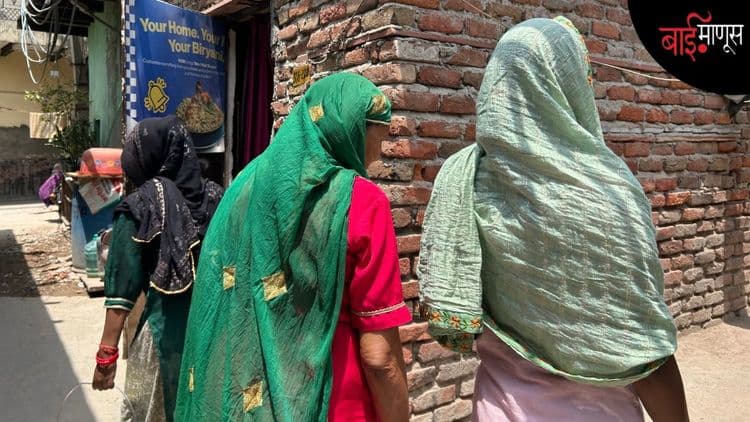
“Those who don’t receive compensation end up running from one person to another and in the process, they get exploited,” says Lahane Dauda. Displacement impacts women the most. everything changes right from home, schooling of kids, and safety. When families are forced to relocate, it directly affects girls education and women’s sense of security. The entire structure of daily life is disturbed.
In one such case from Talasari taluka, an Adivasi family had to leave their village due to the project and move elsewhere. Earlier, their daughter’s school was within walking distance from home. But at the new location, the school is now 5–6 km away.
Due to the lack of transport facilities, children are unable to attend school regularly. At the same time, the unfamiliar surroundings in the new location have created a sense of insecurity among women. whether it is for fetching water, going to the fields, or stepping out for work.
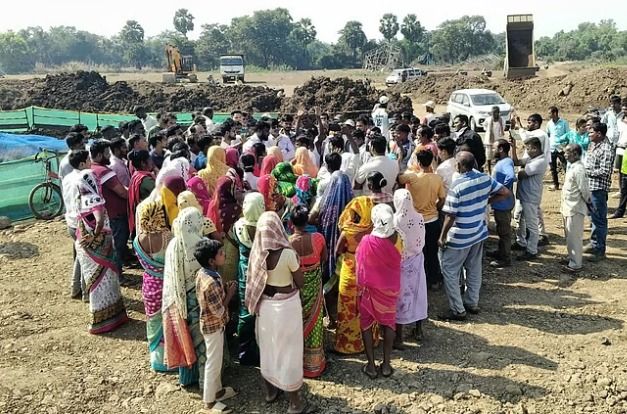 Residents of Chari-Kotbi village continue to strongly oppose the project.
Earlier, the sense of safety came from living in a close - knit community where everyone knew each other. After displacement, that sense of security has weakened.
As a result, women’s daily mobility gets restricted. Similarly, girls education and ultimately their future is directly affected.
“We couldn’t stop the bullet train. But if other projects coming into Palghar continue to affect the lives of Adivasis here, we will come together in large numbers and stand against the government,” says Lahane Dauda.
WHAT EXACTLY IS THE BULLET TRAIN PROJECT ?
The Mumbai- Ahmedabad Bullet Train is considered India’s first high-speed rail project. It aims to cover the approximately 500 km distance between Mumbai and Ahmedabad in just two to three hours. The project is being developed with technical assistance from Japan and involves significant financial investment and loans. A crucial stretch of this corridor passes through Maharashtra, particularly Palghar district.
The project alignment passes through several villages in Dahanu and Talasari talukas. In most stretches, the corridor is being constructed on elevated pillars, while certain sections also include underground tunnels.
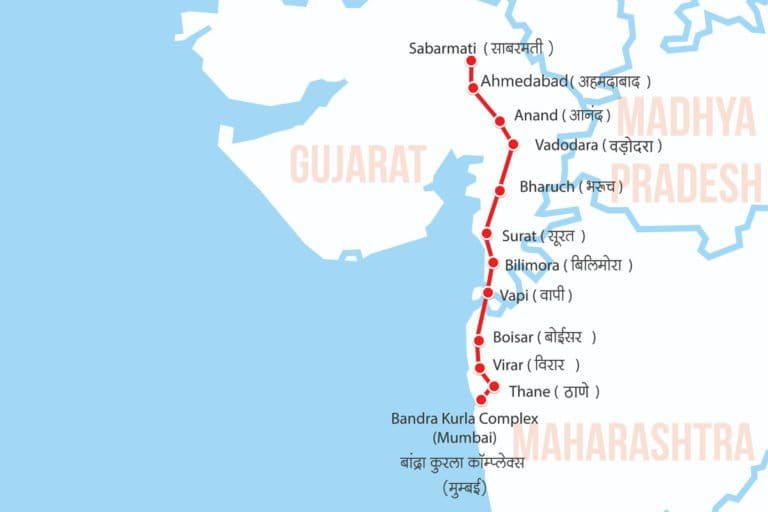
A large- scale land acquisition has been carried out for the project. According to official data, this includes agricultural land, forest land, and in some cases, residential areas. The administration claims that the land acquisition process has been conducted in accordance with the 2013 Right to Fair Compensation and Transparency in Land Acquisition Act.
THE BULLET TRAIN WORK HAS CRACKED THE WALLS OF OUR HOME
Construction work for the bullet train has had a severe impact on local homes. Vanita Mahade Kakad, a 70 year old resident, says her entire house is now covered in dust. She has to keep her windows shut with cloth at all times, as dust from outside constantly enters the house.
“They carry out blasting here for the bullet train work. Large machines are used to dig the land. Because of the constant vibrations, cracks have developed in the walls of my house. The structure has become so weak that I live in constant fear it could collapse anytime. My four year old granddaughter is unable to sleep at night because of the blasting. Every room in the house is covered in a layer of dust. our utensils, our food, the water we drink, even our clothes… everything is filled with dust,”
says Vanita Mahade Kakad.
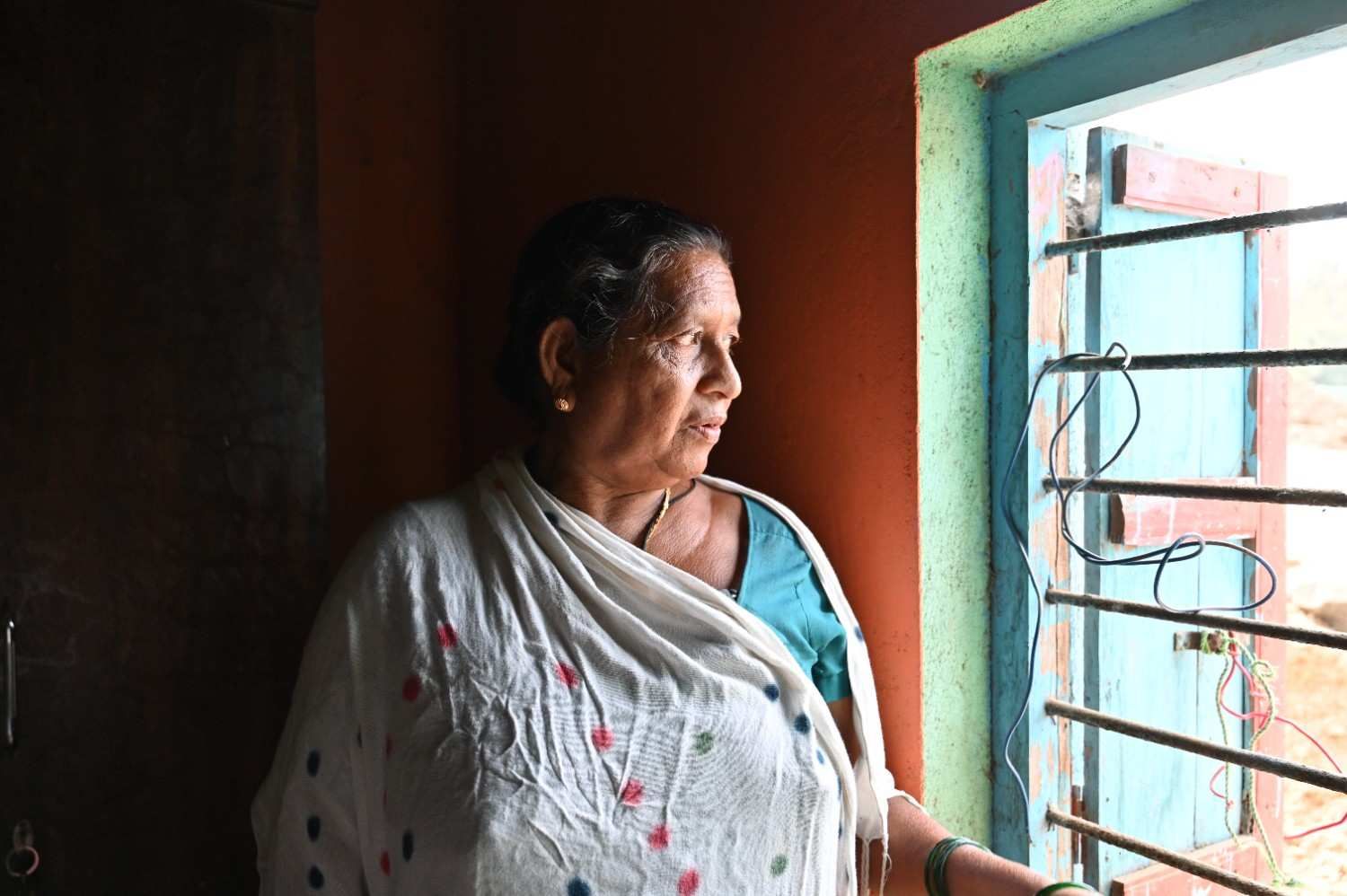 Vanita Kakad (Photo Credit - Komal Thombare)
DEVELOPMENT OR DISPLACEMENT? MLA VINOD NIKOLE QUESTIONS THE BULLET TRAIN PROJECT
Local MLA Vinod Nikole has raised serious questions about the very idea of “development” in the context of the MumbaI - Ahmedabad bullet train project. Speaking to BaiManus, he said,
“This project is being implemented without the consent of local communities and without proper rehabilitation. Large -scale land acquisition has taken place and many farmers are facing difficulties in receiving compensation. In tribal areas especially, several families are still deprived of compensation because their names are not recorded on land documents.”
He further added, “There is still no clear rehabilitation plan for families being displaced by the project. If land is taken away and no alternative housing is provided, where are farmers supposed to build their homes, in the Sky?
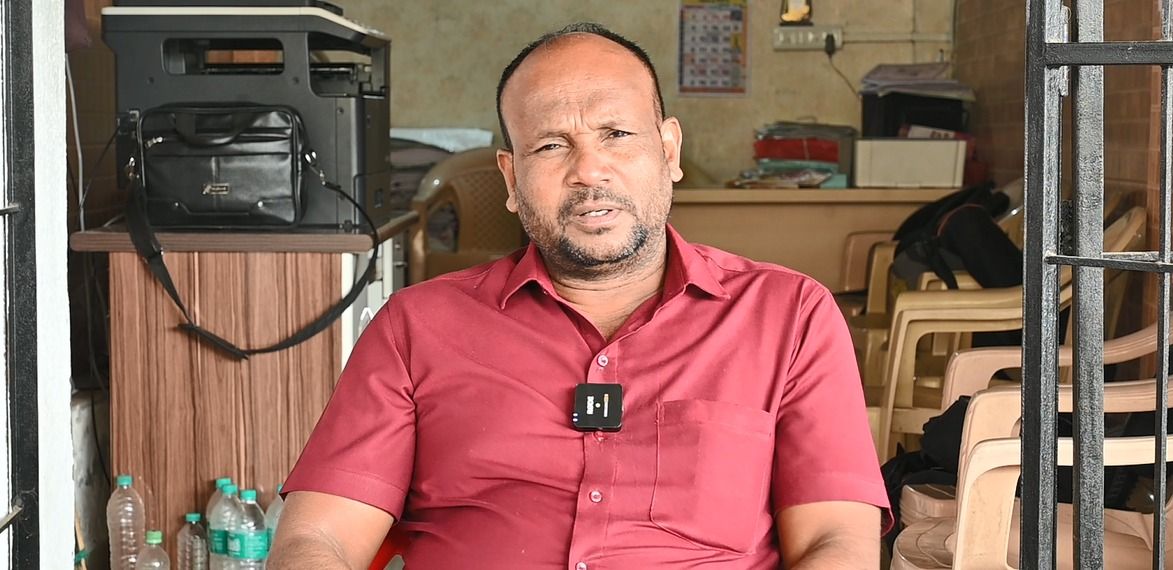 MLA Vinod Nikole (Photo Credit - Komal Thombare)
I am raising this issue in the Assembly as well as actively participating in protests. If needed, we are prepared to take this fight to the courts as well.”
COURT’S STANCE ON THE BULLET TRAIN PROJECT AND KEY RULINGS
Several petitions related to land acquisition, environmental concerns, and ownership rights in the Mumbai - Ahmedabad Bullet Train project have been filed in the Bombay High Court.
In the case of Godrej & Boyce Manufacturing Company Ltd. vs. State of Maharashtra, the acquisition of land in Vikhroli was challenged. The court, however, refused to Stay the land acquisition process, stating that the project is of “National Importance” and serves a “Larger Public Interest.”
Environmental concerns were also raised in separate petitions, particularly regarding the cutting of mangrove forests. In this context, the court permitted the felling of around 22,000 mangrove trees, subject to certain conditions.
The court made it mandatory to undertake large- scale compensatory afforestation for each tree cut, limit felling strictly to what is necessary, and ensure strict compliance with Coastal Regulation Zone (CRZ) norms and other environmental regulations. it also stated that any environmental damage caused by the project must be duly compensated and that all required clearances must be obtained before proceeding.
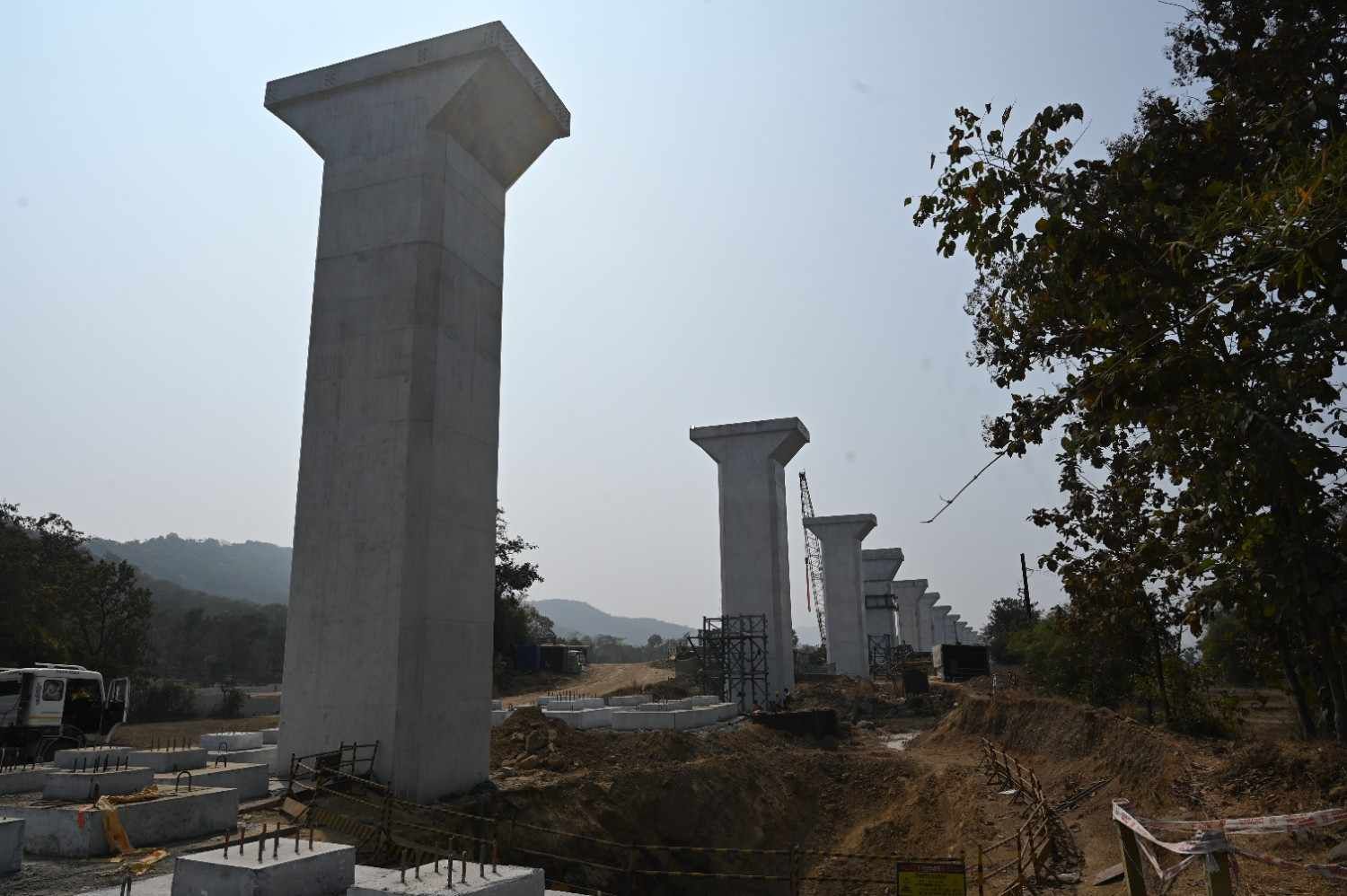 Bullet Train construction is progressing rapidly despite opposition from local communities.
In some cases, disputes related to land ownership and inheritance rights also came up, where the court emphasized proper document verification and adherence to due legal process.
Overall, while allowing the project to proceed, the court made it clear that land acquisition must be carried out transparently, with fair compensation, and with due protection of environmental and local rights.
To be continued… In the next part of “Smouldering Palghar”, we explore the impact of the Mumbai- Vadodara Expressway on villages in Palghar.
Translated By - Sakshi Tangde
Reference - https://www.scconline.com/blog/post/2022/12/19/mangrove-deforestation-bombay-hc-allows-felling-of-about-22000-mangrove-trees-for-mumbai-ahmedabad-bullet-train-project/
(Sanjana Khandare is a mentee at the Climate Change Media Hub of the Asian College of Journalism. The program is supported by Interlink Academy, Germany.)
(This story is produced under Project Dharitri, a joint initiative by Asar and BaiManus on climate change and gender reporting.)