Team BaiManus
The narrative surrounding the climate crisis in Marathwada often defaults to blaming nature, framing the severe droughts and water shortages as unavoidable natural disasters. However, in his address on ‘Reimagining the Future of Marathwada’, veteran journalist P. Sainath dismantled this premise entirely. The crisis in Marathwada, he argued, is not an act of God; it is a meticulously engineered socio-economic disaster. As he pointed out, we should not lay this at the door of nature, because we have spent the last 50 years creating this crisis ourselves.
Fundamentally, Sainath emphasized that climate change and resource scarcity must be viewed through the lens of inequality, framing it, at its core, as an issue of justice.
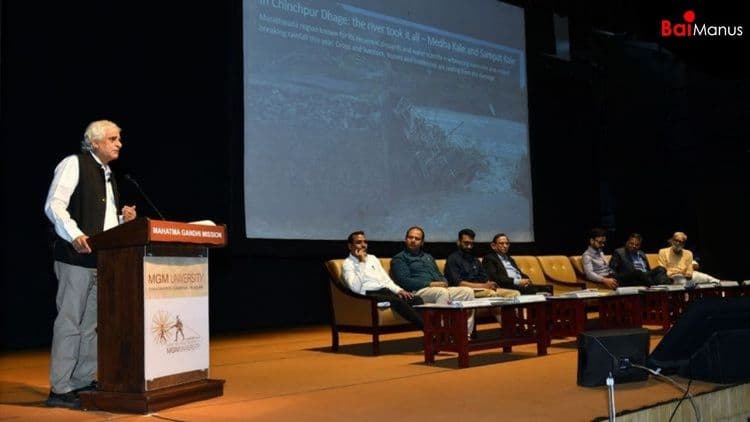
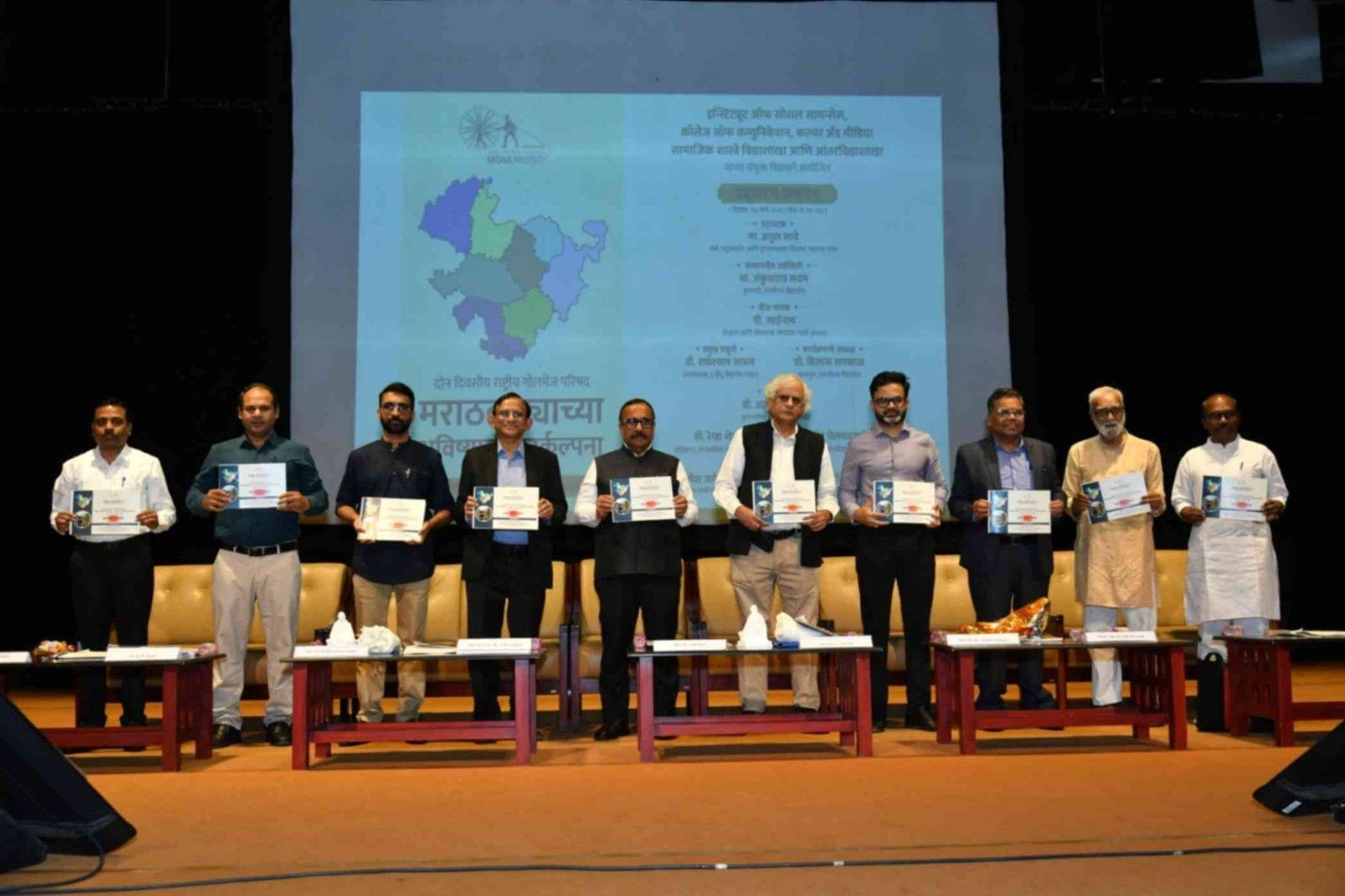
These insights were shared during the inauguration of a two-day national roundtable conference on 'Reimagining the Future of Marathwada', organized jointly by MGM University's Institute of Social Sciences, College of Communication, Culture and Media, and Faculty of Social Sciences and Interdisciplinary Studies at Rukmini Hall on Friday. The event was attended by State Minister for Animal Husbandry and Dairy Development Atul Save, Deputy Editor of The Hindu Business Line Dr. Radheshyam Jadhav, MGM University Vice-Chancellor Dr. Vilas Sapkal, Registrar Dr. Ashish Gadekar, and others.
Addressing the shift in terminology, the veteran journalist and founder of PARI stated,
"In the late 1980s and 90s, major oil and automobile companies spent billions of dollars to debunk the concept of 'global warming' and instead adopted the simple and unaccountable term 'climate change'." He explained that the term fails to fix responsibility, noting, "Weather changes, seasons change, climate changes, temperatures change, which then diverts our attention from the main causes of climate change."
The Economics of Thirst: Factories vs. Families
Sainath identified the pricing and distribution of water as the starkest representation of this inequality. In the Chhatrapati Sambhajinagar (Aurangabad) region, he observed a heavy concentration of beer and alcohol factories around 24 such facilities. For 40 years, he noted, these factories received water at the heavily subsidized rate of just 1 paisa per liter, which only marginally increased to 5 paise per liter after public agitation and court interventions.
He drew a sharp contrast between this corporate subsidy and the harsh reality of the working poor. In the very same region, Sainath pointed out, poor women standing in long queues during the intense summer months are forced to pay between 25 paise to 1 rupee per liter for their daily drinking water. He argued that this gross disparity highlights a system where industrial luxury is prioritized over fundamental human survival.
Furthermore, Sainath detailed how this prioritization extends to urban entertainment. He highlighted that in drought-prone regions, massive "Fun and Food Villages" and water parks use millions of liters of water daily, while neighboring villages run completely dry, effectively multiplying the local water crisis by a hundredfold.
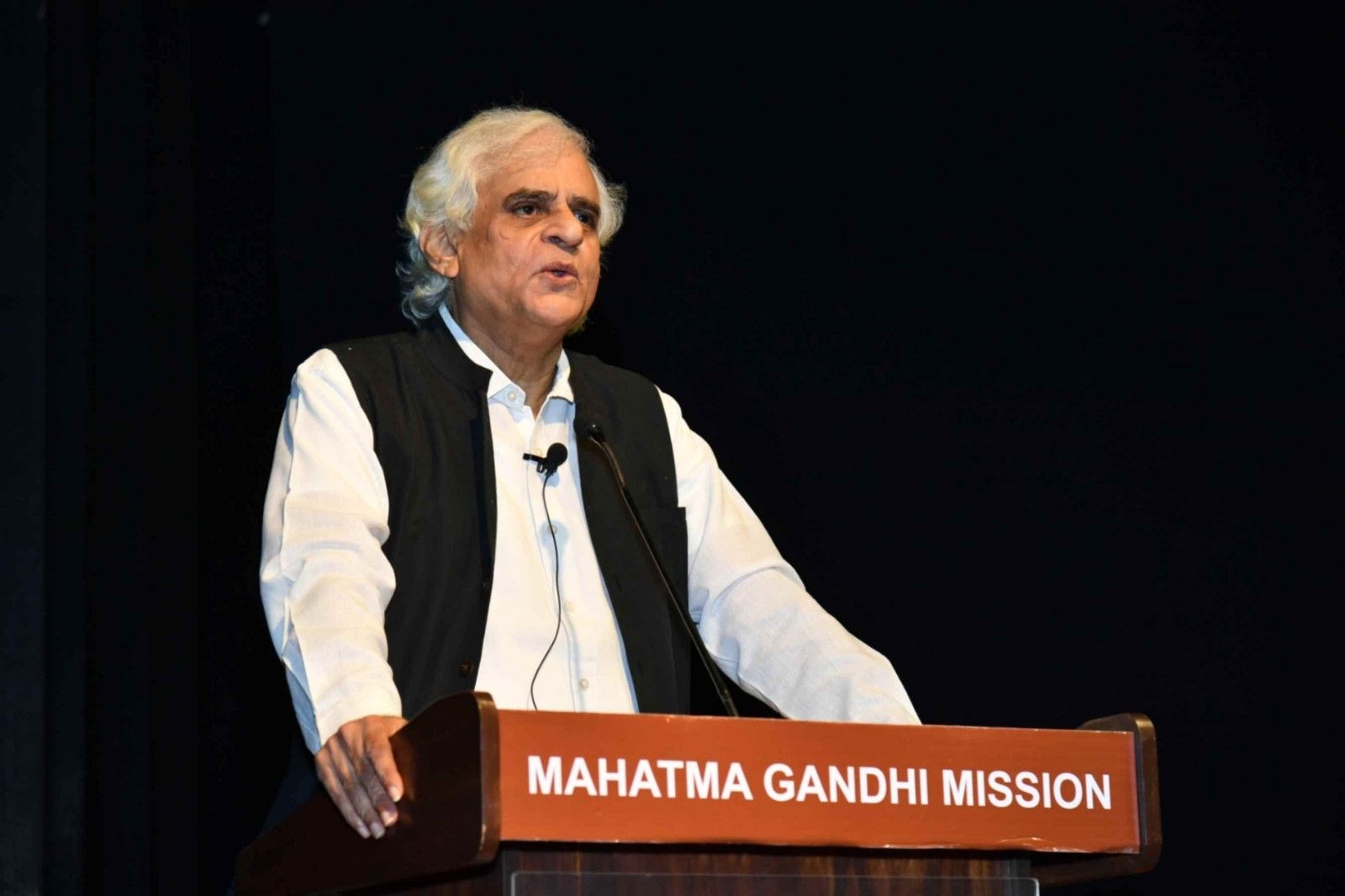 Veteran journalist and PARI founder P. Sainath addressing the national roundtable conference on 'Reimagining the Future of Marathwada' at MGM University."
The Borewell Epidemic and the Plunder of Groundwater
Because surface water has been mismanaged and diverted, Sainath explained that farmers have been pushed into a desperate race for groundwater. This, according to him, has sparked a massive, unregulated industry of borewell drilling. He mapped out how fleets of borewell rigs, many originating from the relatively small town of Tiruchengode in Tamil Nadu have descended upon Marathwada. He shared the staggering statistic that this town manages tens of thousands of rigs that drill an estimated two billion feet into the earth across the country every single year.
To achieve an optimal return, operators are drilling to minimum depths of 1,000 feet, an extraction rate Sainath condemned as an ecological disaster that severely depletes groundwater levels. Worse, he stressed that it has triggered a massive debt crisis. Farmers are taking out exorbitant loans to fund these borewells, and when the wells come up dry, they are pushed into absolute bankruptcy, a cycle Sainath directly linked to the region's tragic, skyrocketing suicide rates.
A Tale of Two Interest Rates
The financial architecture in Maharashtra, Sainath argued, further penalizes the rural poor while heavily rewarding the wealthy. To illustrate this, he highlighted a striking event in Aurangabad where 150 Mercedes Benz cars were purchased in a single day, facilitated by State Bank of India loans at a mere 7% interest rate.
In sharp contrast, he pointed out that a farmer looking to buy a tractor, a productive agricultural instrument faces interest rates of 16%. For those forced outside the formal banking system to rely on microfinance institutions, Sainath noted that interest rates balloon to 36% or more.
He also brought attention to the misallocation of agricultural funds, revealing the astounding fact that 52% of agricultural credit in the state is distributed from branches in Mumbai, Pune, and Nashik. This capital, he stated, is not going to rural farmers but is instead being absorbed by urban agri-businesses.
The Cash Crop Mirage and Virtual Water
Historically, Marathwada cultivated drought-resistant millets like jowar and bajra, which Sainath noted were naturally suited to the local soil and climate. However, he outlined how policy and market forces drove a massive shift toward water-guzzling cash crops like sugarcane and cotton.
Sainath emphasized that sugarcane is notoriously unsuited for a drought-prone area, citing that cultivating just one acre requires approximately 1.8 million liters of water. When India exports these heavily irrigated crops, he explained, it is essentially engaging in "virtual water export." He warned that exporting a ton of rice or sugarcane means permanently exporting millions of liters of domestic water to other nations, further starving local communities.
The Human Toll
Sainath observed that the physical environment is becoming increasingly hostile due to these systemic failures, referencing bizarre and extreme weather events where temperatures hit 43°C followed by sudden hailstorms that decimate crops and kill livestock.
He underscored that the human burden of this crisis falls disproportionately on women, pointing out that in India, 80% of the grueling, time-consuming work of water collection is done by adolescent girls and adult women.
To summarize the tragic reality of this systemic failure, Sainath shared a local woman's definition of "development." After decades of state policies and corporate expansion, he recounted her stating that true development for her family meant only three things: having water in the pot, having flour in the tin, and having the man of the house still alive.