Ritesh Shisode
The war in West Asia is not just of arms and ammunation, the missiles are lighting the skies but one aspect, or the crisis is unfolding, one that doesn’t make headlines as often in the mainstreams or all around as often as the airstrikes or diplomacy. War today is not just about the geopolitical event or international relations, but it is about the Climate events. From toxic air pollution that has bombed cities to oil spills in contested waters, the Iran-Isreal-US tensions could lead to long lasting environmental footprints all around west asia, one that may outlive the conflict itself.
What makes this environmental damage particularly significant is its invisibility in mainstream war discourse. Casualty numbers are reported. Infrastructure losses are quantified. But the degradation of air quality, the contamination of water bodies, and the rise in carbon emissions remain largely unmeasured and underreported. This creates a dangerous gap in how conflicts are understood. Because while the immediate impacts of war are local, its environmental consequences are global. Carbon released in a conflict zone contributes to rising temperatures worldwide. Polluted air does not recognise national borders. Marine damage in one region can disrupt entire oceanic systems.
The Uncounted Carbon of Iran-Israel-US War
Modern warfare is among the most carbon-intensive human activities, yet it remains largely excluded from global climate accountability frameworks. Military operations from fighter jets and missile launches to troop mobilisations consume enormous quantities of fossil fuels. The Iran-Israel-USA conflict has created an invisible environmental catastrophe high above the battlefield. With Iran firing over ~400 ballistic missiles, the skies over the Middle East have become a toxic Atmosphere of deadly pollutants that will impact the planet for years to come.
Researchers estimate that global military activity contributes significantly to greenhouse gas emissions, rivaling some of the world’s largest industrial sectors. However, these emissions are often underreported from international climate agreements, creating a blind spot in Climate governance. The tensions between Iran, Israel, and the United States, the scale of potential emissions is staggering. Sustained air campaigns, naval deployments, and logistical operations could increase carbon output in an already warming world.
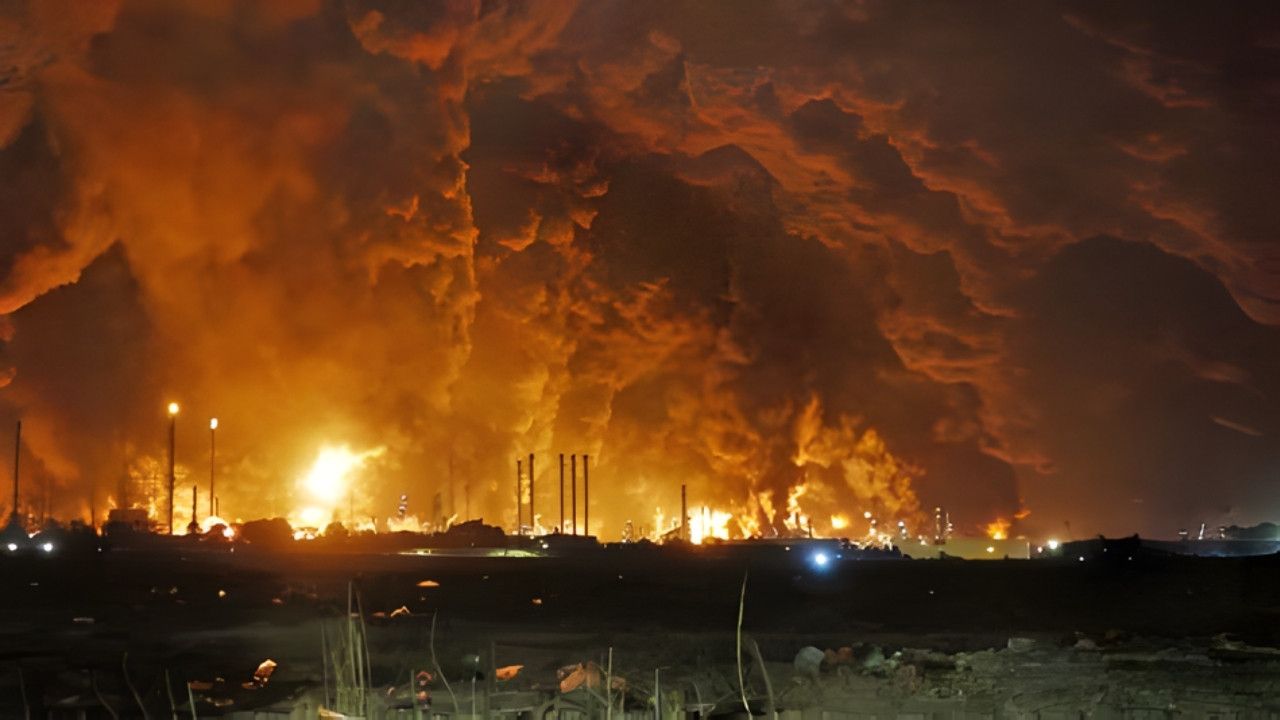 Missiles striking infrastructure release hazardous particulate matter into the atmosphere.
Urban Warfare and Public Health in West Asia…
When missiles strike urban areas, the destruction goes far beyond infrastructure. Buildings collapse into clouds of dust and chemicals, releasing hazardous pollutants into the air. These include particulate matter (PM2.5 and PM10), nitrogen oxides, sulphur dioxide, and toxic materials such as asbestos. Each explosion becomes a localized environmental disaster. These pollutants not only degrade air quality but also pose severe health risks, triggering respiratory illnesses, cardiovascular diseases, and long-term health complications for civilians.
In densely populated regions, the impact multiplies. The air becomes a carrier of both immediate destruction and prolonged suffering, with pollution levels often remaining elevated long after the conflict subsides, but what is the current state of Iran's environment and public health in the aftermath of missile activity and the urban destruction?
What is the Current Situation of Iran and the Middle East?
In the aftermath of the strikes on oil and gas infrastructure, residents of Tehran were issued urgent warnings regarding the onset of "black rain," a hazardous environmental byproduct of the conflict. This phenomenon occurs when massive plumes of soot and toxic particulate matter from burning refineries mix with atmospheric moisture, falling back to earth as a highly acidic and "greasy" precipitation. Public health officials warned its long-term impact on the city’s soil and water systems poses a lingering threat to the capital's already strained ecological health.
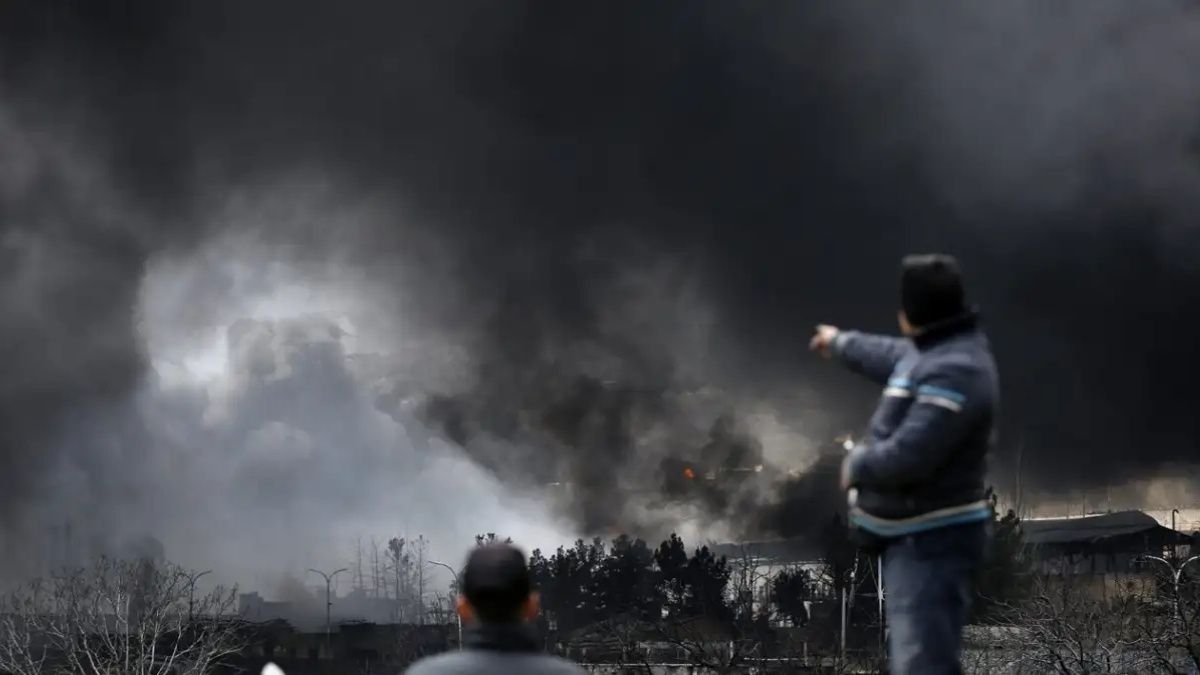 The 'Black Rain' threat: Massive fires at oil and gas refineries create soot-laden clouds that fall back as acidic, greasy precipitation.
Beyond the human tragedy, Iran's natural heritage is burning. Forests that have stood for centuries in Lorestan and Kermanshah are now charred wastelands. The lush wetlands of Gilan critical habitats for migratory birds and endemic species lie damaged and dying. In a deeply troubling pattern, almost all of Iran's most ecologically sensitive protected areas and ancient forests have become direct military targets or suffered devastating collateral damage. What makes this environmental catastrophe even more alarming is the wall of silence.
The Middle East's ecosystems face a "triple threat" of pollution, ecological destruction, and soaring carbon emissions. Military operations, including launch of hundreds of ballistic missiles and sustained air campaigns, have transformed the region’s skies into a toxic corridor of greenhouse gases and hazardous particulate matter. These emissions, which often remain excluded from global climate accountability frameworks, contribute to a staggering rise in carbon output in an already warming world. Also, the degradation of shared resources, such as contaminated water bodies and polluted air that ignores geopolitical boundaries, threatens the long-term public health and climate resilience of the entire West Asian region.
Oceans in the Crossfire & Environmental Debt
The environmental consequences of war are not confined to land. If tensions spill into maritime zones particularly in and around the Persian Gulf the ecological risks expand dramatically. Naval warfare, tanker disruptions, and potential attacks on oil infrastructure could lead to significant oil spills and fuel leakages. These events can devastate marine ecosystems, contaminating water, destroying coral habitats, and killing fish and other marine life.
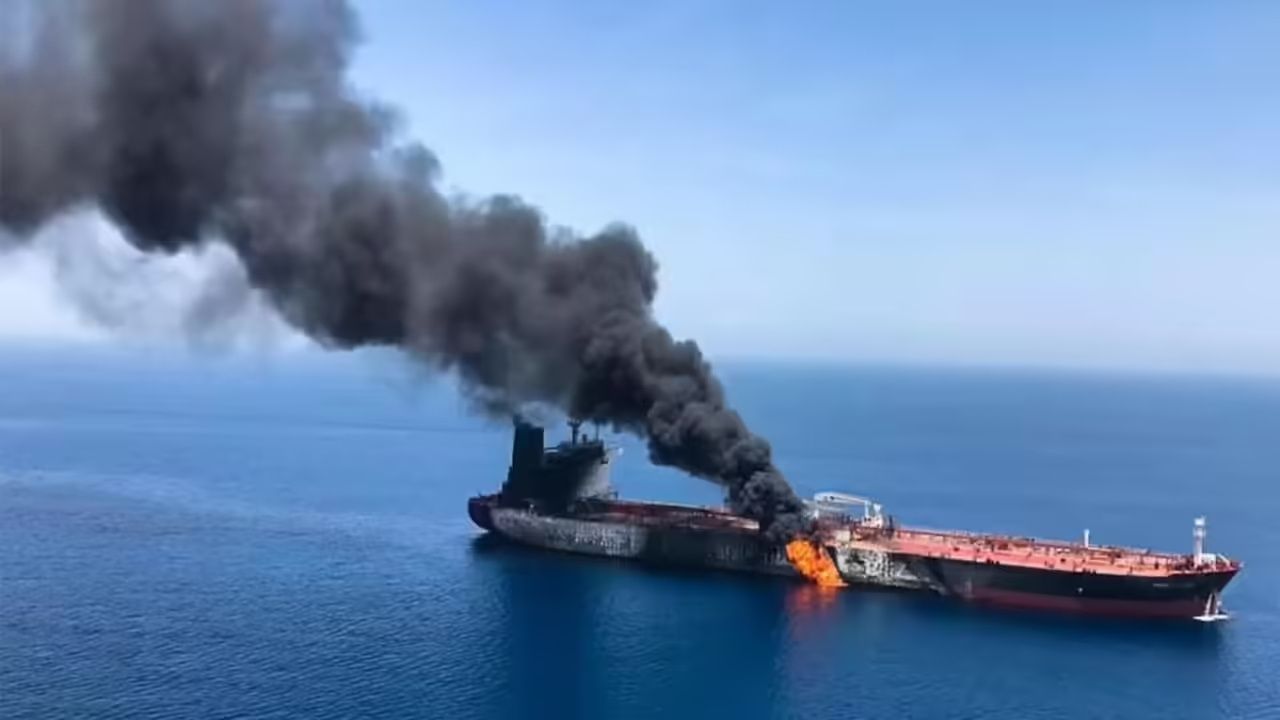 A tanker fire in maritime zones threatens catastrophic oil spills and the destruction of marine ecosystems.
Underwater explosions and sonar activity further disrupt marine species, particularly mammals that rely on sound for navigation and communication. The damage, often invisible to the public eye, can take decades to recover, if recovery is possible at all. Wars do not just redraw political boundaries; they alter ocean chemistry and ecological balance.
The climate impact of war does not end with a ceasefire. In many ways, it is only the beginning. Post-war reconstruction requires vast amounts of energy, raw materials, and industrial activity, leading to another surge in emissions. Damaged infrastructure must be rebuilt, often using carbon-intensive processes such as cement and steel production. Additionally, conflicts disrupt environmental governance. Climate policies are deprioritized, conservation efforts are halted, and environmental regulations are weakened in the face of immediate security concerns.
The result is a long-term environmental debt, one that future generations are forced to pay.
How is war a boost for Renewable Energy?
Within this destruction lies a paradox. Wars that destabilize fossil fuel supply chains can also accelerate the transition to renewable energy. The Iran–Israel–US tensions have the potential to disrupt critical oil routes and increase global energy insecurity. In response, countries may seek to reduce dependence on volatile fossil fuel imports by investing in solar, wind, and decentralized energy systems.
This shift is not driven by environmental idealism, but by strategic necessity. Energy independence becomes a matter of national security, pushing governments toward cleaner alternatives. In this sense, conflict may inadvertently accelerate the very transition needed to combat climate change, though at an immense human and environmental cost.
Union Nations Climate Chief Simon Steill says,
The Iran war’s disruption to the global energy market should be a wake-up call for countries that continue to rely on fossil fuels. I urged government leaders to speed up the renewable energy transition to ensure security and economic growth. Climate cooperation is a cure for the chaos of this moment
 Simon Stiell, executive secretary of the U.N. Framework Convention on Climate Change. (Image Credit:UNFCCC)
Crisis Beyond Borders…!
One of the most dangerous aspects of the environmental impact of war is its transboundary nature. Air pollution does not respect national borders. Ocean contamination spreads across regions. Carbon emissions contribute to a global crisis affecting every country, regardless of their involvement in the conflict.
What happens in West Asia does not stay in West Asia. It becomes part of a planetary system already under severe stress.
The Iran–Israel–US conflict is analysed through lenses of power, strategy, and diplomacy. But there is another dimension of less visible, yet equally consequential. It is the story of poisoned air, damaged oceans, and rising emissions. It is the story of a climate crisis intensified by human conflict. In a world already struggling to limit global warming, war represents a contradiction we can no longer afford to ignore. Because, ‘while ceasefires may silence guns, they do not silence the environmental consequences that follow.’