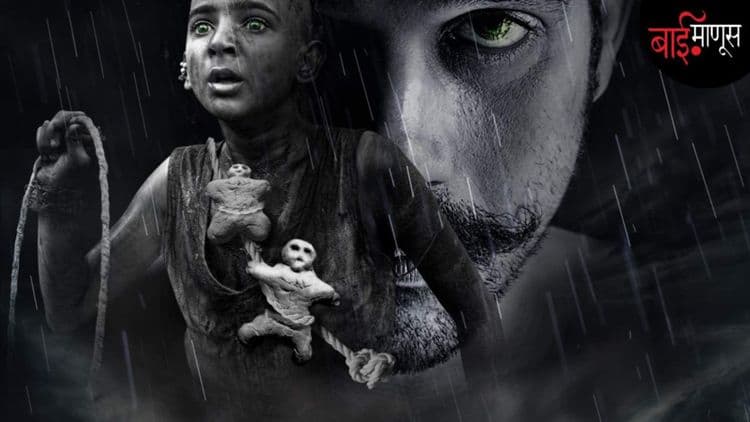
In 2018, when I first saw the movie 'Tumbbad,' there were 4 more people in the theatre with me. The film delivered far more than anticipated. The film delivered far more than anticipated. About never-before-seen Indian cinematic imagery; about a greed-driven family; about the legend monster Hastar; and much more. While many people enjoyed Tumbbad, others thought only the first half hour to be good and 'scary', with the rest of the film being flat and 'unscary'. These posts and replies were read on Facebook. What one likes and hates is very subjective.
I'm not a fan of Halloween, Blair Witch Project or paranormal activities that are well known around the world. These days, I can even tolerate killing and slaughtering in the name slasher films, with a neutral face. The tricks of jumpscares and boisterous soundtrack seems nothing to me.
Even if I already recognized the element of surprise in the film, he made me even more numb to how broken our understanding of 'fear' is. Although many people have varied perspectives on what genre 'Tumbbad' belongs to, I found it more intriguing as a social horror. Of course, the genuine and swiftly related horror sequences are significant in their own right. This fact cannot be denied. However, in 'Tumbbad', there are many other methods to communicate beyond only visuals and greed.

The locks and doors featured in it are impressive enough to warrant a whole article. Tumbbad's elaborate and mysterious locks looked more life-threatening to me. Locks have been keeping our secrets in guts for years. An inner knot is a lock that, if not opened correctly, can endanger the opener's life. A lock with its own mechanism and distinct character.
Set between 1918 and 1947, 'Tumbbad' tells the story of 3 generations of a family and the way it captures the subtle changes in the surrounding is astounding. While portraying the basic idea that even if circumstances change, man's depravity is passed down from generation to generation, Rahi Barve weaves various subtexts into 'Tumbbad,' attempting to tell the story of an entire country rather than just a family. And when all of these subtexts came into focus, I kept recalling lines from Pash's poem 'Sabse Khatarnak Hota Hai'
Of course, the backgrounds for both works are vastly different, but the coldness of Vinayak, his house, his children, and the rest of the world as he goes into the abyss from which he will never return is more terrible. The audience's reaction to such scenes was more scary.
It was even more terrifying that what was happening on the screen did not bother many people's attention. At least for me. It was even more frightening that Vinayak was having carnal pleasure with a woman while adjusting his janeu (a holy thread) on his ear. What frightened me the most was Vinayak, who has no qualms about what he is doing, joining hands with the children, closing his eyes, and saying 'Vadani Kaval Gheta' while having food. Like carpenters, blacksmiths, tanners, and farmers teach their kids their trades, Vinayak teaches his little son how to steal money from Hastar.

On the first day of his greedy journey with his father, the son is worshiped and then he leaves. The son is ahead of his father in carrying on the greed legacy. Vinayak instructs the kid as he receives his first Mudra, "This is your first earning, keep it safe!" In response, he asks his father, "Yeh mudra agar bazaar me bechne jao, to kitane daam milenge?" (What price will I get if I sell this Mudra in the market?) For me, everything was startling. Upon arriving home, the boy's mother inquires, "Kya hua Tumbbad mein?" (What happened in Tumbbad?) The boy responds curtly, "Ye Baba aur mere beech ki baat hai, tu sirf ghar sambhal!" (This is between Baba and me; you simply take care of the house) In response, instead of handing the mother a gold coin, he hands her a chocolate wrapped in gold paper. If you don't feel fear after looking at all of this, I believe you should reconsider the depth of your sensitivity.
This boy attempts to seduce a woman, who is 'kept' by his father, by showing his first mudra. 'Baba ne to sirf tumhe rakha hai, main to tumse shaadi karunga' (My father has only retained you, but I will marry you) demonstrates greed. On her question, 'Umar kya hai tumhari?' (What is your age?), he hands her a gold coin. 'Ab se main rahunga aur kuch saal baad to sirf main hi rahunga' (From now on, I'll be there, and in a few years, it'll just be me), his words to her had a strike on my brain. The audience's laughter at that scene was quite horrifying.
Sarkar uses Vinayak's mother for pleasure in the palace's initial scene, in front of a massive Hastar idol! Regarding her inquiry 'Mudra kab milegi?' (When will I obtain the Mudra?) The Sarkar silences her and instructs her to continue with her job. When Vinayak grows up, even the lady he keeps asks about Mudra, but he ignores her. It is alarming that Vinayak has now become like Sarkar, who used his mother for pleasure, and that he has kept a lady with him in the same way that Sarkar kept his mother.
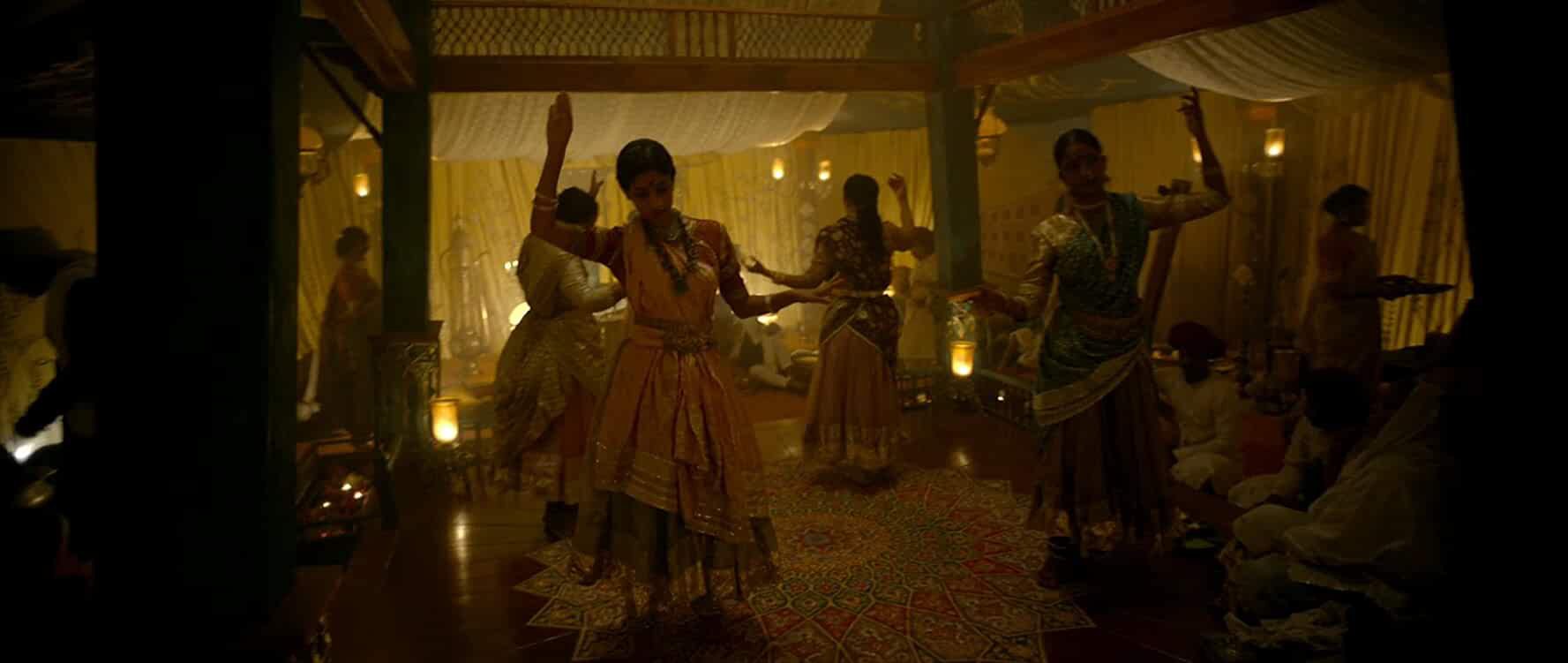
When he returns home after several days, he becomes enraged when he notices that his wife has begun grinding grain and begins to force her. The worst part is that his wife starts enjoying it as well. A golden razor for shaving, a golden lighter, and the child's licking honey with a golden coin is such a horror that even after reaching this level of greed, his enthusiasm does not fade. When he discovers that his kid has given mudra to the woman he has kept, he attempts to spank the boy, but when he learns that this is one step ahead of him, all of his rage fades.
After replying 'Aur kuch saal dhoti mein reh' (Stay within your bounds) in the case of women, the kid instead asks, 'Aur tab tak?' (And till then?) The strange way Vinayak and the youngster stare at each other and smile is terrifying. Immediately after, both the youngster and Vinayak are seen spending money on the women. 'Tumbbad nahi hua to kya hua, vada to apna hua na' (So what if Tumbbad is not there, the vada is ours) is the question Vinayak asked his mother when he was a youngster, and when Vinayak's son asks him after so many years, seeing the transition of lust is a true horror.
Vinayak initially travels by bus, then by motorcycle, and then by his own four-wheeler to Tumbbad's vada to scratch Mudra from Hastar. Meanwhile, the societal changes that have occurred around him have been accurately portrayed. Vinayak's wife grinds the grain first in her husband's absence, displaying a sign that reads 'Brahmani ke haath pisa shuddh atta' (Pure flour grinded by Brahmini). Following India's independence, the mill began to grind, but you don't have to be a sociologist to recognize who the workers are.
The film begins with Mahatma Gandhi's words, 'The world has enough for everyone's need, but not for everyone's greed. However, the huge amounts of money earned through currency, ends up in the hands of people who believe that "the country has been divided, and we must do something to compensate for it." The contrast between the words on the screen at the start and Vinayak's condition at the end for 'Greed' and his money falling into such hands was more terrifying to me.
Vinayak putting his greed on his kid and allowing him to itch even at that age, and Yayati forcing her young child in adulthood and thus enjoying it, both evoke the same emotional response. In the film, Vinayak literally exploits Hastar, the ghost. In Tumbbad, Barve states that people scare ghosts rather than the ghost scaring people. Pash says –
'Sabse khatarnak vo chaand hota hai
(The most dangerous moon is that...)
Jo har katl, har kaandh ke baad
(Who, after any crime or any incident)
Veraan hua aangan me chadhta hai
(Climbs into the deserted courtyard)
Lekin aapki aankhon mein mirchiyo ki tarah nahi gadhta hai'
(But doesn't sting in your eyes like a chilies)
In 'Tumbbad', Hastar's cursed grandmother, her ugly appearance, Hastar's killing of Raghu in a single stroke is a horror for the audience. Some may find the fact that, the audience can see the scenes with a poker face or a smile, more horrible, and I am one of them.
Translation: Sachi Jiwane