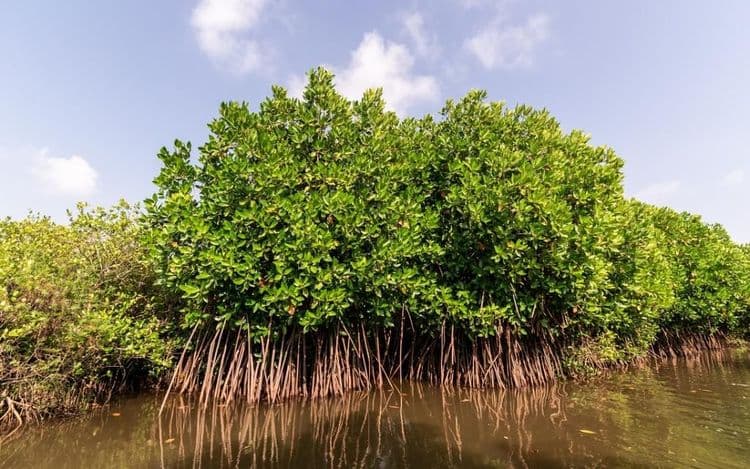
Mangroves are an important component of coastal protection. But in recent years, the mangrove area has come under attack due to various reasons. More than half of the world's mangrove ecosystems are threatened with destruction, and the existence of one mangrove species out of five mangrove species is threatened with extinction, according to a recent study by the International Union for Conservation of Nature (IUCN).
The mangrove study was conducted by more than 250 botanists from around the world according to the Red List of Ecosystems criteria used to calculate the risk of species extinction, IUCN Director General Grethel Aguilar said.

Mangroves or mangroves are very important for coastal protection. The importance of this mangrove has been highlighted after it came to light that during the Tsunami, the same mangrove on the coast of Tamil Nadu State saved a large area of the coast by reducing the speed of the high sea waves. But in the last few years, the mangrove area has been attacked due to various reasons. Various man-made disasters such as encroachment of natural mangrove forests, and dumping of large amounts of waste, especially plastic waste in mangrove areas have affected the roots of mangroves.
Among the threats facing mangroves, climate change is the most important factor. The study revealed that 33 percent of the world's mangrove ecosystems, i.e. one-third, are threatened by climate change. Deforestation, development, conservation, and construction of dams are the major factors that have created threats to mangroves. The study was conducted by classifying mangrove areas into 36 divisions due to the effects of climate change, such as sea level rise and increased frequency of cyclones.
A study by the International Union for Conservation of Nature estimates that one-third of the world's mangroves will be lost and 25 percent will be submerged in the next 50 years. Mangroves worldwide store 11 billion tons of carbon. This is nearly three times that of equatorial forests of the same area. The study also estimated that climate change and sea level rise could release 1.8 billion tons, or 16 percent, of the carbon stored in mangroves by 2050.
Mangroves are important in terms of reducing the risk of coastal disasters, carbon storage and supporting fisheries. Therefore, this destruction of mangroves can be dangerous for both nature and population. IUCN Director General Grethel Aguilar expressed the view that this report can guide efforts to revive the already extinct mangroves and conserve the remaining mangrove areas.
In this regard, senior plant and environment expert Dr. Anil Patil while expressing his reaction said that the fact is that mangroves are not only endangered but also extinct due to human intervention in the mangroves i.e. Kandal forest area, garbage thrown on Kandal forests and countless killings. Due to the chemically polluted water released in the creeks of the chemical factories, the natural process of regeneration of the Kandal forests has stopped at many places. The relaxation of CRZ rules has also increased the threat to Kandala forests. To avoid threats to both natural ecosystems and populations, the revitalization, protection and conservation of Kandala forests is imperative as a grassroots movement.
Importance of Mangroves
Mangrove trees grow in coastal areas of tropical and subtropical regions. The roots and leaves of these species have special adaptations to withstand the high salinity of brackish water. These magnificent trees not only add beauty to the coastal landscape, but also play an important role in maintaining the ecological balance. Prevents soil erosion, protects coastlines from storms. They also act as a natural wall to stop the waves coming from the sea. They provide habitat for a variety of marine and intertidal organisms. Many provide breeding grounds for organisms such as fish and crustaceans (shelled mollusks such as crabs) because of the abundance of food available. In addition, mangroves help filter pollutants and excess nutrients from the water, improving overall water quality.
Mangroves are an important carbon sink. They help reduce the effects of climate change by absorbing large amounts of carbon dioxide from the atmosphere. Mangroves are important for the survival of many marine species. Mangrove forests are found in many coastal areas of India. The Sundarbans is the largest mangrove forest in the world and is home to the Bengal tiger. The Andaman and Nicobar Islands have over 50 different types of mangroves and are the oldest mangrove ecosystems in the country. The Gulf of Kutch in Gujarat is also home to a large mangrove ecosystem with many species. The Konkan region of Maharashtra is known for its mangrove forests.

Mangrove forests are not only aesthetically pleasing but also help maintain the delicate balance of nature. They also play an important role in coastal protection, livelihoods and biodiversity conservation. These forests are a testament to the resilience and adaptability of nature and hence the preservation of these precious ecosystems is very important.
Team Baimanus