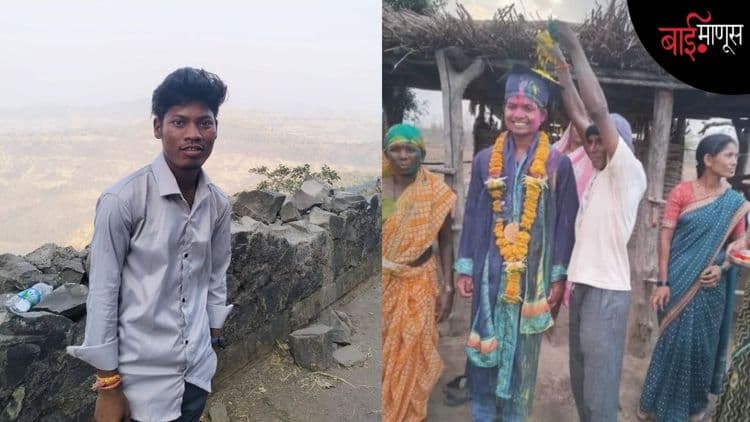
42-year-old Radha and her family have recently moved to a mud hut-like colony in northwest Delhi. The family is happy that the four walls and a roof over their heads give them some relief from the scorching May sun, but they are even happier that there is a TV in the house…so that they can watch serials on TV and her entire family can be seen on the news channels…the blue papers of Indian citizenship. (Dossier) Radha's family was seen in news channels.
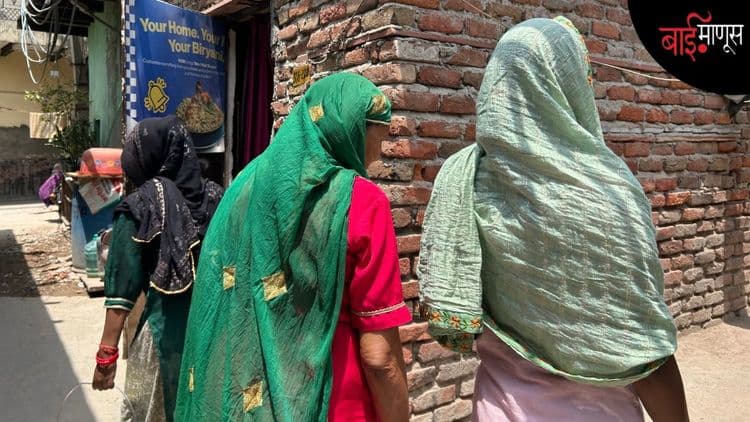
It is immediately apparent that the people living in about 200 huts in this colony known as Adarsh Nagar are a little different. Many Hindu refugees from Pakistan , Afghanistan and Bangladesh have started to consider this colony as their home. Some of them have got Indian citizenship and some are going to get it soon. His dream of many years now seems to be coming true. Some of these people are queuing up for Indian Citizenship Identity Cards at the nearest post office here with their documents and are going to get it in their hands at any moment.

Radha wipes tears from her eyes and says, "Now we are independent citizens. The girls in our house can now go to school, and build their own future. We have no regrets about leaving Pakistan, rather we have taken the first step in India to make the future easier.
Radha's family is one of the first 14 people to be granted Indian citizenship under the Citizenship Amendment Act (CAA). A different atmosphere of excitement spread in this colony of Delhi at this time. The CAA came into force in December 2019 to grant Indian citizenship to Hindu, Sikh, Jain, Buddhist, Parsi, and Christian migrants who came to India from Bangladesh, Pakistan and Afghanistan on or before December 31, 2014 due to persecution. He also got the President's approval. But the rules under which Indian citizenship was to be granted were issued four years late, on March 11 last. The voting phases for the Lok Sabha elections started from April 19. In the midst of this election, the government has conferred Indian citizenship to 14 people.
Those who have been granted Indian citizenship so far include Radha along with her daughter Bavana (18), sons Harji (28) and Arjun (21), Lakshmi (26) and Chandrakala (25). Radha's husband's documents are yet to be finalized as he does not have a Pakistani passport.
Apart from Adarsh Nagar, some new Indian citizens were given houses at Majnu Ka Tila in North Delhi. 29-year-old Yashoda and her younger brother Bharat Kumar live in Majnu Ka Tila as Hindu refugees from Pakistan. The joy of becoming an official Indian citizen is evident on his face after so many years of demand.

Yashoda said, "While in Pakistan, I could never go to school and I could not do anything for myself." At least now my children especially my daughter can live a good life, go to school, and college, apply for jobs…
Coming to India from Pakistan and getting Indian citizenship was a long journey. Each of these Pakistani Hindu refugees has a different story of religious exploitation, beatings, atrocities…
When Radha lived in the city of Tando Allahyar in the Sindh province of Pakistan, she had a banana garden and a large house. But still, her family was under constant pressure and panic. Her daughters had very little opportunity for education. Radha's two daughters, Sita and Meena, used to study in Burkha in primary school. All emphasis on education was related to Islamic scriptures. Radha says, one day my elder daughter Sita went out of the house to buy chips. When her father came to know about this, he beat Sita badly. Sita's father was afraid that she would be abducted if she left the house. Since then my daughters have never left the house.
Since then, Radha's family decided that she no longer wanted to be afraid. Before coming to India, he got a visa to Haridwar based on the sponsorship of a relative in Gujarat. On 22 March 2014, he entered India by Thar Express via Munabav station near Jodhpur, Rajasthan . From there, he went to his relatives in Gujarat, where he settled the papers. In 2018, Radha's family moved to Delhi from Gujarat in search of a job. Both her sons got a job selling mobile phone covers while the daughter passed her 10th exam from a government school. Sita and Meena are now married and have also acquired Indian citizenship.

Yashoda, who lives in Majnu Ka Tila, says that our family of 14 used to live in Hyderabad in Pakistan's Sindh province. We left the country leaving our home. We could never go to school, because our parents thought that if we went to school, we would be arrested and our religion would be changed. Forced marriage with some Muslim person. So collected all the documents, two years passed, and finally took a train and directly entered India on a tourist visa.
There are approximately 30 thousand Hindu refugees in Pakistan, Afghanistan and Bangladesh who now want to live a free life like Radha and Yashoda. All these are waiting like crazy to come to India.
(Courtesy – The Print)