Mir Zeeshan
“Agar Firdaus bar ruye zamin ast, hamin ast o hamin ast o hamin ast.” “If there is a heaven on earth, it's here, it's here, it's here,” a famous saying by Persian poet Amir Khusro. Winters usually look like a wonderland, with snow-covered landscapes during the month of February in the Kashmir Valley region of the Himalayas in India. This year, however, February did not follow that pattern and recorded higher temperatures.
The Kashmir Valley has been experiencing visible climate change over the past few decades, with temperatures increasing in winter as well as in other seasons. This year, February in Kashmir recorded a maximum temperature of 21.0°C, which is the highest ever recorded for the month.
As rising temperatures across the globe are a concern, similar conditions are being observed in Jammu & Kashmir.
Director of the Meteorological Department Srinagar, Mukhtar Ahmad, said that over the last decade, winters in Kashmir have recorded a deficit in precipitation, particularly in the month of February. The years 2019 and 2020 were the only two years in the past decade that recorded above-normal precipitation during winter. In the remaining years, precipitation deficits ranged from 30 to 80 percent.
This year, February alone recorded a precipitation deficit of 90 percent. Considering the entire winter season, the Kashmir Valley recorded a deficit of 60 to 65 percent, while the Jammu division recorded around 50 to 55 percent, he added. In terms of temperature, winters have recorded an increase of about 6 to 12 degrees above the normal range. In some cases, February in both divisions of Jammu & Kashmir recorded temperatures up to 14 degrees above normal. The precipitation in February in the Kashmir division is usually around 85 mm, but this year, less than 5 mm of rainfall or snowfall was recorded, resulting in a 95 percent deficit, said the MET director.
The average temperature in February is usually around 10°C in Kashmir, but some stations recorded temperatures up to 25°C. Even Gulmarg, a ski destination, recorded higher temperatures during February.
Faizan Arif, a young independent weather observer from the Kashmir Valley, said that the temperatures recorded during February were similar to those normally observed in mid-April. He added that this year was the seventh consecutive winter rainfall deficit in Jammu & Kashmir, and the winter of 2025–26 ended with 65 percent below-normal precipitation. February recorded the lowest precipitation in history.
The data shared by Arif comparing winters of past years is as follows:
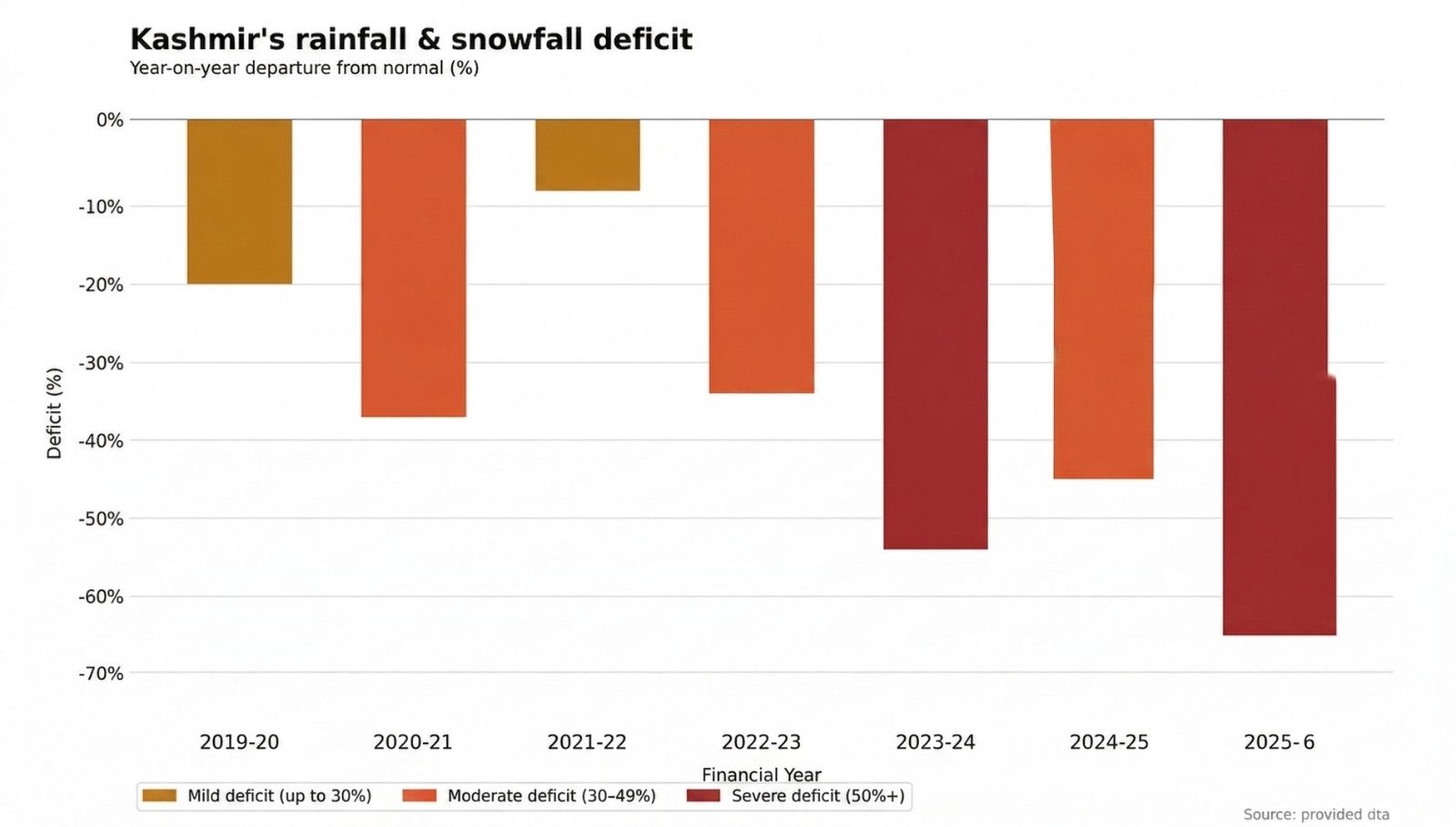
2019–20 – (minus) 20%
2020–21 – (minus) 37%
2021–22 – (minus) 8%
2022–23 – (minus) 34%
2023–24 – (minus) 54%
2024–25 – (minus) 45%
2025–26 – (minus) 65%
For the Jammu & Kashmir divisions, the district-wise December–February 2025–26 rainfall deficit is as follows:
Kashmir Division
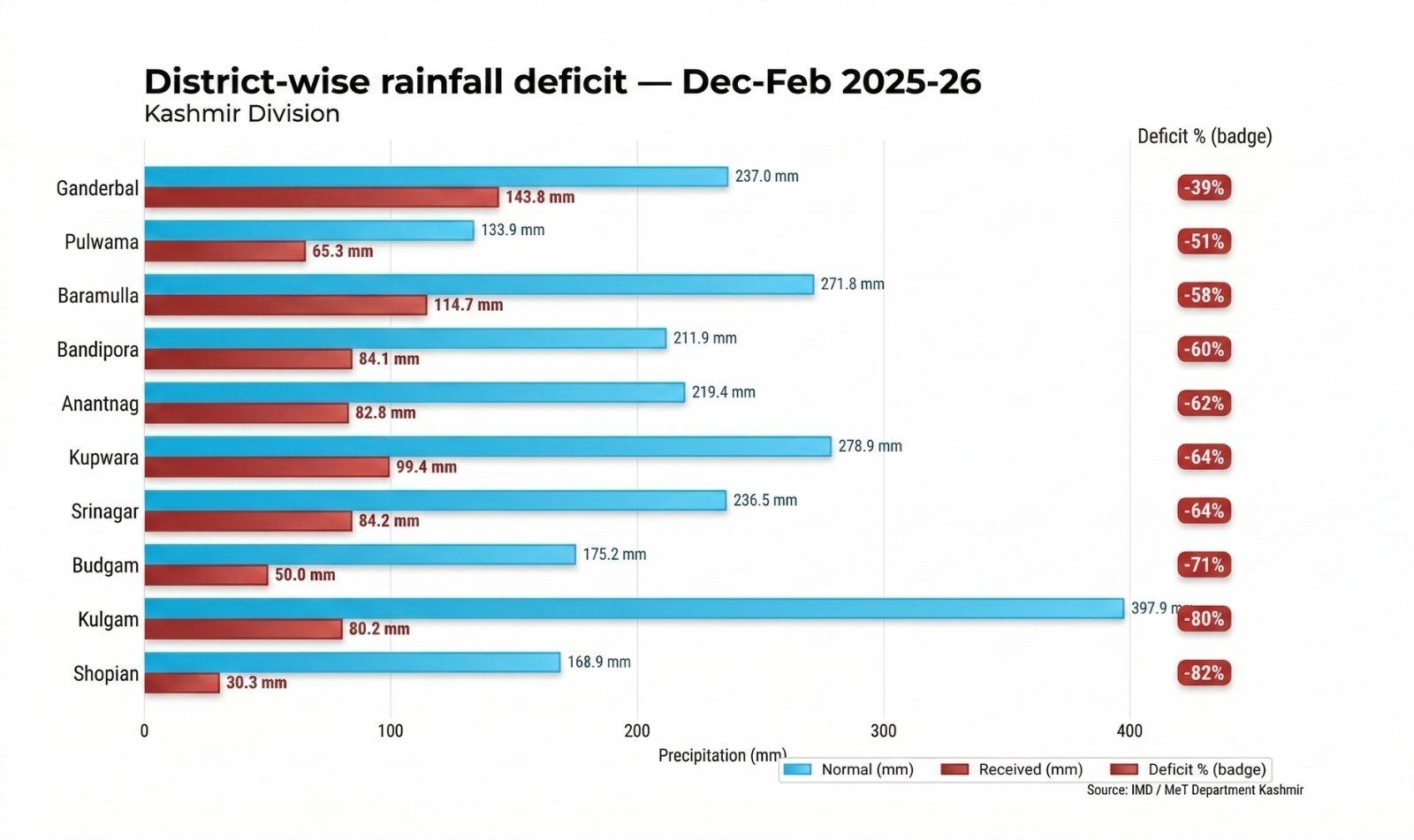
Srinagar: 84.2 mm vs 236.5 mm normal (–64%)
Anantnag: 82.8 mm vs 219.4 mm (–62%)
Budgam: 50.0 mm vs 175.2 mm (–71%)
Bandipora: 84.1 mm vs 211.9 mm (–60%)
Baramulla: 114.7 mm vs 271.8 mm (–58%)
Ganderbal: 143.8 mm vs 237.0 mm (–39%)
Kulgam: 80.2 mm vs 397.9 mm (–80%)
Kupwara: 99.4 mm vs 278.9 mm (–64%)
Pulwama: 65.3 mm vs 133.9 mm (–51%)
Shopian: 30.3 mm vs 168.9 mm (–82%)
Jammu Division
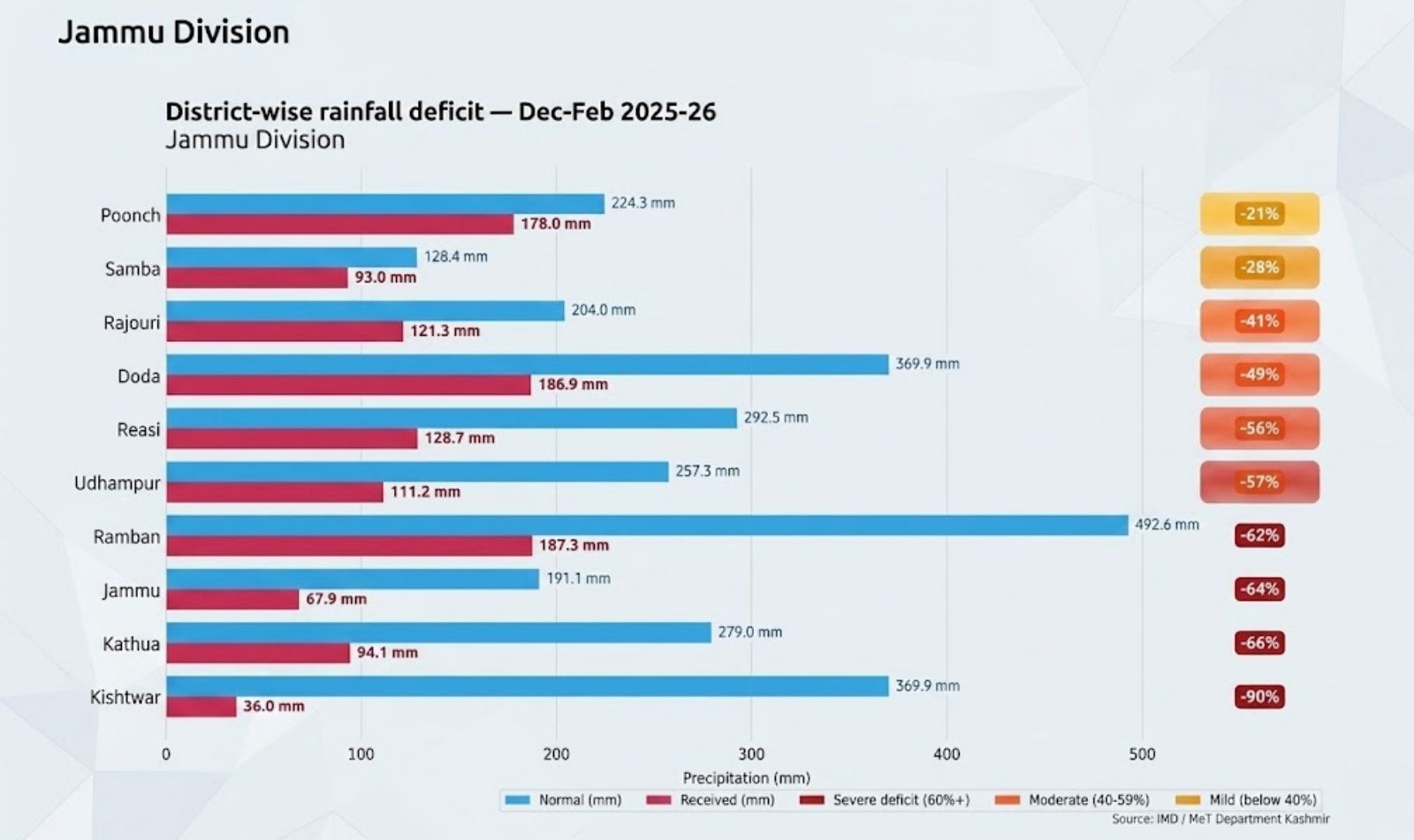
Jammu: 67.9 mm vs 191.1 mm (–64%)
Doda: 186.9 mm vs 369.9 mm (–49%)
Kathua: 94.1 mm vs 279.0 mm (–66%)
Kishtwar: 36.0 mm vs 369.9 mm (–90%)
Poonch: 178.0 mm vs 224.3 mm (–21%)
Rajouri: 121.3 mm vs 204.0 mm (–41%)
Ramban: 187.3 mm vs 492.6 mm (–62%)
Reasi: 128.7 mm vs 292.5 mm (–56%)
Samba: 93.0 mm vs 128.4 mm (–28%)
Udhampur: 111.2 mm vs 257.3 mm (–57%)
Arif said that Kashmir recorded its highest maximum temperatures for February across all stations. February, which is part of the winter season, recorded higher temperatures. he said,
In Srinagar, the average maximum temperature reached 15.6°C, exceeding the previous February record of 14.9°C set in 2016. Similarly, Qazigund recorded 15.2°C, surpassing its earlier record of 14.1°C from 2016.
In north Kashmir, Kupwara recorded 14.8°C, slightly exceeding the previous record of 14.7°C recorded in 2016. In south Kashmir, in Anantnag district, Kokernag, at an altitude of 2000 to 2020 meters above sea level, recorded 13.5°C, exceeding its previous February record of 12.8°C set in 2016. Another location in the same district, Pahalgam, at an altitude of 2200 meters above sea level, recorded 12.1°C, surpassing its earlier record of 11.6°C from 2016. Gulmarg, located in Baramulla district, recorded 7.0°C, exceeding its previous February record of 5.9°C set in 2006.
Arif said that February, which is usually associated with cold conditions and snowfall, recorded conditions similar to those of later months. He explained that winter precipitation in Jammu & Kashmir is important because snow accumulation feeds rivers and springs, recharges groundwater systems, supports irrigation for orchards and crops, and regulates early-season temperatures.
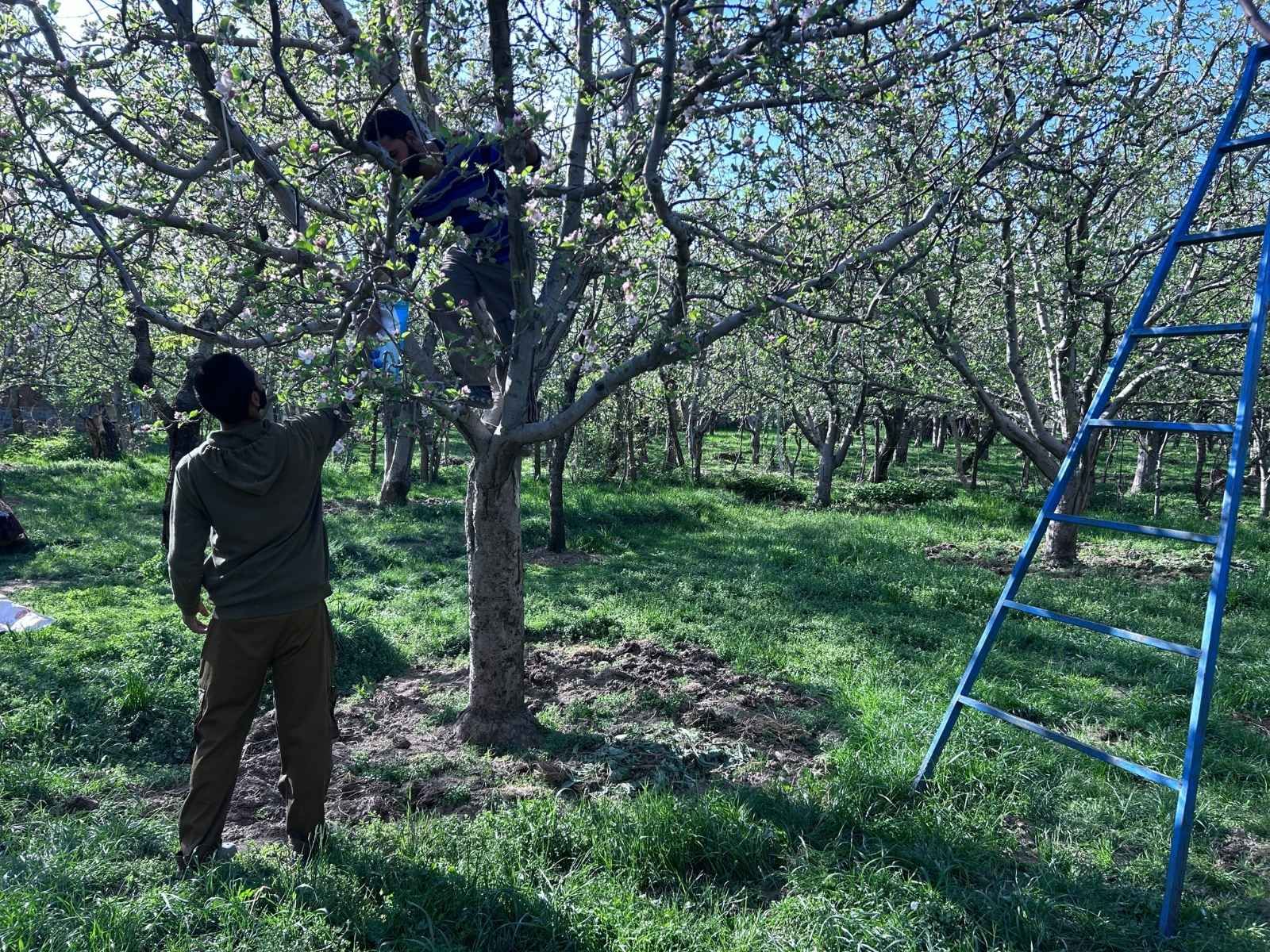 Two young brothers busy in cross pollinating the apple tress during last week of march month. (Image Credit: Mir Zeeshan)
With December almost dry, January below normal, and February recording a deficit of nearly 90 percent, the snow accumulation period has reduced. Such consecutive winter deficits reduce the availability of meltwater during late spring, summer, and autumn. Seven consecutive deficient winters indicate a change in precipitation patterns. He stated that this may be linked to variations in western disturbance patterns, uneven distribution of rainfall, and longer dry periods.
Impacts on Agriculture Due to Rising Heat
In Jammu & Kashmir, almonds are cultivated over an area of 5.11 thousand hectares. Pulwama is the leading producer, with 4,688 hectares, particularly in Pampore and Newa blocks.
This year, almond farmers observed early blooming of around 15 days. Nazar Ul Islam, a farmer from Newa in Pulwama, said that blooming in almond trees usually occurs during the second week of March, but this year, trees were in full bloom in the last week of February due to higher temperatures.
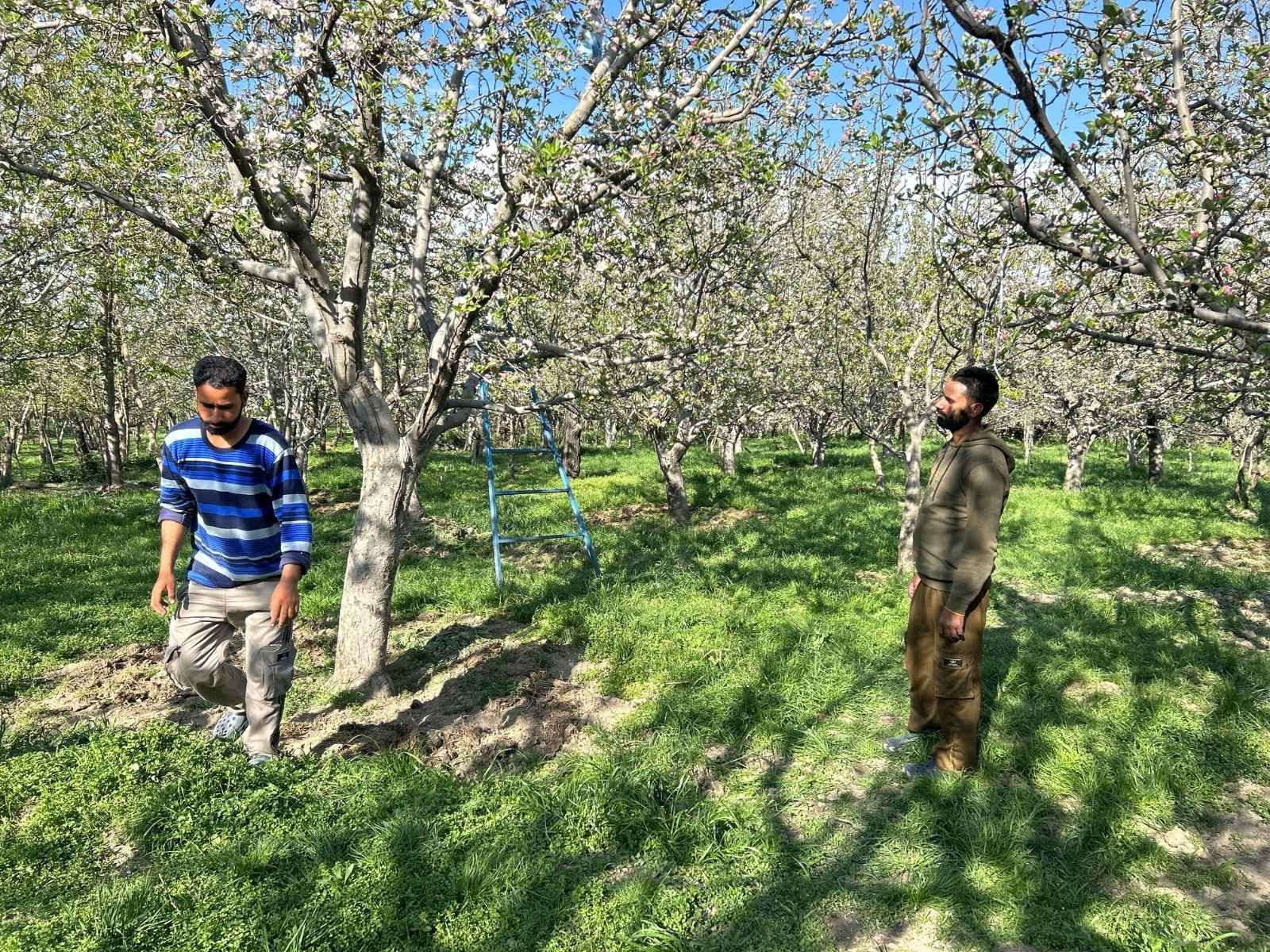 Borewells have been new way of water sources of apple farmers for spraying and irrigation purposes. (Image Credit: Mir Zeeshan)
Shopian district is a major apple-producing district, with orchards covering 26,231 hectares. Mohammad Aqib, a farmer from Pirpora village in Shopian, said that cross-pollination work in apple trees, usually done between 10 and 15 April, was carried out on 27 March this year. He added that due to the lack of snowfall in February, orchards required irrigation during the first week of March as soil moisture was low.
Mohammad Maqbool Malla, a farmer from Keegam in Shopian, said that water availability in canals has reduced. Farmers have been using water from other sources, and local streams passing through orchards have dried.
We fetched water for spraying purposes in apple orchards from other water bodies as we had no available water in small brooks.
Environmental Implications
Assistant Professor at Government Degree College Pulwama, in Environmental Studies, Mohammad Anees Ul Mehmood, said that the Himalayan region is being affected by climate change. Reduced snowfall and changing precipitation patterns are affecting agriculture. He stated that reduced winter chilling periods may affect fruit production, particularly apples. He also noted that reduced snowfall and early melting of glaciers affect water availability for agriculture and daily use. Increasing urbanisation has increased water demand, while availability remains limited.
Mohammad Yousuf Tarigami, a leader of the Communist Party of India (Marxist) and chairman of the legislative environment committee, while addressing the assembly budget session 2026–27, said that climate change should be addressed in the Jammu & Kashmir budget. He stated that the budget does not include a climate-related framework.
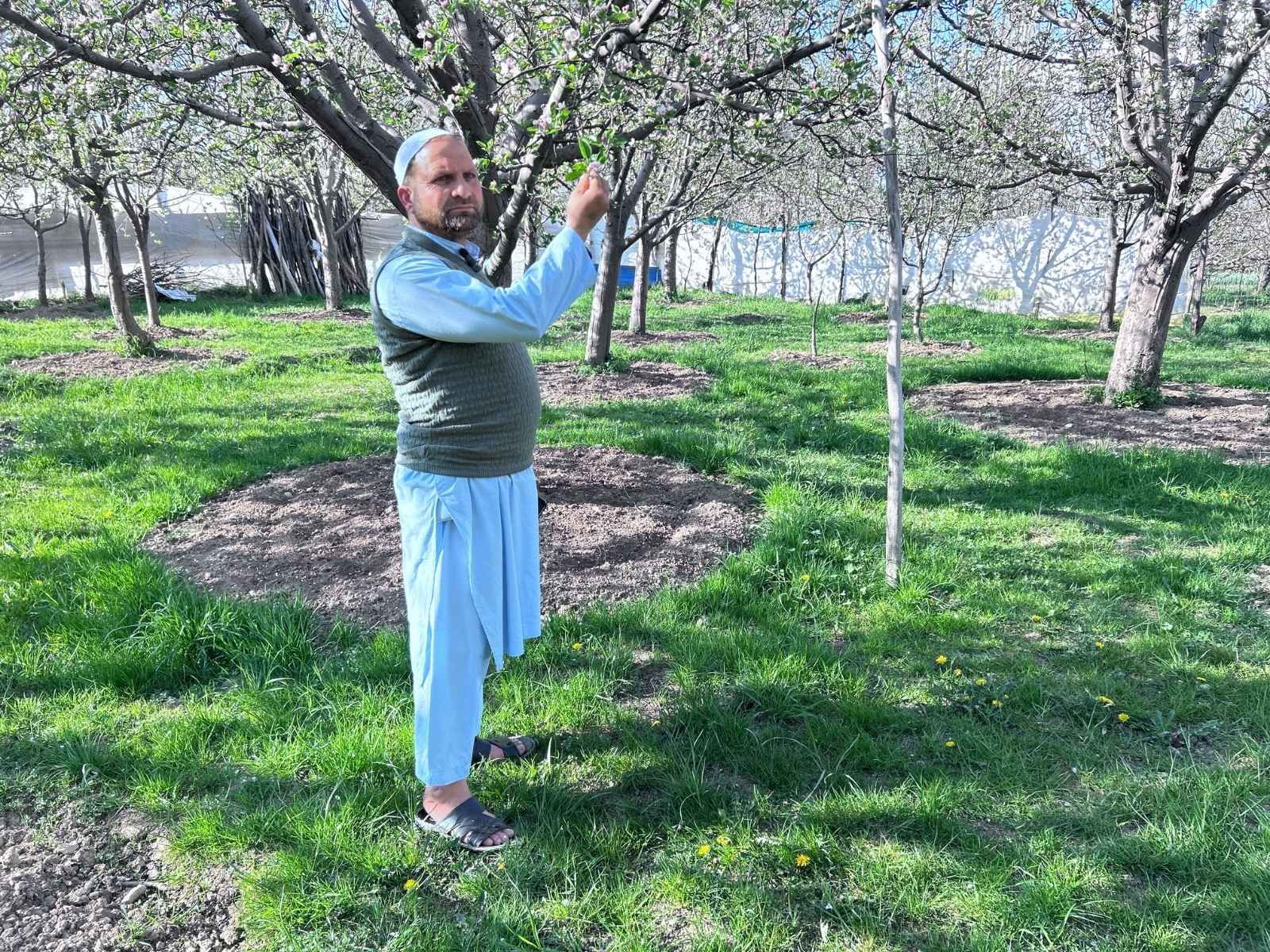 Apple orchards witnessed early blooming this year due to rising temperatures. (Image Credit: Mir Zeeshan)
He added that climate change affects infrastructure and livelihoods and referred to Kerala’s climate framework for mitigation and adaptation. He said that he has submitted a note to Chief Minister Omar Abdullah for a similar mechanism.
During the Khelo India Winter Games held in Gulmarg, the Chief Minister raised concerns about low snowfall and said that artificial snow may be required in the future if such conditions continue.
Future Implications on Fruit Production
According to Dr. Tariq Rasool, Professor of Sher e Kashmir University of Agricultural Science & Technology (SKUAST)- Kashmir, the dry and warm conditions in January and February led to early bud break in crops, though without any adverse impact on production.
However, the cold and wet weather in March and April months that too particularly during the flowering stage in apple is negatively affecting fruit set in apple orchards. The increased number of rainy days during this period has also raised the risk of scab disease, unless growers maintain strict and timely fungicide application schedules. Additionally, reduced sunshine hours in April and May months are expected to cause significant fruit drop in apple orchards.
(Mir Zeeshan is a mentee at the Climate Change Media Hub of the Asian College of Journalism. The program is supported by Interlink Academy, Germany.)