Ritesh Shisode
In a Country where sexual violence statistics rise day by day, even after convictions remains difficult to identify, Yogita Bhayana’s work stands on the centre stage to remind that justice is often find outside courtrooms. BaiManus today captures her constant confrontation with a system that routinely fails survivors. Yogita Bhayan’s activism is not just one person’s campaign but it reflects the structural emergency in how India deals with sexual violence. Behind the narrative and activism are staggering numbers and systemic gaps.
What do the numbers say?
According to the National Crime Records Bureau (NCRB) reported rape cases have been rising for every years. Over 45,000 rapes were recorded in 2023 with an average of 124 rapes per day. Looking into a broader categories of sexual offences all over country including molestation, sexual harassment, and modesty, the total number crossed with 150,000 cases in a single year. The age group with most vulnerable continues to be young females 84% of reported rape survivors are under 30, and over 10% are minors.
While India records such staggering numbers, and standing as among major economies, the justice timeline remains stuck with three out of every four cases still pending, and fewer than one in ten lead to conviction. Survivors face some of the most harsh phases of their life with delayed trials, and social stigma leading to psychological traumas.
A nation with its institutions standing at a position to protect its most vulnerable. Stands with a landscape where reporting has become more common but justice remains hidden in civil society demanding not just accountability for individuals, but accountability from very structures made to deliver justice. In this void, activists like Yogita Bhayana have emerged not just as advocates but as the first responders to survivors’ needs.
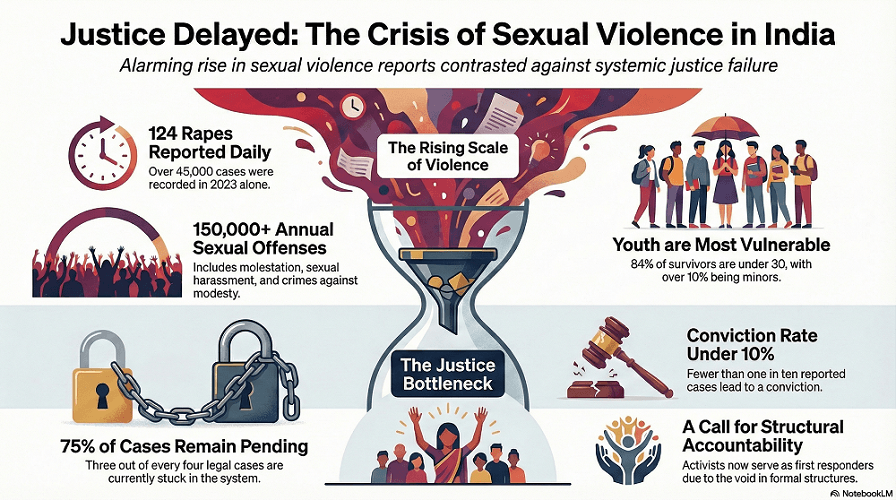 NCRB Data Inforgraphic. (Image Credit: NotebookLM)
Who is Yogita Bhayana?
Yogita Bhayana is not a celebrity activist, she is the frontline responder in one of India’s most persistent and painful social crisis, sexual violence against women and children. Her journey shows the brutal gap between legal guarantees and lived realities. Her story rises with her work in People Against Rape in India (PARI), organisation born not to play role on social media but in the corridors of hospitals and police stations where survivours first seek help.
Bhayana’s activism is in both philosophy and practice. Instead working from a distance, she places herself literally in the environment where justice begins for the survivors like the ‘Police Station’ filing FIRs, ensuring correct legal sections applied, ‘Hospitals’ ensuring immediate medical attention, forensic process, and also in the ‘Courts’ tracking the case progress, pushing timely hearings, and even participating in legal strategy discussions.
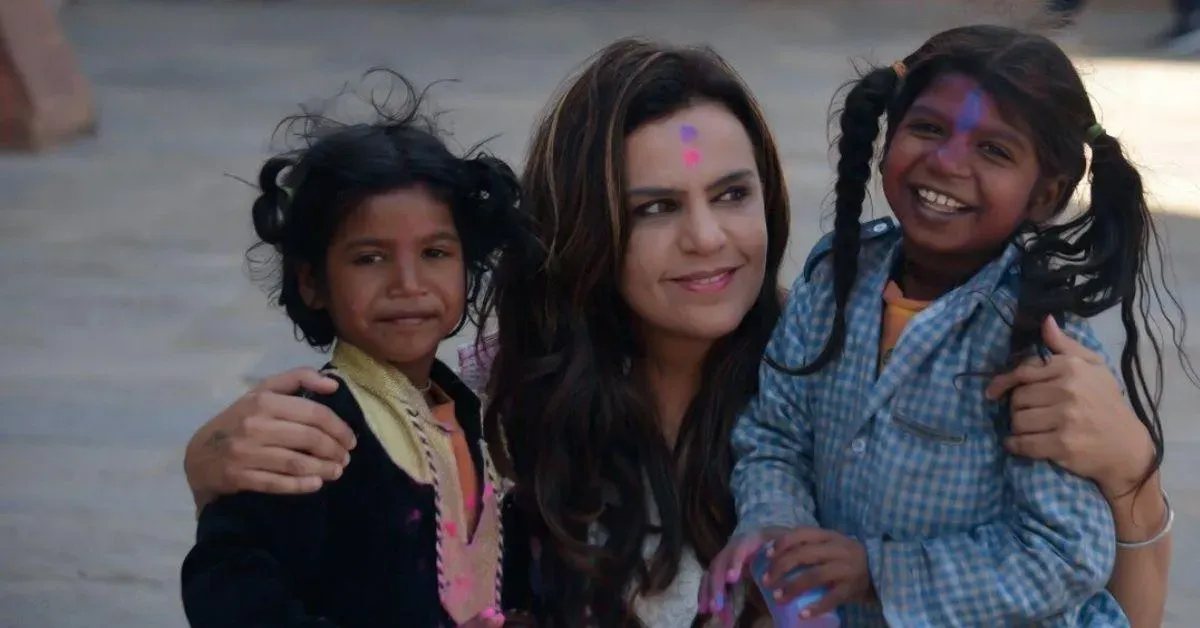 Yogita Bhayana with children during an outreach interaction, reflecting her work beyond protests engaging with communities (Image Credit: The Better India)
Yogita Bhayana’s & People Against Rape in India
People Against Rape in India (PARI) was founded by Yogita Bhayana after the Nirbhaya case and other incidents of sexual violence which highlighted the gaps in institutional support for survivors. The core objective of PARI remains the same to provide legal assistance, counselling and advocacy to survivors of rape and those who affected from sexual violence. PARI also helps survivors navigate police, hospital, and court systems which often fail to deliver justice. PARI also works in raising public awareness about sexual violence and promote cultural and legal changes to prevent abuse.
Yogita’s work just not stop till one organisation but she also serves on expert committees related to gender, education, and workplace sexual harassment (POSH). She has also campaigned for long-term structural solutions, such as annual parliamentary sessions dedicated to women's safety and legal protections. Her activism with PARI reflects both the urgent needs of survivors and the systemic barriers they face.
 People Against Rape in India (PARI), founded by Yogita Bhayana (Image Credit: pariindia)
Yogita Bhayana’s Unpaid Activism
One of the most uncomfortable truths highlighted by Bhayan’s work is the activism in India
stories daily, confront graphic realities, and manage families in crisis. Bhayana herself spoke about burnout and exhaustion but not as a weakness, but as a reality of sustained engagement with human suffering.
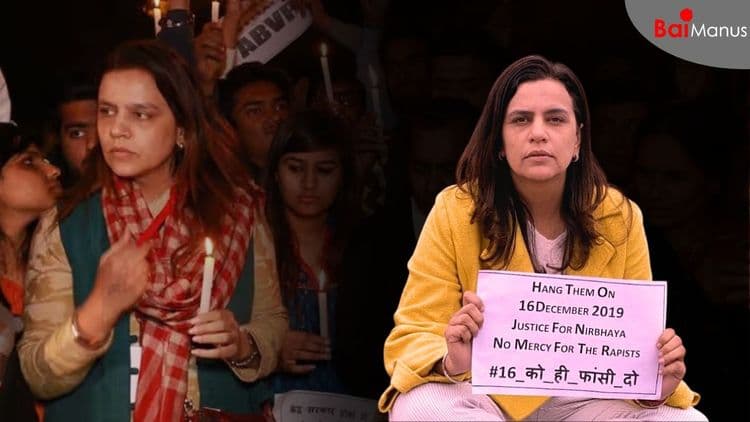
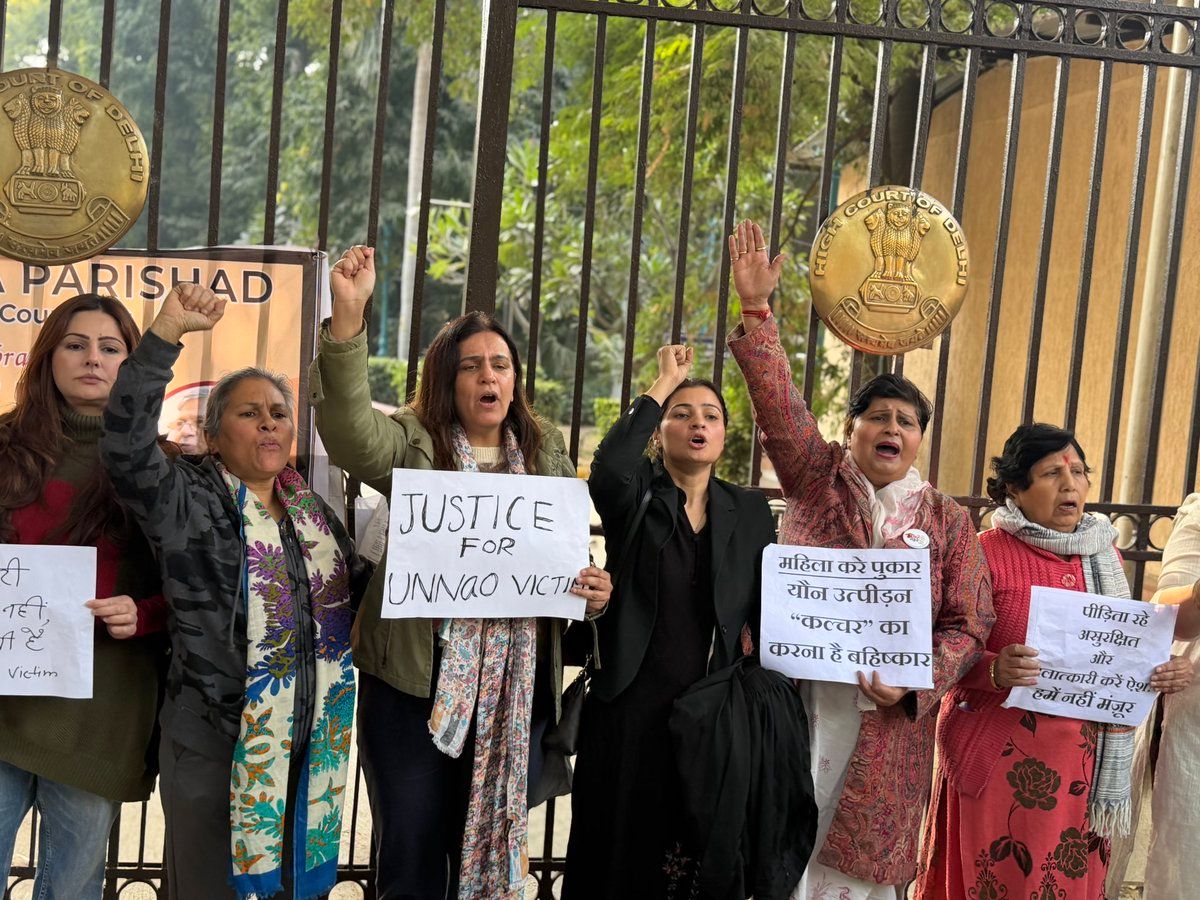 Yogita Bhayana and members of People Against Rape in India (PARI) protest outside the Delhi High Court.
Holding Accountability with humbleness
Yogita Bhayana does not claim to defeat the accountable authorities. She confronts it, again and again, repeatedly, knowing that the victories are not full won and faces setbacks frequently. Her work reminds us that justice is not ideal but a daily struggle fought in police corridors, hospital wards, and overcrowded courtrooms.
In the end, her story is less about her individual courage and more about the collective responsibilities. Until instructions respond with the urgency and humanity the survivors deserve, activists like Bhayana will continue to stand where the authorities hesitate, and hold accountability with humbleness, with one case at a time.