“When girls are educated, their countries become stronger and more prosperous”, says Michelle Obama. But it doesn't appear like the Taliban adheres to this idea. Since August 2021, when the Taliban took control over Afghanistan again, Afghan women have consistently been denied their fundamental rights. For Afghan women, the Taliban has essentially outlawed all fundamental human rights.
Women are the most affected...
War-affected countries face financial hardships, food crises, life-threatening situations, and so on. However, women are the most affected individuals not just in the Taliban-Afghan conflict but in many other countries that undewent or are undergoing a war.
Mahbouba Seraj, an Afghan women’s rights activist, in a conversation with Firstpost, said that "it was the Afghan women who paid the biggest price when the Taliban came to power. Right from the very beginning, the Taliban imposed a plethora of restrictions on women. From stringent dress codes to no access to education, women in Afghanistan lost their voice in a matter of months."

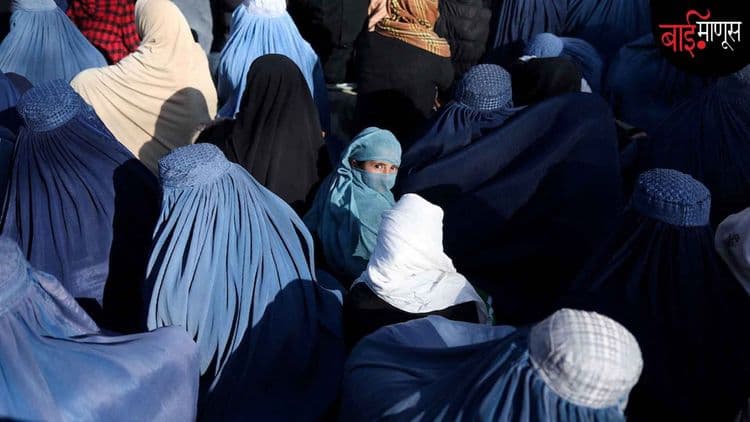
The Taliban went beyond limits when they imposed new laws denying women basic human rights. They released a 114-page document, which consists of 35 articles on laws of vice and virtue and focuses on a variety of everyday topics, such as festivals, music, public transportation, and personal grooming. Article 13 under the document mandates women to cover their bodies in public, bans them from singing, reciting, or reading aloud in public; it also prohibits women from looking at men to whom they are not related, and vice versa.
These laws are not just violating women's rights in the country but also the basic fundamental human rights. Afghan women, today, are facing the most vulnerable situation that any human can never experience.
Dreams of young girls crushed in a blink of an eye
Almost 19.5 million Afghan women and young girls saw their hopes and dreams dashed on December 20, 2022, in the span of a single glance. The future of young girls who had dreams, lived by them, and desired for them desperately, was threatened when the Taliban banned female students from attending universities in Afghanistan, forcing the majority of girls out of school and every woman out of higher education.
In Afghanistan, girls are forbidden from attending secondary school and women from pursuing college education. On August 15th, the UNESCO agency stated that "the Taliban have deliberately denied 1.4 million Afghan girls access to education through bans."

The Taliban thinks that education for girls above the sixth grade violates Sharia law. Afghanistan is the only country in the world that prohibits women from pursuing secondary and higher education. Women in Afghanistan have been completely expelled from workplaces and are forced to sit at home.
The Taliban rule has pushed down the progress of women and girls in Afghanistan by about 20 years. They have been subjected to many such unreasonably discriminatory rulings. Apart from a few exceptions, like in the health sector, women have been banned from working for international humanitarian organizations and other workplaces.
"View of world through window"
From dreaming about the sky being the limit, attending schools and workplaces, to being deprived of basic rights, the mobility of women is banned. The real challenge arises for women with no male companions or relatives.
The Afghan women made progress in terms of education, democratic participation, and healthcare between 2001 and 2002. However, the Taliban regime has dragged down the progress back to the 2001 era. The effect of the Taliban regime on women in 2001 and today is described in an article by the New York Times as "Afghan women’s view of the world was through the windows of their home".
Women in other war-affected countries
Whether it's Afghanistan or any other nation going through wars and crises, one thing always remains the same: women's suffering! Afghanistan is said to be facing the world's worst humanitarian crisis by the Global Conflict Tracker. But moreover, women, may it be in any war-affected country, go through the most difficult circumstances.
In war-torn Sudan, women are forced to have sex with the soldiers to get food so as to feed their families, said a report by The Guardian. More than twenty women who left the Sudanese city of Omdurman claimed that the only way they could get food or items to sell for cash to support their families was by having sex with soldiers.

Iraq's new 'barbaric bill' will lower the legal age of marriage for girls to 9. UNICEF reports that 28% of girls in Iraq are married before turning 18, and the new measure would make matters worse by eliminating the current age restriction.
A woman in Iran was shot for not wearing the hijab properly in Iran. This clearly states that not wearing a hijab in Iran is considered a serious crime; if committed, it can cost the loss of a life.
Women in each war-affected country suffer the most. Young girls' dreams are crushed, and women are forced to follow the patriarchal rules of society.