Ritesh Shisode
- Dia Mirza's comment sparked debate after she linked the climate crisis to patriarchal systems, not individual men.
- Her argument is rooted in ecofeminism, which suggests that environmental exploitation and social inequalities are often connected.
- While critics say climate change is mainly driven by fossil fuels and industrialisation, supporters argue that power, inequality, and representation also play a role in shaping environmental outcomes.
Actor and United Nations Environment Programme (UNEP) Goodwill Ambassador Dia Mirza has become the centre of an online debate after saying that "patriarchy caused the climate crisis" during a conversation on Soha Ali Khan's podcast. Her comment quickly went viral, with people criticising it while others supported it, saying that similar ideas have been discussed in academic and environmental research.
After facing backlash, Mirza said she stands by her statement. She explained that climate change is not just about rising temperatures, extreme weather, or damage to the environment. According to her, it is also linked to inequality in society.
Mirza argued that, “Systems where power is concentrated in the hands of a few have often focused on taking resources from nature for economic growth, rather than protecting the environment and maintaining balance.” She believes this approach has contributed to both environmental damage and social inequality.

What exactly does Dia Mirza Mean?
Many people felt that Dia Mirza was blaming men for climate change. But according to her, that was not the point she was trying to make.
She said she was talking about larger social systems, described as patriarchal systems, rather than individual men. According to her, these systems often focus on using natural resources for quick benefits and economic growth, while giving less importance to care, protection of nature, and long-term sustainability.
Mirza drew attention to the fact that climate change does not affect everyone equally.She mentioned, women in many vulnerable communities often bear a disproportionate share of its consequences. These impacts can include water scarcity, food insecurity, displacement, and the loss of livelihoods.
According to her, this idea is linked to a broader concept called ecofeminism, which looks at the connection between environmental issues and gender inequality.
What Is Ecofeminism?
Dia Mirza linked patriarchy and climate change; she was mentioning the ideas that are often associated with ecofeminism, a movement and body of thought that gained prominence in the 1970s and 1980s.
Ecofeminism suggests that social frameworks giving men authority over women are the very same systems governing our treatment of the natural world. From this perspective, nature and women are frequently viewed merely as assets to be dominated and used for financial profit, rather than being protected or respected.
Seen through this lens, climate change is not just a scientific or technological challenge. It is also connected to broader questions about power, decision-making, and the way societies prioritise economic growth and resource extraction.
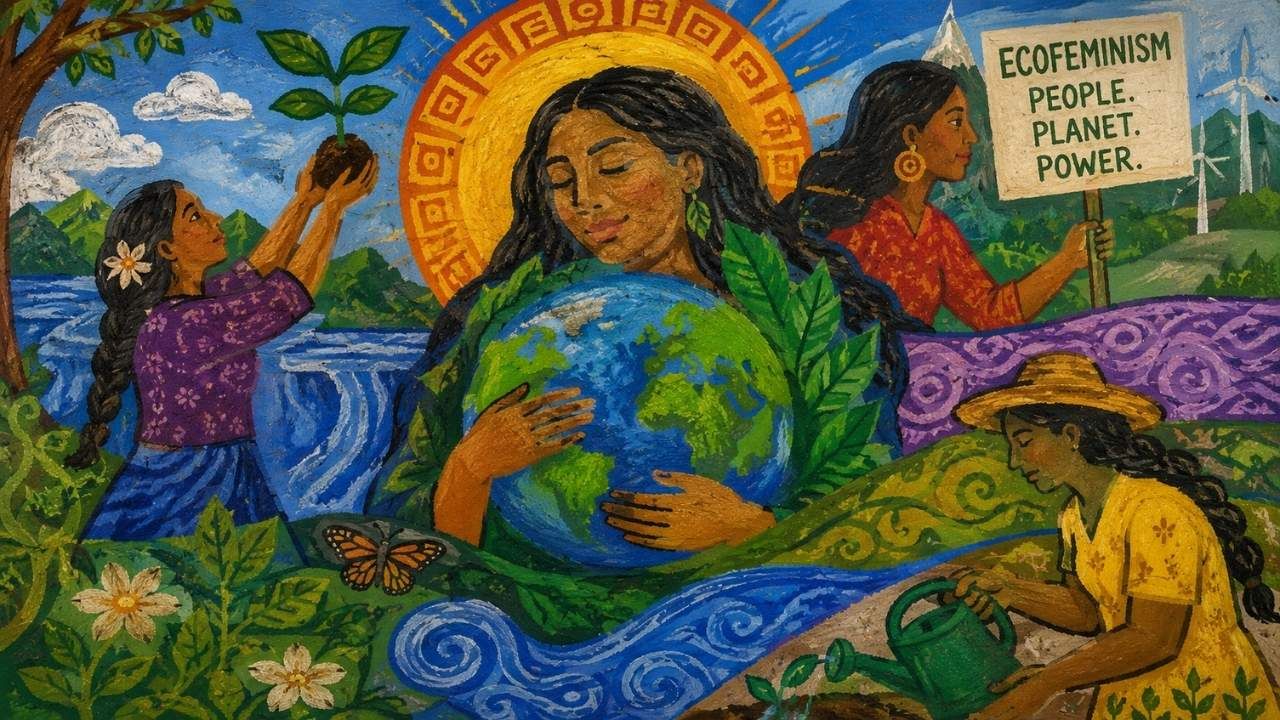
This helps explain what Dia Mirza means when she says climate change is linked to patriarchy. The argument is not that men individually cause climate change, but that systems built around unequal power structures can contribute to environmental harm.
Supporters of ecofeminism argue that environmental and social issues are interconnected. They believe that tackling climate change effectively may also require addressing inequalities in representation, access to resources, and participation in decision-making ideas that are reflected in the broader point Mirza was making.
What Does the Research Actually Tell Us?
To understand this debate, it is important to separate two different questions: Who is most affected by climate change? and What systems helped create conditions that led to it?
There is strong evidence that women are often among the groups most vulnerable to the impacts of climate change. Research from the United Nations, the World Bank, and numerous climate studies shows that women, particularly those in low-income, rural, and developing regions, frequently face greater risks during climate-related disasters.
This vulnerability is not simply because of gender itself. It is often linked to existing social and economic inequalities, including limited access to land ownership, financial resources, education, healthcare, and political decision-making. When extreme weather events such as droughts, floods, or heatwaves occur, these inequalities can make recovery more difficult.
In many communities, women are also responsible for securing water, producing or preparing food, and caring for children and elderly family members. As climate change places increasing pressure on natural resources, these responsibilities become more demanding, creating additional economic and social burdens.
At the same time, greater gender representation in environmental leadership can influence climate action. Several studies suggest that governments and institutions with stronger female participation are more likely to support ambitious environmental policies, sustainability initiatives, and long-term climate planning.
Why Some People Disagree
Many people believe climate change is the result of centuries of industrial development, economic expansion, population growth, and the widespread use of fossil fuels. Some people argue that framing climate change primarily through the lens of patriarchy places too much emphasis on gender. When the issue is fundamentally a global environmental challenge.
Others maintain that the climate change are industries, markets, energy systems, and political decisions involving both men and women. The climate crisis is better understood as a consequence of economic and industrial systems rather than gendered power structures alone.
While social inequalities may influence who is most affected by climate change, many people do not see those inequalities as the primary cause of the crisis. For this reason, they disagree with the idea that patriarchy can be identified as the main cause of climate change.
Why Supporters Defend Her
Internet and researchers say Dia Mirza’s statement was not meant to blame all men directly. Instead, they believe she was pointing toward larger systems of power that have historically been dominated by men. In this view, climate change is not just an environmental issue, it is also tied to inequality, representation, and control over natural resources.
Experts, those influenced by ecofeminist ideas, say that climate discussions should include social justice along with environmental concerns. According to them, solving climate change is not only about cutting emissions or using cleaner technology. It also involves understanding the systems and power structures that have contributed to environmental damage over time.
Advocate Parikrama Khot says that within feminist theory, patriarchy does not refer to every individual man. It refers to a social, economic, and political system of power that legitimises domination, control, and the unrestricted exploitation of resources. Khot is the founder of Sapient Law Chambers in Pune and specialises in family law, gender and sexuality advocacy, and social justice issues. Khot explains,
Ecofeminism does not claim that every man is responsible for climate change, nor does it suggest that marginalised communities such as Dalits, Adivasis, OBCs, or economically disadvantaged groups are responsible for environmental destruction. Instead, it argues that the exploitation of nature and the persistence of social inequalities often stem from the same power structures.
Ecofeminism fundamentally questions a model of development that views forests merely as timber, rivers merely as water resources, land merely as mineral wealth, and women merely as objects of ownership
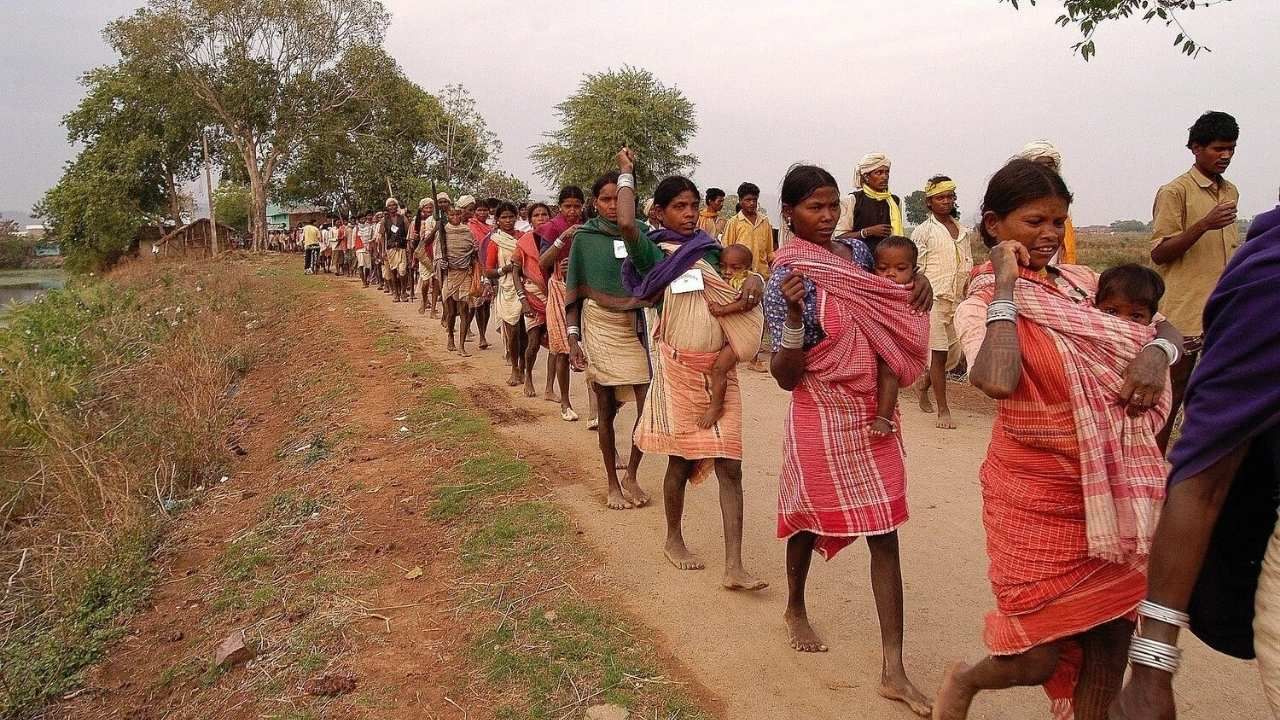
Commenting on the debate, Bhimrao Nivruti Raskar, Social development Practitioner and grassroots activist with over 35 years of experience in Maharashtra, said that patriarchy should not be understood as individual men, but as a system of power that often encourages control, domination, and excessive consumption.
According to him, the discussion is closely linked to the distinction between "need" and "greed" that Mahatma Gandhi often spoke about. He said,
Patriarchal thinking is frequently associated with the idea that we need more, better, bigger, easier, and quicker outcomes. This mindset of endless accumulation and consumption is harmful not only to society but also to nature.
He stressed that the debate is not about blaming men as a gender.
This is not a criticism of men, but of a mindset rooted in domination and unchecked greed. The conversation is about values and behaviour, not about biological sex. We need to become better human beings and better allies of nature if we are serious about addressing the climate crisis.
Climate Change as a Social and Political Crisis
Dia Mirza's statement makes clear things out that it’s something larger than a social media controversy. It highlights a growing shift in how climate change is discussed. Earlier conversations focused primarily on emissions, technology, and energy. Increasingly, discussions are also examining questions of inequality, governance, gender, and justice.
Mirza’s statement has brought attention to an important question all around: Is climate change only an environmental crisis, or is it also a social and political crisis?
The answer may ultimately lie somewhere between the two extremes. But climate change is no longer the future, and it’s happening so who bears its costs, who makes environmental decisions, and who benefits from existing systems are questions that continue to shape climate debates around the world.
And that is the conversation Dia Mirza's remark has pushed into the spotlight.