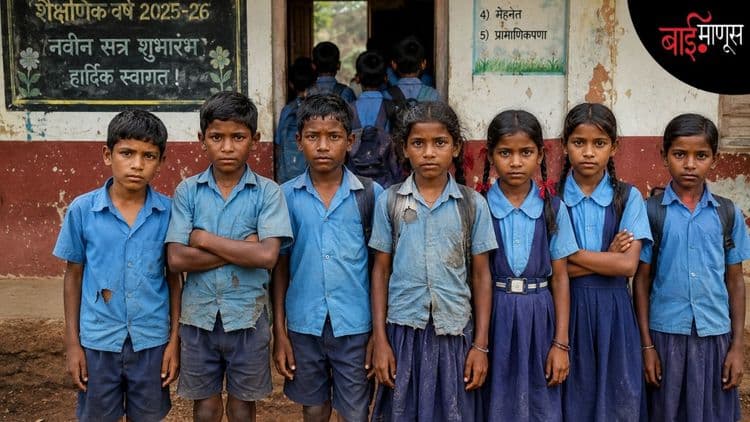
Two days ago, the police brought hundreds of people from the Pardhi community to the police station in Alandi. Because if anything, these people steal 'warit'. After the discussion started on social media, 'So what's so special about it?' Some justified Pardhya's arrest justified by such a flamboyant appearance. According to him, 'Pardhis are criminals, and they should be locked up with their wives and children.' This is their traditional mentality.
We need to look at this incident very seriously. Even after celebrating the nectar jubilee year of Indian Independence, we have still not been able to erase the stamp of innate criminality on certain tribes/communities in our country. Pardhi means a thief. Pardhi means robber. This group has not yet found stability due to the 'inhuman rumors' that have been spread from generation to generation. Pardhis are very soft targets for the police because of the birthmark of criminality on their foreheads. Anywhere there is a theft, arresting the Pardhyas, beating them brutally, etc. have not changed even in the last hundred years.
For a moment, we will accept that, 'They are criminals. They steal. Robbery. They beat people and so on.' But who has forced them to do such an act? Are we going to think about it or not? Even after seven and a half decades after independence, if this group does not get a rightful house, job or similar things to live in, how will the problem of their livelihood be solved? Their stability, their rehabilitation is indeed a social issue. But unfortunately, we have never trusted this community. Neither house nor door. Are we ever going to truly understand the pain of this group of people who are wandering around with bread on their heads for food or not? The problems of the Pardhyas, who have no right to village shivar and the nomads as a whole are very different from the Dalit-adivasis.
Many groups of people have been living a nomadic life in our country since ancient times. During British rule, the British authorities introduced the 'Jungle Act' in the eighteenth-nineteenth century. This created a huge dilemma for the tribal, nomadic groups who were totally dependent on the forest/nature. The British forced this group to surrender and capture their natural territory by force and arms. The tribals and nomads strongly resisted this policy of the British. At that time, there were big rebellions in the states of Bengal, Orissa etc. Even after the institutional surrender to the British, the tribals, the nomads, had brought the British to Jerris.

Later, the 'Arms Act' was passed and a big conflict arose. It was from this dissatisfaction that the rebellion of eighteen hundred and fifty-seven took place. The performance of tribals and nomads in this rebellion was significant. After realizing that these people were not surrendering, the British brought the 'Criminal Tribes Act' in 1871 in the name of law and order, and under this act, about 198 tribes in the country were made legal criminals. Pardhi is one of them.
This act branded the tribe as 'thieves' or 'criminals'. Everyone born in this tribe became a criminal. This law gave the police and villagers alike official license to brutally harass Pardhis and similar nomads. The result of this incident was that the family / social health of the nomads was destroyed. Their physical and mental peace was disturbed. They could not stay in any village for more than three days. It was made mandatory to go to the police stations night and night to appear or to give information about the goods and animals in their possession. Their terrible persecution began. Their women and girls started being abused. From beating them like animals on mere suspicion to outright killing – many incidents took place.
The 'Criminal Tribes Act' is sitting on the neck, 'Who should seek justice?' A question arose. This act gave unlimited powers to the local administration, and they used it very ruthlessly. It has not changed even today. Their right to live as human beings was taken away. Due to lack of stability, they are left with no other option than begging or petty theft. Further, the British passed the 'Settlement Act' in 1924 and recruited the nomads in 'Settlement Camps'. About fifty-two centers were established across the country. By which an attempt was made to stabilize them (schools, employment, land acquisition etc.) These colonies were known as 'Free Colonies'. Of course, they were not free from this either.
If we are not going to accommodate these people or give them dignity, what should they do? There is no place in the village-car, city, rightful house-land- no job. Business loans are not available. Because there is no permanent address. No education due to continuous migration. Although they have many problems like health, superstition, child marriage addiction, they also want to live in the end. Despite their desire to live with dignity, they are unable to live. Financial and social prestige are not available. How long will we ignore this situation?
There is no reason to support the criminal activities of Pardhyas or similar tribes. But keeping them with children just on suspicion is inhumane. What effect will this incident have on the minds of the detained children? We should think about this. No society has an absolutely pure or healthy environment. A little conflict is inevitable. But it means denying the existence of a group from a hegemonic mindset. Identifying it as a criminal is a terrible thing. This situation will not change unless we change our traditional mindset and attitude towards nomads. We should all try that.