What to learn from millions of success stories in the world? So there is no other option but to fight the battle of siddha. Secondly, fighting until proven, one has to fight with only one sutra in hand, then where are you hailed? In this entire journey of axioms, then no limitations like country, time, time, circumstances can block your way. In the writing of a warrior, such limitations do not matter much. Likewise, who are you? What is your background? What is your history? Those who make up their minds with superstitions like fate, destiny, godfather etc. can never create any history. History creates those whose feet threaten to step forward and trample all such beliefs. Those who are prepared to walk on coals to overcome the darkness that surrounds them. Those who have the strong will to repeatedly hit the rock-like system without fear or despair.
Those who have complete faith in their abilities and who do not deviate from their goals even for a moment without begging for any time. On the contrary, they defy time and write a long inscription of their achievements on the spears of time. No matter how much one tries to bury it in the soil, it never stops resurfacing. Such stories of achievement and achievement are vital in any era.
Here I am telling some such stories. All these deadly struggle stories begin with the '12 October 1871' Criminal Tribes Act. This law declared brave warriors, skilled in the arts, believed in hard work, loved their native land, water, land and forests more than us, and declared them as thieves and criminals and ended their existence. These stories of criminals 'freed' from such non-existent criminal laws. These stories have references to the burning of thousands of generations. That's why their shine automatically comes with more sunshine than gold. Also, their brightness is not limited to their individual parts, but becomes the whole.
After the British went to the 198 tribes of India who were declared criminals and captives according to the Criminal Tribes Act, even though the country became independent, no one noticed. After two or three years after the celebratory pomp of independence, attention was paid to hundreds of settlements of millions of captives. 'What do these people want to do?' So the brainstorming began. After waiting for almost five years and sixteen days, the wires of the settlement were cut on 31st August 1952. All these tribes fighting for the native land were indeed 'liberated', but they got a begging bowl in their hands and a medal around their necks as the sons of thieves and criminals. The hegemonic society accused each generation of 'Tu Chor, Tera Bap Chor, Tera Pura Khandan Chor'.
Your history belongs to thieves, so all chances of leapfrogging are nipped in the bud. The system of not giving any chance to these underprivileged people, destroying them, and not naming them, like Chanakya, Shandy was like a knot. But the springs, armed with the will to fight stubbornly, break the breast of the great mountain and come out. In fact, their intention is so firm that no matter how many mines are planted on their courage, their courage cannot be shaken. Nagraj Manjule has proved this. Wadali Brothers, South BajrangiAndPoorna MalavatThese fighters. The situation forced them to fight. They also fought hard. Possessing intense brilliance, he restored the self-respect of those who had lost their self-respect in their search for a dignified life.
 Nagraj Poptrao Manjule
"Every day a dream with stale bread in my mouth, beating the wound of Sutki on a stone, my hopeful poem is born, deadly with questions"
Standing against 'Sun's conspiracy', the poems that came to our hands and the camera started making noise in the mind, this question in the restless mind. A real life movie is the life of a foundry that has blown its wind with a storm of such questions. Whose real hero is Nagaraj Poptrao Manjule. His life is more interesting than a movie. Awe-inspiring. From being a renowned artist, writer, poet, director, actor to being a sensitive soul, Nagaraj Manjule is a lot. Which created a record in the Indian film world. He became the first director to win consecutive National Awards with three films; 'Pistulya', 'Fandri', and 'Sairat'.
He was born into the 'Vadar' caste, one of the 'Vimukt' castes, in the Vadar population of Jeur. Fighting for food and drink, fighting for survival in the house since childhood. Even though he proudly says today that 'I was made by circumstances', those circumstances were never so straightforward, simple and pleasant. When he was two-three months old, he was adopted by his cousin. As there was no life in both families, life was torn apart before we knew it. Maternal love of both houses has been tested.
There is no tradition of education in the entire nobility at home. But the rural fathers who used to break stones from village to village showed Appa, Bhushan, Bharat and Nagaraj to school. There was no money to pay school fees. Teachers were expelled from the school. Appa's school is over. But both became police officers. Nagaraj, however, left the police after 13 days. Nagaraj, who was "good" at education, became an addict at an early age. He started drinking alcohol in fourth, cigarettes, bidi, ganja in seventh. He started doing many bad things, like secretly watching blue movies, playing cards in clubs, eating cannabis pills. Because of this, he started stealing money. He gave up all addictions when he fell in love with a girl in seventh grade. During this period, a girl played 'Fandry' and the name 'Fandry' means 'pig'. That later became a national honor for Nagaraj. Through his films, he watched the lives of millions of children like him who lost their childhood, lost their lives. Going to the Sangh branch, shouting at Shiv Sena, cursing Ambedkar, he did it all out of ignorance. After failing thrice in class 10th, he became fond of reading and Nagaraj met his father named Babasaheb.

He accepted the father who inspired thousands like him to think and fight by contradicting his birth father. Today he is trying to destroy the caste hierarchy by using the Ambedkari theory. With the departure of his father, Nagaraj was completely broken inside. He thought of committing suicide many times. He turned to writing diaries and poems to express himself in solitude. A security guard, Istrivala, did the work. He faced huge financial difficulties till he got a higher education. He lived as long as he could wait...
This poet, who started speaking against the 'sun conspiracy', said, "Sairat, the stone thrown at the system by becoming a jab at the foundry, has hit the cremation castle of the caste like a bomb." His film writing is very close to his life. He brought before the world the sufferings of people who were worthless in the soil. Each selected artist has no background. The themes of the works of art also revolve around Bhoi, Vadar, Kaikadi, Pardhi.
Even if you look at the names Pistulya, Jabya, Langdya, you will understand the role behind them. His training had how to hammer the stone, where to place the chisel so that the stone will become hollow, had been passed down to him by thousands of generations. Nagaraj certainly went a thousand steps ahead of them. He knows exactly where to keep his pen and camera. Cruel reality of caste, poisonous orthodox traditions, humans being cut off from man by man, he takes important things in his poem. Nagraj has stirred up the sludge accumulated at the bottom of social culture in Maharashtra. Taking strong opposition, anger, infamy...
The Wadali Brothers
Considered to be the pride of Sufi singers, Padmashree, who captivated the audience with her high-pitched voice, Puranchand Wadali And Pyarelal WadaliThe Bajigar Banjara brothers of Punjab, who have gained worldwide fame as the 'Wadali Brothers', have arranged Punjabi folk music along with Sufi singing in such a way that their identity is 'Bas Naam Hi Kafi Hai'. He has been honored with many awards today, from the Tulsi Award, Sangeet Natak Akademi Award to Ustad Puranchand Wadali's Padma Shri. It has become a talisman around the necks of fans around the world.
His childhood was spent in terrible poverty. Had to take refuge in singing for daily livelihood. Sung on the grave of Pir Fakirs. Born in the Bajigar caste, the Wadali brothers hail from Pakistan. Puranchand Wadali was born in Pakistan in 1940 before the Partition and Pyarelal was born in India. Their descendants continued to wander for cattle grazing. Herding cattle, bargaining and singing are their occupations. His father, Thakurdas, came to Guruki Wadali near Amritsar in Punjab after the Partition. Later they became known as the "Vadali Brothers".
 Wadali brothers
The Wadali brothers did not have a book education. Ustad Puranchand Wadali was originally a wrestler. He wrestled in the arena for 25 years. Wrestling is also his favorite sport. He was not at all interested in singing. Pyarelal Wadali, however, used to sing in village nautanki, raslila, fairs, at the grave of Pir Fakirs. He used to play the role of Krishna and bear the burden of household expenses. Due to his father's insistence, he took music lessons from Ustad Bade Ghulam Alli Khansaheb.
Sufi turned to singing not as a career, but as a livelihood. Today he is revered as the heir of the fifth generation of Sufi singing. From Baba Farid, Sultan Bahu, Baba Bulleshah, Khwaja Ghulam Farid Shah Hussain to Amrita Pritam, he gave voice to the words of many. Awliyas who revel in Gurubani, Kafi, Ghazal, Bhajan and Qawwali. He has done magic with his voice in films like Dhoop, Charkha, Pinjar, Sarhadpar, Tanu Weds Manu, Mausam, Rangrez etc. Mike drags his voice, believing that the once-feared brothers have become Mike's tyrants…
The Wadali brothers, who used to sing on bicycles and scooters, did not buy a car for many years. He loved to ride on bicycles and scooters. Puranchand Wadali says this, 'Mai Garib Bap Ka Beta Hoon. I rose from the ground. Zamin ke logong se milne mein bada sukoon pata hoon. Gadi me bahitunga to zamin ke logang se nahi mil pa ungga.' The one who succeeded in rising from the soil and touching the sky is called a winner by society, but this victorious person believes that I am from the soil, my life is from the soil, the people from the soil should meet their necks... Whose this sincere feeling, they are the ones who created their unshakable position by becoming an enemy. The name is 'Wadali Brothers'...
Poorna Malavat
Many aboriginal children who run and climb high mountains, descend deep valleys, kill birds with a stone while tending cattle, can go to the shooting range in the Olympics and join the army to capture the enemy. They need to get a chance. Poorna Malawat, a daughter of the Lambadi tribe who drives goats in the hill valleys, has proved that if given such an opportunity, they can easily take the field. Diamonds are always found in coal mines. The lotus always bloom in the mud. But how long should they be born in poverty and die in poverty? Why didn't we let them call this land, this sky, our own?
 Poorna Malavat
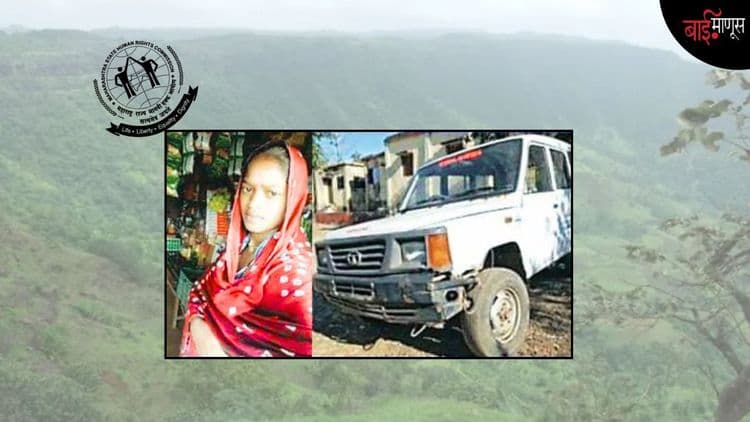
Poverty at home, barely enough income to feed the family. Parents have no sense of education. A small Tanda nestled in the side of a mountain, in a dense wilderness hundreds of miles from modern settlements. There are no facilities. Houses other than shacks make life easier. But a 13-year-old boy, Poorna Devidas Malavat, born in Pakala Tanda, Telangana state, set a world record by carving his name in golden letters on the highest peak of the world, Mount Everest. She became the youngest woman (13 years 11 months) to climb Mount Everest. From which she gave a new message, a new inspiration to all women and girls in the world. There may have been many celebrities established in the world, but the success of this child is significant in many ways. There is no tradition in the house, no rich heritage. It is also tainted. At such a time, she showed this courage with the strength of only four months of training. This happened for the first time in the history of climbing.
This was possible for her, thanks to 'Andhra Pradesh Social Welfare Residential School' and her mentors. Secretary of Tribal Residential school Society R. N. Praveen Kumar, the innovation-seeking officer provided climbing opportunities to underprivileged children through the 'Adventure Sports' campaign, in which Poorna secured an 'A grade' in the Kanchenganga climb and made it to the final two. From April 4, Purna started climbing the mountain from Kathmandu. She finally reached the summit on May 25, 2014, after 52 consecutive days of climbing a very difficult ridge through China. With great confidence, she set a record for herself. As the light of knowledge starts reaching the valleys with the knowledge of education, this is the proof that the light within us has started to take the form of the sun.
Purna, along with Dr. An image of Babasaheb Ambedkar was carried. This girl from a family struggling to earn two meals a day has become a role model not only for the country but also for millions of marginalized people in the world. How much to praise this kid's confidence? Before leaving for the mission, she had told her parents that, 'After I leave, many people will come to meet you. T. V., the paper ones will come.' It was a sign of determination in her morale. Which no one thought was true at that time. When she spoke to her parents in her native language from Everest base camp, 'Yadi-ba man chadgi' (Mother, I have climbed Everest), her parents were teary-eyed. It was satisfying to see her demonstrate that we taught her even in dire circumstances.
When reporters asked Poorna before climbing Everest, she said, "I will climb and become an IPS officer when I come back." This is when the goal is thousands of koses away. She saw many dead bodies on the way up, facing danger at every moment. But she didn't stop climbing. Keep climbing. She suffered food poisoning near the summit. Still, she was determined. Even if death came now, Behtar would die on reaching the summit. And finally she reached it safely and hoisted the tricolor at the top. She was asked by reporters, 'What did you feel when you reached the top?' The answer she gave then was very eloquent. She said, “Sir, I see not only India but the whole world. And I feel like I've conquered the world.”
South Bajrangi Chhara
An infamous settlement called Chharanagar in Ahmedabad, Whose history is tarnished. But her present and future are refreshing, bright. This could happen only because of Dakshina Nandlal Bajrangi and 'Budhan Theater'. A goal-obsessed, haunted youth and the theatrical institution he raised could transform an entire tribe, pitting them in a struggle for survival, perhaps the only example of this in India.
'Chharanagar' is a settlement of the Chhara tribe. Next to Sabarmati. But people are afraid to even go there as this is a place of thieves and criminals. The means of livelihood of the people here is distilling, drinking and selling hand-baked liquor, as well as petty theft. The overall environment here is unsafe. As a disgrace, the police also pick up innocent youths, women, men and make their lives' hell by registering false cases against them. This has been going on for years.
 South Chhara
Dakshina Chara, born in this locality, was dedicated to crime and vagrancy right from his childhood. But he was really fond of drama. He felt bad about all this situation. So he used to play against the police. Out of anger, the police framed him for a false crime and put him in jail under section 326, 324. Eight days after that, he was going to take the IAS exam. But he was convicted again. Endured police interrogation. Against this Dr. Ganesh Devi, Mahasweta Devi, K. Satchidananda, Bhupen Khakkar raised voices through newspapers and help came to the southern tribe. Dakshin decided to change all this. Then he had drama and only drama in his hand. Then the transformation took place Of 'Budhan Theater'.
Alok and Jitu is currently studying at the National School of Drama in Delhi. Gathering some of these talented Chara youths, Dakshin wrote plays against the social and political injustice of the nomadic tribes across the country. It was presented in streets and villages. The popular drama 'Budhan Bolta Hai' was born out of it. 'Budhan', 'Death of Pinna Hari Kale', 'Deepak Tanuja Pawar' are plays written on innocent youngs who were victims of police brutality. These plays used to be performed in front of the police station, as 'anti-police theater' for justice.
Dakshin, a playwright, actor, director, social activist, says, 'Budhan Sabar gave birth to me.' Budhan Sabar is an innocent youth from a freed tribe of West Bengal. A victim of police brutality. Thousands of such mercury are being killed today. They should be saved, Mercury should be kept talking, hence a revolutionary movement was born in the South. He took all the children of Chharanagar to books, education and drama. Today, hundreds of children are making a name for themselves in the fields of advocacy and acting. Chhara Jamaat is turning towards education. All credit goes to 'Chharanagar Library', 'Budhan Theater'. Today, the organization 'Budhan School of Theater Arts, Journalism and Media Studies' was established. More than 500 artists have graduated from this institution.
He has made more than 20 documentaries on social and political issues. He has conducted more than 1000 'Budhan' plays in India and abroad. For the past few years, he has been organizing the tribal theater festival 'Ahmedabad Theater Festival' in Ahmedabad. He is the first youth from the Chhara tribe to receive a Ford Foundation and other prestigious international scholarships.
I received many scholarships, like National Tribal Academy, Rajiv Gandhi Art Fellowship, a Language Fellowship. Not only this, he is an activist of the "Blind People's Association". He has also received an award from the National Human Rights Commission. Many of his documentaries have won awards. He has created important projects for social justice, like 'The lower Depths', 'Acting like a Thief', 'Budhan', 'Accidental Death of an Anarchist', 'Ayush', 'Birth 1871'.
Journalist-writer Prasant Pawar stated in his book '31 August 1952', "Chhara Nagar, once infamous as a school for criminals, is now known as a school for artists." This journey is so freaking awesome. The South has made its own way. Why are we second citizens of this country? We also want dignity. We also want to live with dignity… this is the question the South is repeating again and again. Saying 'budhan ki avaaz meri avaaz', he is speaking and dreaming to deprived dumb lips...

All these nomadic people have repeatedly proved their patriotism and patriotism from the time of history till today, yet they were looked upon as secondary citizens. Someone implicated them in a false crime, someone cheated on them. Someone said, drive these devils away. So someone said, what is the proof that these are from this country? The secondary heroes sang the praises of their prowess in various fields. The conventional definitions of struggle and success have been changed. From the proto-revolutionary Umaji Naik, Govind Guru Banjara, who fought in the freedom movement, to Vasantrao Naik, Sudhakarrao Naik, Phulandevi, who created their ideals in the arena of politics.
From Poorna Palawat, who set a world record on Everest, to Harisingh Banjara, who ran barefoot and won a medal in the 1967-68 Asian Games. Padmashri Laxman Mane, Laxman Gaikwad, who shows the edge of pen, art, words, music, rhythm, drama, acting stage, Nagraj Manjule, Wadali Brothers, Reshma, South Bajrangi, South star M. K. Thyagaraj Bhagwadhar, M. N. There are hundreds of names like Rajan, who wrote in golden letters the glittering history of groups rejected by history. He proved himself by demolishing all the walls of caste, untouchability, deprivation, injustice and tyranny.
All of them should be appreciated not only because they created their own place and existence in the established society, even though the times and conditions were not favorable when darkness surrounded them. While doing this, a new ideal was set before the coming generations for their future. That success can only be achieved through determination and hard work. The world can be conquered. History can be made…