Last month, a news story related to Brazil was circulating among heritage, tribe, culture and language scholars. She was, Tamandua found. Who is Tamandua? Why is the news of his discovery important? Why were detailed articles published about it after its discovery?
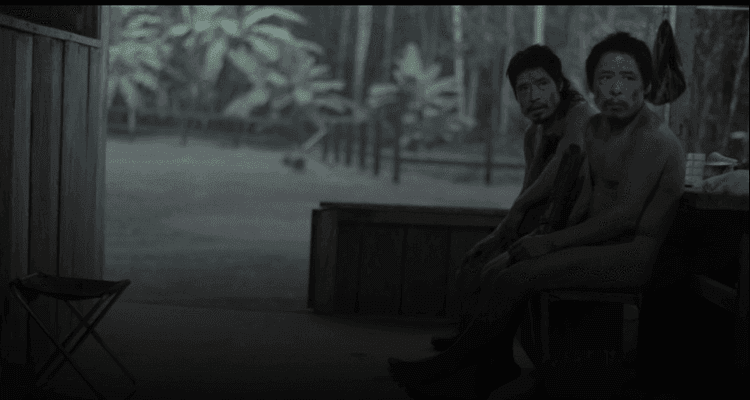
Discovering Tamandua is the important thing because he is the third member of a group called Piripquara that lives in the Amazon jungle. Only three members of this tribe are left. One of them is his uncle. His name is Pacayi and his sister is named Rita, but she is married to another tribe. Tamandua and Pacayi lived for a long time in the forests, away from people. He had completely avoided contact with outsiders. To understand why this is so, it is necessary to know their full story. Then the importance of these three will be realized. This story starts in 1940. This year, Brazil's then government sold a large amount of land in the Amazon forest. They planned to dig mines there, cut timber and sell it, plant rubber trees, produce rubber. The government would get a large amount of income from it. It is true that these lands were sold and bought. but it created a dilemma for the primitive tribes living in this forest.

For generations, even centuries, people lived in these forests. Such was their lifestyle. They used to stay away from people outside the forest. Even their contact was avoided. But this decision brought outsiders into the forest. Outsiders were only interested in timber and minerals. They drove these gangs from their places. Some were even killed. Due to all this, gangs were broken up, divided, expelled from their places of residence. Many people died in it and the gangs gradually became hesitant. Rita left her tribal abode in 1985. She started working for outsiders. Later, she married a person from another tribe. According to her, when she was five-six years old, there were about 10–15 people in their gang. Now, her brother Tamandua and uncle Pacayi are the only two left.
After 1985, efforts to save the indigenous tribes began, but thousands were killed in the meantime. Tamandua and Pacayi first appeared in 1989. Government officials and researchers sought Rita's help to find the people of this tribe. After their first appearance, they both appeared live in 2007. As traces of their habitation were found after searching deep in the forest, the government reserved for them an area of about 1,000 square meters of forest. Their tribe lived in this area. This decision was opposed by the Penoz family who bought the area. They ask why there is so much space for only two people? They are also fighting to regain possession of the parts they have bought. The two were seen again in 2017. He approached the government base by himself. They wanted a place. After that, it is found that Tamandua has preserved the Vistava till today. In later years, Pacayi came to live near the base.

Living in the forest must have been difficult for him due to his age. Now he wears the clothes etc. given by the authorities. Tamandua, however, remained in the forest. Lives by hunting according to their method. He could not be seen as he moved away from outsiders and this was a matter of concern. Last month, traces of his habitation, a recently extinguished fire, a makeshift shelter, fresh footprints in the soil were found and Tamandua was still alive, roaming the forest in his own way. The 'New York Times' has published a detailed article on their discovery and circumstances. A movie titled 'Piripakwara: The Last Two Survivors' has also been released in 2017 about these two.
Languages in danger
As the maturing tribe teeters on the brink of extinction, it is not limited to humans. The knowledge that those people have acquired over generations, the wealth of information they have about the forest, will be lost. Along with all this, their language, which is important, will also disappear with them. The loss of a language means the loss of a culture because language is not only a medium of communication, it is also a carrier of culture. A language includes the accumulation of many generations. Traces of this can be found in many aspects, even in our speech. UNESCO, an organization created by the United Nations for the preservation of heritage and culture, also works on language. The organization publishes a list of dead, endangered languages. Try to save them. Efforts are being made by 'UNESCO' and some other organizations to keep video or audio recordings of the speakers of that language, to create their dictionary. An example of language preservation is worth reading.

A language called Ayapanco was spoken in Mexico. It was one of the various languages of the various tribes there. After realizing that there are only two people alive who speak this language, they were contacted. This was about 13 years ago. Those two people are Manuel Segovia (age 75) and Isidro Velaquez (age 69). The funny thing is that the two of them did not get along. Those two living in the same village did not speak a single letter to each other. Manuel spoke to his brother in the Aypanco language. After his brother's death, he used to speak to his wife and son in this language as well. Although they understood the language generally, they could not speak it except for a few words. They were approached and learned that language. Words in that language and their meanings were written down. This campaign lasted for a long time. An organization called 'Waikitongues' in America works to preserve the language. They talk to people who speak such different languages. They record their speech on video.
Why is it important?
Preserving tribes or languages like those mentioned above is important for future generations. The wealth of information from such tribes and their traditional knowledge, can be useful in many ways. Let's take the example of forest-living tribes. They have detailed knowledge of the forest. There is information about various things like useful plants, flowers, leaves, medicinal plants, troublesome plants, plants that repel insects. They can be used. Their customs and traditions are connected with the forest. They are passed down from generation to generation. It can reach not only their roots, but also our roots. Since language is the carrier of culture, many words, phrases, sayings are associated with culture. They take us back to our roots. These are a great source of information for students of language, culture, heritage. We understand many things, like our standard of living, culture, farming practices. They can also be used in the modern world. To preserve language is to preserve diversity. It should be remembered that if this diversity is not preserved, a large stock of information and knowledge will also be lost.

The Amazon rainforest is rich in biodiversity. Everyone agrees that it is an oxygen factory. Natural resources, natural heritage should be preserved even because of our selfishness. The question remains of Tamandua about natural justice is to let him live his way.