Mrig Nakshatra had appeared. 'Nomal' was observed in Juvvi village. Nomal says that on that day no one should cut a tree, no one should go through the village, no land transactions should be done. So there was nothing wrong. There was only one galka in the village. All the women gathered in Gotool. The story of Perma had come to life. After worshiping Bijai in the forest, all the men entered the village. A shout of 'Tirrrr ahead' rang out in the sky. The women welcomed him by singing songs. Everyone started jumping to touch the pylon the girls had built in front of Gotul. The share of women's offerings was handed over to them. They cooked it in the gotul. The men went to the forest and cooked their prasad. There was a buzz in the forest and excitement in the air. This festival was 'Vijapandum'. Vija Pandum means Bija's festival. When lightning strikes, every tribal here sows paddies in their fields. Vija Pandum is a very important festival among the Madia and Gond tribes. Of course. Highlighting the primordial relationship between nature and man. Especially, the worshiper of the earthen vagina. In Madiya, 'Tirrrr' means Jai Ho and 'Next' means vagina. This 'vija pandum' is because a new life is created from the vagina, from the ground. This festival is celebrated under the leadership of the traditional heads of the village, namely Perma, Gaita, Kotla. An example of nature worshiping tribal culture.
Know about Vija Pandum festival
The reason for elaborating on Vija Pandum is that it was celebrated in the remote Bhamragarh taluka of Gadchiroli district, considered to be backward in terms of urban civil society. On this occasion, on the occasion of this traditional Vija Pandum, the meeting of Van Dhan Kendra in the taluka was also concluded there. Van Dhan Kendra is a scheme of Tribal Development Corporation. Assisting tribal self-help groups for employment generation. In that meeting in Juvvi, some proposed the project of making Moha Ladoo, while others thought of extracting castor oil. Along with this year's agricultural seeds, the sowing of these seeds in that meeting also became clear in the minds of the youth of the village.
Gond and Madia tribes are the happiest.

There is always a cry that development schemes do not reach tribals or tribals are not mainstreamed in development. But no one reaches its roots. It is rooted in mainstream society's ostracism of tribal livelihoods and culture. The issue is not just the development plans but the whole approach. Tribal development was determined by the ideology of urban and civil society. As a result, he failed. How pathetic is the condition of tribals around the global metropolis like Mumbai today. They work as laborers in brick kilns. They have forgotten their language, they have forgotten their culture. They have lost their land. Their life expectancy is reduced to forty years. None of them are happy or unhappy. If that model of development was successful for the tribes, why are they not happy today is an important question today. Happiness is an important dimension of any community in the United Nations development criteria. Considering that, the Gond, Madia tribals of Gadchiroli district, which is the most backward in the eyes of the state, are the happiest, most prosperous. Its seed lies in its rich culture. It is because of this culture that they have been able to preserve the forest and preserve nature. However, with the passage of time, this culture of the tribals, its meaning did not reach the non-tribals. The main purpose of this sadara is to convey that.
Why is Gotul important for tribals?
'Gotool' is one of them. In fact, 'Gotool', the free culture of the youth of the tribal community, reached the civil society. Actually, the meaning of gotul in tribal culture and the existence of gotul is beyond that. GoTool is an important tool for shared living, decentralized democracy and community decision-making. We will discuss it here. Apart from that, pandum is the festival of tribals, weta is their hunting methods and its rules, Patti is their habitat, pen kartal is the festival of gods, matriarchal practices like laman, customs like binalk related to jatra, birth, marriage, death, nomala is the way of eating and drinking. We will do it here.
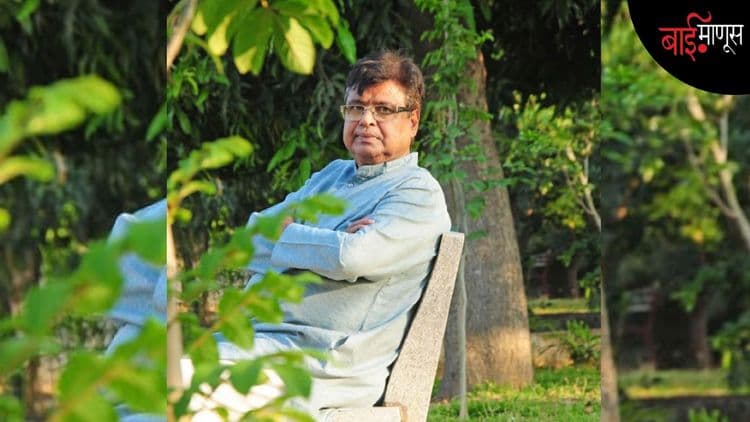
I got an opportunity to become the first lawyer in the Media community. I graduated from Ferguson College and studied law at ILS. But when I came back to my village, started working with my people, I realized that we had not learned anything. A lot remains to be learned from him. Answers to many tribal questions are found in their rich culture. But due to its neglect by the civil society, the adivasi has been thrown out as it has not been included in the mainstream of development. If we want to develop it, if we want to solve its problems, it is necessary for the civil society to understand the culture and customs of the tribals. It has become necessary to understand this heritage of cultural richness, to connect it with modern living, to revive the confidence lost due to eviction, to gain self-respect, to preserve it in tribal society. We started this journey through Gotul Patti Committees of Gadchiroli district. The Van Dhan Kendra meeting in Vija Pandum or the fight against illegal mining in Surjagad and Pen Kartal are some examples.
The origin of the law is in customs
The origin of the law is in customs. The origin of law is considered to be in customary tradition. But apart from the Pesa and Forest Rights Acts, tribal culture has not been considered in any law. Tribals have their own marriages, but as it is not bound by law, their marriages are governed by the Hindu marriage system. Adivasis are not Hindus, yet their conversion is politicized. Adivasis have a separate mechanism, a structure, capable of making individual decisions, collective decisions. But mainstream society did not take notice of it. It was ignored. Such a large tribal society, divided it into fragments. Central India is so vast, from Madhya Pradesh, Chhattisgarh, Orissa to Amravati, Kinwat in Maharashtra. A vast territory became a country. Provinces were formed language wise. Marathi speakers got Maharashtra state, Telugu speakers got Andhra Pradesh, Punjabi speakers got Punjab. But the Gondwana speakers did not get the Gondwana kingdom. At that time, there was no capable leadership from among the tribals.
They did not have an independent state. Had that been the case, the condition of tribals in India would have been very different. Today, the Gondi speaking tribals are scattered throughout the state where their native language was imposed on them. My language is Madia, none of my parents and family know Marathi, but my mother tongue is written in Marathi. In Chhattisgarh, the native language of my aunts and uncles is written in Hindi in government documents. The native language of the tribals of Telangana is written in Telugu. Tribals were divided. Weakened their power.
As a result, the next generation of Gond tribals in the country cannot communicate with each other in Gondi. Madiya names in our area are receding and names like Aishwarya and Laila are being kept. Tribal culture is disappearing. She will attempt to keep the world alive and bring to you the ongoing efforts in Central India. The hope is to make this a bridge of communication between civil and tribal society.