I went from Maharashtra to study the issue of poverty. I went around the districts. hisA quest for poverty' (Contemporary Publication) published this report. At that time, many His were visited in Latur, Osmanabad, Beed, Solapur, Nagpur, Bhandara, Gondia, the district with the largest population of nomads. It was then that the poorest and most marginalized groups in Maharashtra were convinced and realized that their questions had not yet been answered, let alone answered.
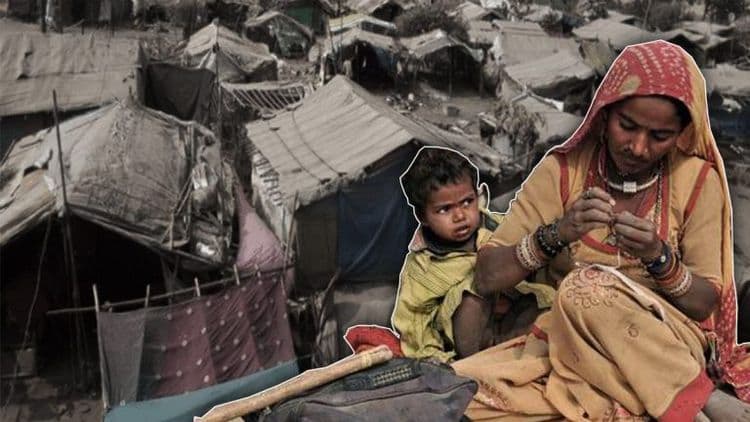
While visiting, I realized that the castes had changed, the village has changed, but the problems of the settlements are the same. No own place to live. No fixed houses. No Resident Proof, Aadhaar Card, Name in Electoral Roll, Ration Card. Children don't study, almost begging men and women to work full-time. Earlier nomads used to be part of the village cart. They used to be the bearers of people's religious faith, but now society has no more love for this class. This complaint is felt by all the wandering nomads. Since the increase in the number of educated classes, Maria's Devara, fortune-telling, Ayurvedic herbs are not trusted much.
The class that watches the Olympics and gymnastics on TV does not feel anything special in the sport of Dombarya. After watching the Ramayana Mahabharata series, it doesn't attract the vagabonds who come with a show and society is not so arrogant as to enjoy the fun of cheating the polymorphism. So, you don't get the expected money by vagabonding and again, "Why do you beg for this game when you have arms, legs and torso?" Some people even go outside Maharashtra because of hearing this. The wanderers from Bhandara had gone to West Bengal, Bihar.

A very different observation is that there are very few people doing their traditional profession in nomadism. At that time, many people did not do caste jobs. On the contrary, they used to do jobs such as cleaning ears, grooming buffaloes, taking care of buffaloes, collecting scraps, and collecting hair. This has changed their questions. Nathjogi brings buffalo to Ballali in Akola district. she8 manages 8 months. A month and earns Rs. Some people from this settlement go to play the jantri. . In Gosavi settlement, now the new generation of children repair stoves, cookers and mixers. Nomads are the most involved in collecting scraps. Every day 150 gets Rs. In Bhandara, Osmanabad, they do the business of collecting hair by giving pots. To collect a kilo of hair, 500 silver pots have to be given. It takes eight days to accumulate one kilogram of hair. Barshiche Davari Gosavi, young boys and sold such items as tiklya, bakkal, chap, pina, bangdi, pin, sari every day, minimum 20 kilometers rolls. Some women sell Bentex jewellery. The cowherds of Ansarwada organized a band party. A big wedding betel nut is taken from it.

The few people who are doing traditional business are asked for their earnings during Diwali, Rangpanchami and Padwa. People pay more. 5 of kg has to be peppered. Traditional Ghisadi family 4 people go to a village every day. Sickles, weeds, axes, kadaba scissors, swords, scythes are made by people. 400 earns Rs and for that 4 people work. Due to plastic and fiber, the demand has decreased significantly. Many youths in Mang Garudi settlement sharpen their tools like iron scissors, sickles and knives. The Kaikadi family of Ansarwada weave baskets from bamboo.

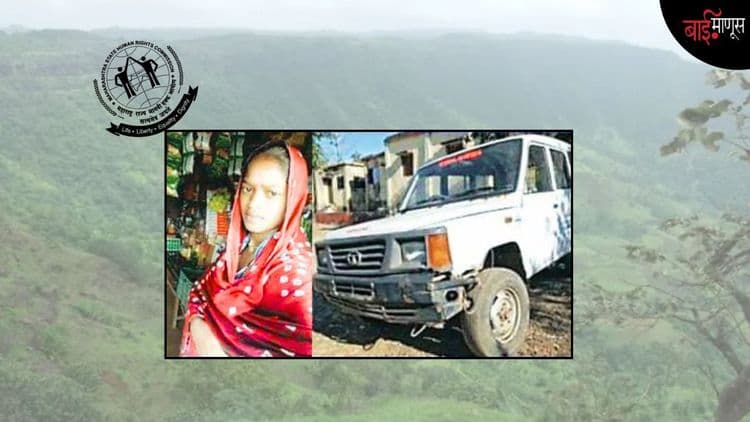
Security of nomads has become a complex issue. Attacks while roaming are one side hand, but they are also attacked in some places in the villages where they live. In three villages it was found that nomads were attacked. A girl from Gopal village field in Chorkhamari in Bhandara district field of cut brinjal from the field50 More than 1,000 people attacked the settlement. Beaten badly. The huts were demolished. They threatened to kill me if I went to the police. In Bhandari district, houses were to be provided in the village of Pimpalgaon in Sakoli taluka. So they will live in the village forever, so the sarpanch set the village on fire that night. asked for lakhs. After the Tehsildar confirmed the location of the hut, the settlement was set on fire the same night. All these fled from the village to save their lives. Third case,
Bharwad of Babdev in Maunda taluka in Nagpur district was beaten and destroyed by a bulldozer. Cow fodder was seized and if fodder required 25000 asked for Rs. Telling the District Magistrate Tehsildar did not help 10 had to pay a thousand rupees. In all these three types, there is a mentality that nomads are not allowed to live in the village, they do not want to get houses and make them permanent residents, and the severity and neglect of the issue of nomads can be seen from the fact that such extreme injustice has been done in the district by the Chief Minister and the Minister of Social Justice. Police do not allow vagabonds living in urban areas to stay near railway stations. In Udgir, their leaves were set on fire. They suffer so much.

We can't imagine the hardships the nomads have to endure as they don't have certificates, ration cards or simple documents. Ration cards are not available due to lack of resident proof. No bed is available. No government scheme is available. As there is no resident, there is no name on the voter list and no voter, so the political activists of the village do not pay attention. On the wandering pala of Gondia, we met the women who had collected scraps. By collecting debris from morning 80 earned Rs25 They rations brought a kilo of rice of Rs. on rations... There is a kilo of rice, but as there is no ration card, I sell scraps to them. It has to be bought for Rs. Gharkules are not given to villagers either and, if granted, the place they live in is not in the name. That's why you don't get the true house. You can't even afford water. We used to go to the nearest tap, go to the well and get water. Even if Maharashtra is free from hagana, women have to live very hesitantly as there are no toilets.
The worst condition of nomads is health. In Nagpur district Usha Gangavane. This woman met on a boat. Ushabai has simultaneous heart disease, ulcer and kidney disorder. He did an angiography with close money. He has a faulty heart valve. I said in the language book that the govt gives help, right? She said calmly, but its cost would cost another one and a half lakh rupees, excluding government aid. Since they don't have that much money, now they only take pills. They collect scraps to pay for the pills and buy medicines from them. Sometimes they don't even have money to buy pills. In that case, the chest hurts a lot. Jeeva gets scared. Ushabai goes to church because diseases are healed by the grace of Jesus… This one example is enough to about the health of the nomads.
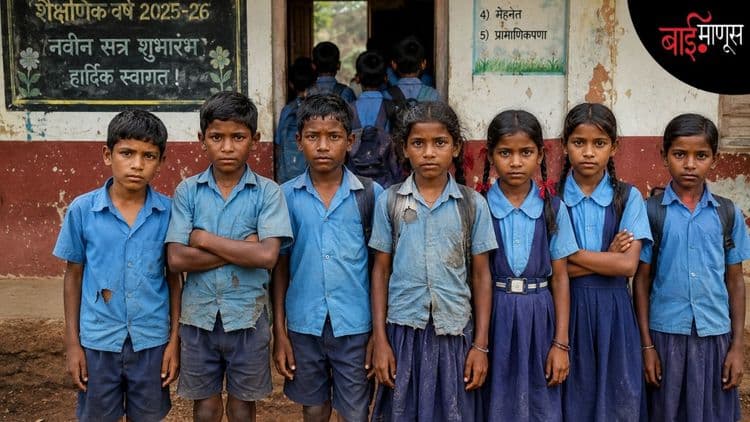
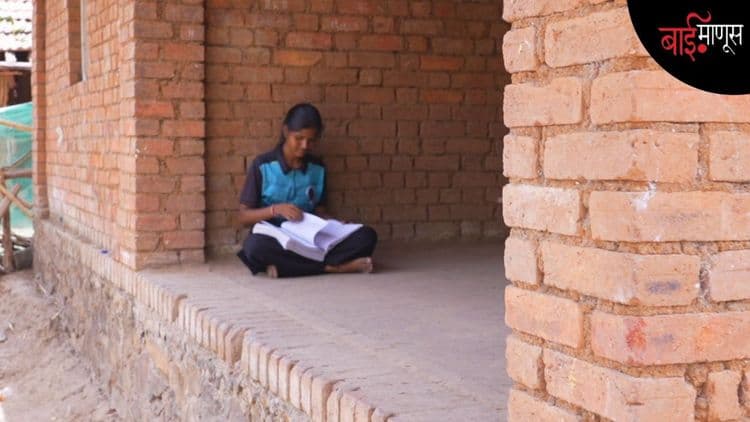
Education lags far behind in this battle for survival. In Osmanabad150 only in residential areas 22 children are studying in school. The most educated girl in that village is 5 Learning Veet.and only in the entire settlement 3 Girls learn. Student learning has increased at the primary level. But there is dropout at the secondary level. Still wandering now. There are V-pass graduate kids, but they don't get jobs-because of that, again, a depression spreads.25 The nomads are the most marginalized, neglected and livelihood-dangerous group in Maharashtra after moving across the districts. The government is not able to say the exact number of them and finding answers is still far away.

Talented artist in nomadism
In Bhamragad taluka in GadchiroliPouring nomads, different items are made from brass metal. These items are made by hand. They mold the clay…they cover it with wax and design it. Brass turtles and blackbuck are made and sold very neatly, but there is no capital, no market, so they continue to do their work at the household level.
Most of them are music masters at Hangarga Pala near Tuljapur. Outside the hut where we sat, the father of the family was a decorated tabla player and the son, a music prodigy, performed bhajans from village to village. It was painful to see that old artist with musical ornaments on a pedestal.
What exactly should be done?
Santhosh Jadhav's Nirman Sanstha of Pune, which works on the issue of nomads, is doing advocacy on the following issues with the government along with all the organizations.
- Caste certificates should be given to them based on proof of residence of present place and house inquiry report
- Village where they are living8AWadeGram Panchayat should provide
- If reservation is made for nomads in Gram Panchayat, Panchayat Samiti level elections, they will get political prestige and the problems at village level can be solved. By implementing this plan, this issue of documents should be resolved once and for all.35BPL ration card should be given immediately to get 1 kg of grain
- Vasantrao Naik Empowerment and Swabhiman Yojana should be implemented effectively and Vasantrao Naik Economic Development Corporation should prepare need-based schemes
- Population of nomads should be determined by caste-wise census•5Acre of land to the butcher and4 Guntha land should be given for construction• Protection of Atrocity Act should be given to vagabonds
- Folk artists should be given government stipend to performing artists.
Provision of a small budget
Number of nomads in the state 11 Despite the percent provision in the budget, only 1800 is crores. And more than half of this amount is spent on ashram schools and scholarships. There is no provision for employment generation. Dinanath Waghmare of Sangharsh Vahini gave an example of how the schemes for freeing the vagrants are becoming lonesome. The Yashwantrao Chavan Mukt Vasahat Yojana was launched in 2011 to provide housing for vagrants. Every year in every district 20 of houses 3S60ment means 60 to build houses in every district. Provision of Rs. 35 in the district6in the year12Thousand600There should have been houses but only just 22 together in the district 80 Houses were built and funds remained unspent and homeless
Success stories of nomadic settlement
- Tiramalwadi slum activists in Beed district, Valmik Nikalje. At his initiative, the nomads encroached and grabbed the land. Vegetables were grown well water.When we visited, the pulses freshly harvested from the farm were being dried in front of the house. It was delightful to see the nomads on whose palas the loaves brought from behind were dried
- Ganeshpur village in Hingoli district75Percent people are cowherd. Most of these have acquired land. it10 having more than an acre of land. There are more families than. Some have access to irrigation and can grow two crops. Cotton and Turmeric are good income turmeric farmers
- In Nilanga, Bhatke Vimukta Parishad has set up an Industry Center in Ansarwada and Nilanga. They produce neat products like sewing dresses, sewing bags, sewing sleeping cushions, sewing car cushions. The same council has started many palvar schools. Children have started learning from it.