Ritesh Shisode
One of India’s most reliable Polar Satellite Launch Vehicle (PSLV) programmes has recently come under intense pressure following two consecutive mission setbacks, triggering discussion in strategic and scientific circles. Amid growing speculation on social media and other platforms, claims of external sabotage began circulating, though these claims remain unverified and unconfirmed.
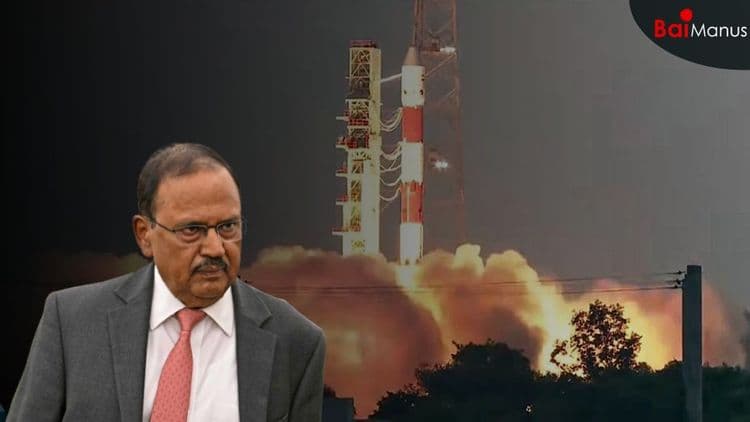
While speculation circulated, Ajit Doval, India’s National Security Advisor, made a secret visit to the Vikram Sarabhai Space Centre (VSSC) in Thiruvananthapuram, Kerala, which is also the primary integration and launch preparation hub for India’s launch vehicles.
PSLV's Back to Back Anomalies
The Indian Space Research Organisation has historically maintained an undoubted success rate with the PSLV or Polar Satellite Launch Vehicle, often referred to as the “workhorse” of India’s Space Program. However, recent missions reportedly encountered technical anomalies at critical stages, prompting internal reviews. ISRO has so far not publicly characterised these events as failures, instead referring to them as mission deviations.
The consecutive mission failures of PSLV-C61 on May 18, 2025, and PSLV-C62 on January 12, 2026, shattered the trajectory of stability. These accidents represent the first time in the vehicle's history that it suffered back-to-back losses, which triggered a high-level national security crisis that forced the intervention of National Security Advisor (NSA) Ajit Doval.
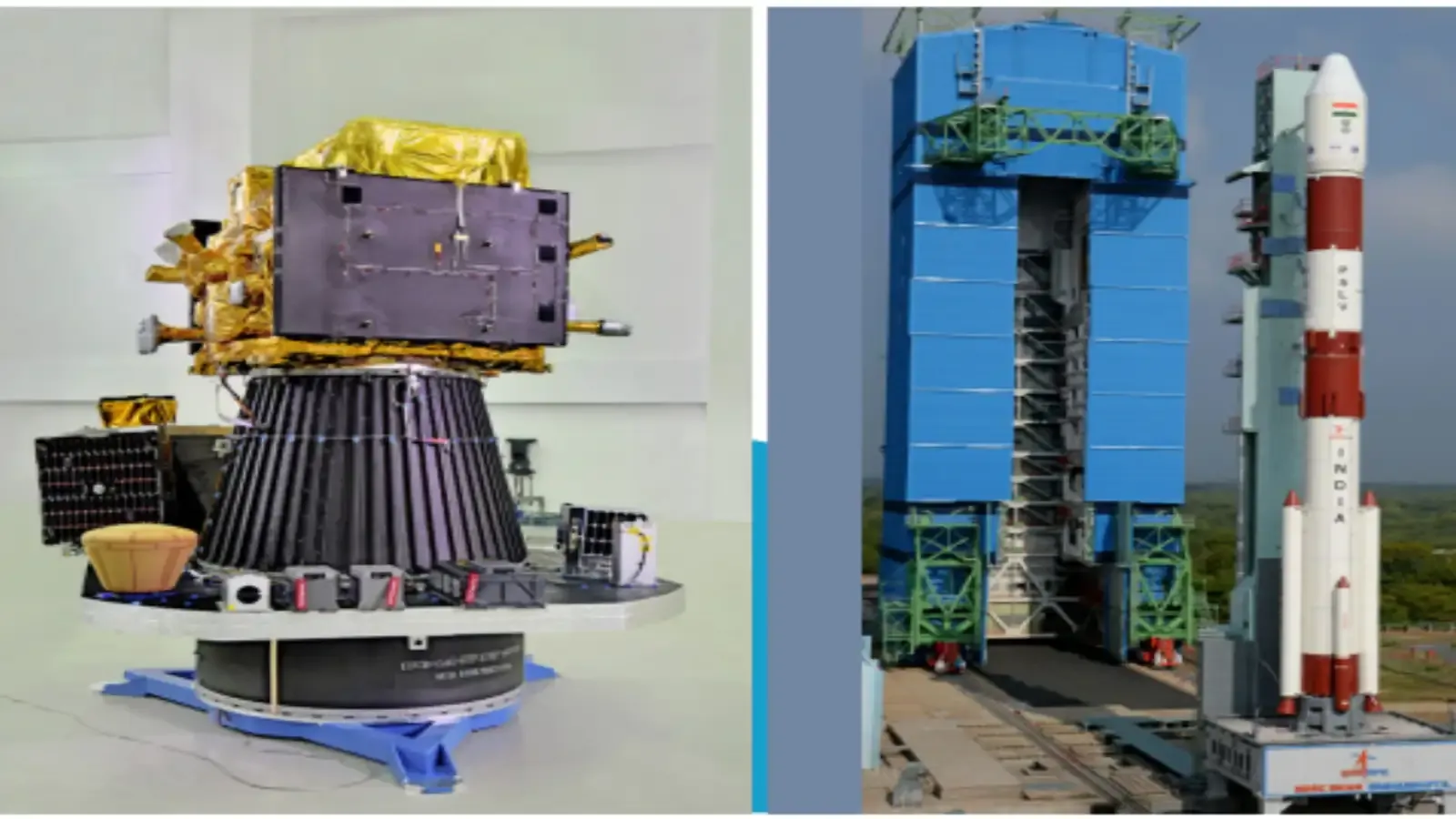 ISRO PSLV C62 Mission Satellite and Launch Vehicle. (Image Credit: isro)
What happened with PSLV-C61 and PSLV-C62?
On May 18, 2025, the PSLV-C61 Mission aimed to deploy the EOS-09 satellite, which was a high-resolution earth observation asset intended for strategic government use. Data indicated that the first and second stages performed nominally, lifting was also successful and the vehicle crossed through the dense layers of the atmosphere. However, an anomaly was detected upon ignition of a later stage.
The shock of the C61 failure was doubled on January 12, 2026, when the PSLV-C62 mission encountered a catastrophic failure during the same stage as PSLV-C61. This mission failure was more shattering as it was of even higher strategic and commercial value, carrying the EOS-N1 (Anvesha) hyperspectral spy satellite for the DRDO, alongside fifteen commercial payloads from international partner countries.
ISRO Chairman V. Narayanan and other senior scientists highlighted that the Vikas engine (used in stage two) and the solid motors used in stage three face challenges when restarting or maintaining performance in vacuum conditions.
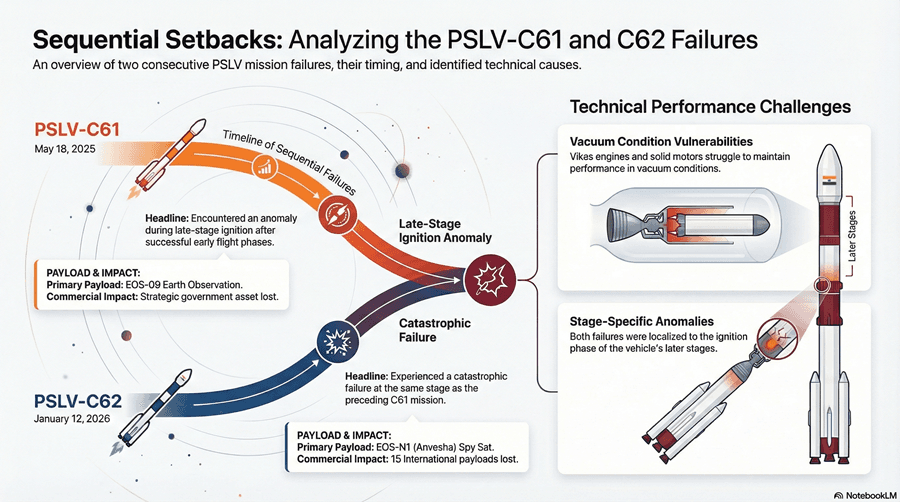 Illustration of PSLV-C61 and C62 Failures. (Image Credit: AI Generated)
Claims vs Confirmation
The speculation regarding international-level sabotage gained more attention following the rarity of consecutive PSLV setbacks, rising geopolitical competition in the space domain—whether with NASA, the USA, China, or other nations—and India’s expanding role in commercial satellite launches and strategic payloads. Security experts caution that technical failures in complex launch systems are not uncommon, and that no forensic or intelligence evidence supporting sabotage claims has been made public yet.
At present, the sabotage theory remains speculative and unsupported by officials.
Ajit Doval’s Reported visit to Sarabhai Centre
The timing and the failure at the same stage-location fueled intense speculation within the Prime Minister's Office and the wider intelligence community regarding the possibility of international sabotage. Since PSLV is ISRO’s long-standing trusted workhorse, the sudden degradation of quality in the system was seen as malicious rather than merely technical.
Keeping all this in mind, National Security Advisor Ajit Doval arrived in Thiruvananthapuram on January 22, 2026, for a two-day investigation at the Vikram Sarabhai Space Centre (VSSC). The visit was conducted strictly off-camera to maintain security. Doval was sent to determine if there was an “inside threat” or external manipulation involved in the PS3 stage production. During the visit, Doval conducted a series of high-intensity meetings with VSSC Director A. Rajarajan and key deputy directors.
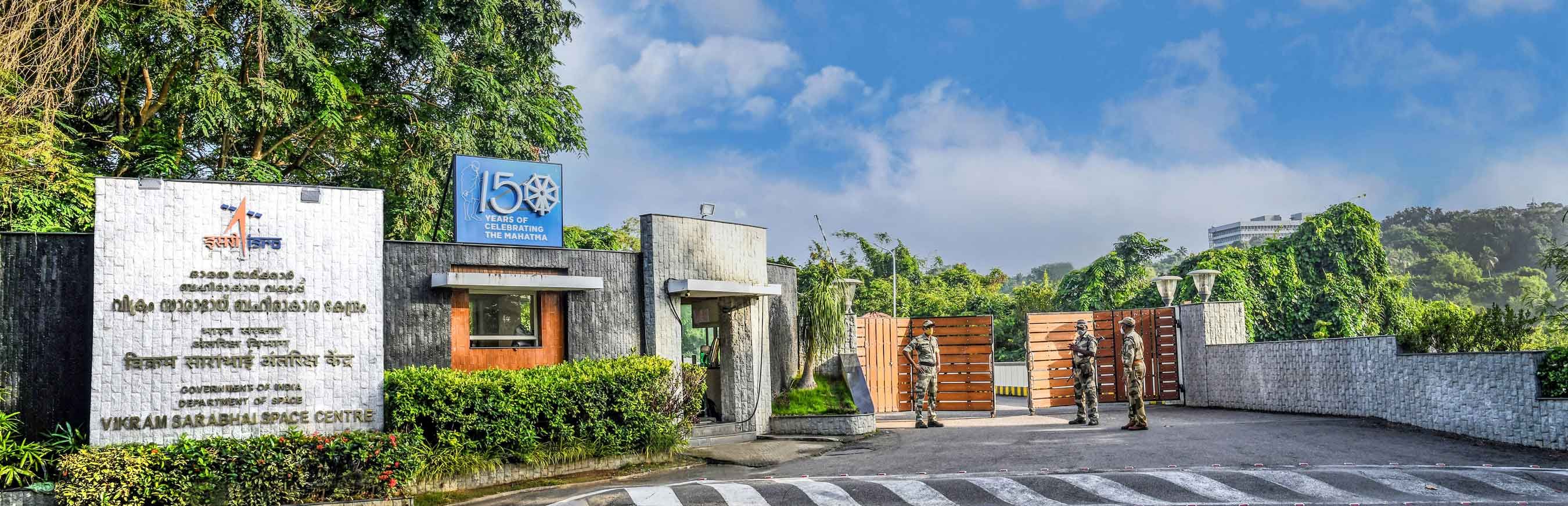 Vikram Sarabhai Space Centre (VSSC) Thiruvananthapuram, Kerala
What happened to Global Market Positioning of ISRO?
The back-to-back failures caused significant economic consequences for NewSpace India Limited (NSIL), which is ISRO’s commercial arm. The total financial loss from the PSLV-C62 mission is estimated between $200 million and $250 million. While international payloads were generally covered by launch insurance, the loss of years of engineering work from partner countries led to a trust deficit.
Insurance underwriters are expected to increase premiums for future PSLV launches by 20% to 30%. This spike now threatens the PSLV’s primary competitive advantage, which is low cost. As competitors like SpaceX are offering Falcon 9 options at lower costs per kilogram, any increase in PSLV insurance or launch cost could lead to a permanent loss of market share.
What are ISRO’s future Targets?
ISRO is targeting June 2026 for the next PSLV mission. The mission is proceeding based on the successful completion of a third-party review and the implementation of technical fixes. ISRO has planned around eighteen launches for the year, including six with private sector involvement. None have withdrawn despite sabotage speculation and recent failures.