I was in the city of Ranchi in the state of Jharkhand for some work. Then I got a call from my elder brother, 'Our Gorakh died today in Bandu village near Ranchi. Called you since you were there. Come if you can. Near Gorakh's dead body are his wife, two small daughters and his ten-twelve-year-old son.' I don't know what to do. Not interested in work. A similar Gorakh appeared in front of him. He began to remember.
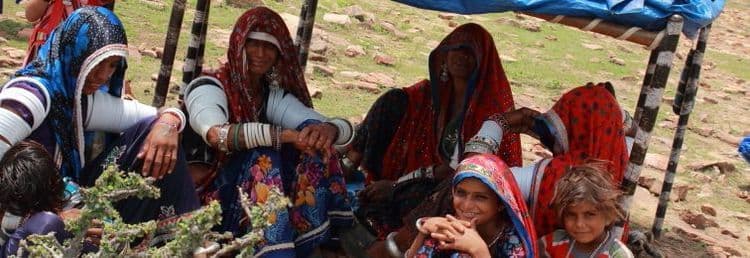
There are 42 main tribes recognized and sponsored by the government in Maharashtra and its sub-branches have grown to over 250 and are still growing. The main livelihood of many of these nomadic tribes is alms. Among these, Nathpanthi Davari Gosavi is a historical nomadic tribe. Gorakh belongs to this tribe. The main livelihood of this tribe is alms. Their estimated population should be four to five lakhs. It is an observational estimate that at least half of these people live on alms. Although its origin is from Maharashtra, the vine has spread all over India. They earn their living by begging in different parts of India.
If there is a husband and wife, young children, sometimes parents or other relatives accompany the blind, as a blind person accompanies a blind person. Superstitious people are observed to be more backward or backward. People are kept superstitious due to the exploitative behavior of the feudal-capitalist system all over the world. Those who are denied the right to medical care are left behind. Their backwardness is like a cancer sitting in the body as it is multi-faceted, social, economic, political and cultural. Due to this, the entire tribe is on the verge of destruction. Tribes will perish, but their poverty will not. As capitalism grows, it forces some people-communities to use religion and gods as an antidote. Capitalism skillfully steals their labor and turns them into thieves and again by planning programs for their so-called upliftment. Capitalism hides the constant discovery, research, knowledge from labor. Workers are not allowed to unite even under the flag of distress. The unity of the oppressed means the downfall of capitalism. Because of that, she constantly raises the specter of suspicion among each other by brainstorming. Capitalism is like an octopus, exploits the exploited with a thousand hands. Octopus is nature made, but capitalism is man-made.
What would nomadic communities resort to for survival? Or what tools are they free to use? Wanderers use idols of God for alms. Idols are made using the rules of science and their worship is unscientific. They make a small chariot of the idol of God and ask for alms on it. Sometimes, Kalubai, Durgamata, Saibaba, Swami Samarth are carried on a palanquin and beg for alms. Cows with five or six legs, three horns, three eyes, two genitals, beg for alms on them, all the journey on foot. Walking a distance of ten-fifteen to twenty-twenty-five miles a day, if they find castles and towns on the road, they use this tool to beg for alms. They come to their native village once a year like this. Depending on the availability of money, they come to the village after one-two years or many years. During this journey, they get married at a young age... they have children... while on the journey, a woman gives birth. There the umbilical cord is broken by a stone. Oli Balantin leaves for the next journey again. If someone gets sick, the next journey begins by taking herbal medicine and sometimes by visiting an expensive hospital if there is money. During this journey, many die of disease, natural disasters, and old age. At that time, the dead person is cremated or buried in any available place, using any available means. Sometimes the body has to travel hundreds of miles to find a place for cremation. No cry or bomb! No dowry or moaning! Tears are squeezed from the eyes. The stomach is tired after several days of starvation.
I was in the city of Ranchi in the state of Jharkhand for some work. Then I got a call from my elder brother, 'Our Gorakh died today in Bandu village near Ranchi. Called you since you were there. Come if you can. Near Gorakh's dead body are his wife, two small daughters and his ten-twelve-year-old son.' I don't know what to do. Not interested in work. A similar Gorakh appeared in front of him. He began to remember.
There are 42 main tribes recognized and sponsored by the government in Maharashtra and its sub-branches have grown to over 250 and are still growing. The main livelihood of many of these nomadic tribes is alms. Among these, Nathpanthi Davari Gosavi is a historical nomadic tribe. Gorakh belongs to this tribe. The main livelihood of this tribe is alms. Their estimated population should be four to five lakhs. It is an observational estimate that at least half of these people live on alms. Although its origin is from Maharashtra, the vine has spread all over India. They earn their living by begging in different parts of India.
If there is a husband and wife, young children, sometimes parents or other relatives accompany the blind, as a blind person accompanies a blind person. Superstitious people are observed to be more backward or backward. People are kept superstitious due to the exploitative behavior of the feudal-capitalist system all over the world. Those who are denied the right to medical care are left behind. Their backwardness is like a cancer sitting in the body as it is multi-faceted; social, economic, political and cultural. Due to this, the entire tribe is on the verge of destruction. Tribes will perish, but their poverty will not. As capitalism grows, it forces some people-communities to use religion and gods as an antidote. Capitalism skillfully steals their labor and turns them into thieves and again by planning programs for their so-called upliftment. Capitalism hides the constant discovery, research, knowledge from labor. Workers are not allowed to unite even under the flag of distress. The unity of the oppressed means the downfall of capitalism. Because of that, she constantly raises the specter of suspicion among each other by brainstorming. Capitalism is like an octopus, it exploits the exploited with a thousand hands. Octopus is nature made, but capitalism is of human origin.
What would nomadic communities resort to for survival? Or what tools are they free to use? Wanderers use idols of God for alms. Idols are made using the rules of science and their worship is unscientific. They make a small chariot of the idol of God and ask for alms on it. Sometimes, Kalubai, Durgamata, Saibaba, Swami Samarth are carried on a palanquin and beg for alms. Cows with five or six legs, three horns, three eyes, two genitals, beg for alms on them, all the journey on foot. Walking a distance of ten-fifteen to twenty-twenty-five miles a day, if they find castles and towns on the road, they use this tool to beg for alms. They come to their native village once a year like this. Depending on the availability of money, they come to the village after one-two years or many years. During this journey, they get married at a young age... they have children... while on the journey, a woman gives birth. There the umbilical cord is broken by a stone. Oli Balantin leaves for the next journey again. If someone gets sick, the next journey begins by taking herbal medicine and sometimes by visiting an expensive hospital if there is money. During this journey, many die of disease, natural disasters, and old age. At that time, the dead person is cremated or buried in any available place, using any available means. Sometimes the body has to travel hundreds of miles to find a place for cremation. No cry or bomb! No dowry or moaning! Tears are squeezed from the eyes. The stomach is tired after several days of starvation.

Bonsai is done by tying the roots to prevent the horizontal tree from growing! Many boarding school students find out about the death of their loved ones after six months or years. Then everything is over! This karmic story happens to every wanderer. There is no despair or suicidal ideation. The thought of life itself! The thought of living! The nomads will leave the language and the region but will not leave the living. So what happened to Gorakh Dadarao Bhosle? So Gorakh Dadarao Bhosle, village Bamni, t. Sangola, Dist. A resident of Solapur. What is a resident if his father's pals were there? There is no ration card, no Aadhaar card, no identity card, no 7/12, no proof that this village is yours! So Gorakh used to earn his living by begging for alms, as a pike of tradition in Pratigya! He traveled all over India asking for the province of Maharashtra.
He never had the experience that all Indians are my brothers. Finally, I went to Jharkhand, which is rich in nature. Do they have to accept or reject the received reality? How to forget the hunger in the stomach? How can you forget the pain in the stomach from drinking medicine and water? How can Padarkarin forget being molested by a child? How will you forget the killers who beat and crushed them to death thinking they were thieves? How to understand this broken world? One by one ripe, fell like the falling people in the forest! How to commit suicide by looking at the baby that is born like a new baby is about to burst? So what is the closest way without addiction? Who will help keep the head calm? Who will help cover these questions? There is no food in the stomach. There is no medicine for sickness… this made Gorakh squirm. It became a dry chip. And finally, without medicine, without water, without parents, without brothers and sisters, without relatives, he climbed the ladder of death alone!
I heard the news in Ranchi. Gorakh was my distant brother. Jharkhand and its capital city, Ranchi, and Bandu village near Ranchi and somewhere in the same village, were Gorkha pals. My two colleagues and I went to find the dead body of Gorkha. We reached the village… There was a house instead of a hut and a middle-aged woman came out of it and started asking in Jharkhandi mixed with Hindi, 'Aap kaun log hai? Kisliye aye ho?' I said, 'Hum teacher hai. Teaches children. Here is a man who was a wanderer who died. Aske vaste hum aye hai..' Who gives shelter-shelter-support to a wanderer? So like them backward groups or victims of the system!
The lady waited for a while. She guessed that there was no force. She said, 'There is a river two kilometers away from here. Us me mera bhi mard hai'. They were probably tribal. They were poor and were hardworking. After getting out of the car and walking along the banks of the river for a long time, I saw some people in the dark. I recognized Gorakh's wife in it. She also recognized me. She wanted to break the bank and I also wanted to pay the dowry. She showed him the corpse. Gorakh's son was preparing for Saran. Collecting wood, white cloth, pots, flower garlands, kerosene was beyond the realm of experience for the little boy, but he did it, he did his best to qualify as a pike of tradition! Father's grave is decorated! It is true that situations teach a man everything. The whole sky was quiet, only here was the heart of everyone. I gave fire. My friends were watching all this. They did not know my Jamaat community. They finally know in what environment Narayan Bhosle is maintaining his academics!
The story does not end here!
He was killed near the house of a Gorakh tribal tribal. They supported him. According to their custom, the non-vegetarian ritual on the third day required the slaughter of a buck. When Gorakh's family started to leave the Bandu village, the tribals stopped them and said that they would not be allowed to leave unless the buck is slaughtered there. Again, the money was arranged, the buck was cut, everyone was fed, and these vagabonds started to return to their so-called homeland. Which country?
(The author is a professor at the Department of History, University of Mumbai, Mumbai.)