Rehabilitation. What is rehabilitation, making weta baskets, making brooms, making lanterns, sewing, and selling these things in Mumbai-Pune exhibitions with a placard saying 'Amuk Safat Gut Yojana, Tamuk Safat Gut Yojana'... That's all we have for rehabilitation.
Over the past few years, environmentalists, NGOs, the administration and courts have become so 'aware' that, due to their awareness, the survival of tribals, nomads and nomads in this country has arisen. Even before no government facilities reach their people, their livelihood based on traditional knowledge has also been disrupted due to this awareness. All this marginalized society is outside the flow of agricultural and industrial society. The community has been isolated from the mainstream for the past 76 years. Their caste-based occupations have either been rendered obsolete by the pace of globalization or have been upended by new laws. Political apathy is such that we have had several ministers in the past saying, "Just because you don't have a voter card doesn't solve your problems". Our political leaders are beggars of votes, but what use are you since you are not a voter? Unless you prove your strength in the elections, it is difficult to solve your problems.
Some such Takladu projects are implemented to rehabilitate the nomadic community who are stuck in a triple crisis, such as the role of political leaders, laws made by courts and harassment of NGOs. The implementation of various laws like the Prevention of Beggary Act, the Wildlife Protection Act, the Magic and Drugs Act and the Anti-Cruelty to Animals Act led to the collapse of, the nomadic society. What exactly needs to be done for the permanent rehabilitation of those whose livelihoods have been affected by such laws, is now a pressing question.
Implement the model of 'Irula Garudi' across the country
In India, the Wildlife Protection Act came into existence in 1972, and it seemed to take away the livelihood of all the tribes that depended on it. The law banned the catching of snakes, extracting their venom without permission and snake sports, exposing the country's Garudi community, numbering in the millions.
An ingenious environmentalist foreigner named Romulus Whittaker wanted to look into the matter. Keeping in mind that snake venom is the raw material for snakebite vaccine, Romulus established the 'Erula Garudi Co-operative Industry Association' in Tamil Nadu in 1978. The Tamil Nadu government has given permission to this team to capture and de-venom around 8,000 snakes every year from two districts on a cooperative basis.
This was the first project in the country after the Wildlife Protection Act. Today, even after so many years, 'Erula Garudi Co-operative Industry Sangh' is successfully running this special… 45 km from Chennai. This project is being implemented at a distant place, 'Madras Susar'. This project involves catching snakes and rearing them for three to four weeks, extracting their venom four times and releasing the snakes back into the wild, treating the extracted venom and selling it to the vaccine manufacturing industry...
 Romulus Whittaker
The project sells an average of 600 grams of venom every year and the venom fetches between $500 and $700 per gram on the international market. That is, this cooperative alone has an annual turnover of one and a half crore rupees. Romulus started this project only for the life of the eagles. The Garudi community, which was moribund due to the Wildlife Protection Act, got a new lease of life with the vaccine of this new project. Bihar State Social Welfare Department also started a similar project a few years ago. He imparted technical training to the youth of the Garudi community on how to extract venom from snake glands and started venom research centers in many parts of the state. Today, thousands of children of Garudas are doing government jobs in these centers.
Institutes like Hafkin in Mumbai are producing similar vaccines. The stand of the Maharashtra government is that development of Konkan is not possible without preserving nature. There are many types of venomous snakes in Konkan. Why is a project like 'Erula Garudi Co-operative Union' not implemented in Konkan? This team from Tamil Nadu supplies poison to Mumbai's Halfkin, so why has the Maharashtra administration been sleeping for so many years? The answer to this question comes from Chhagan's statement 'Political leaders here are just beggars of votes'...
Gopal Samaj's 'Ek Number' band squad
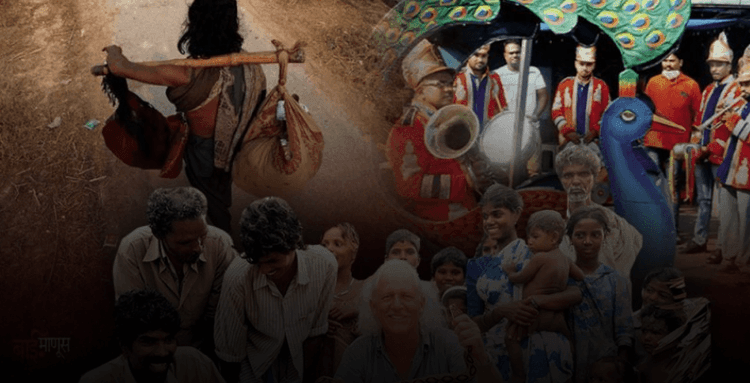
In Latur, one condition is maintained in the negotiations, regardless of whether one is married, is that in Varati, the Bandabaja must belong to the cowhered community. 'Ek No' Band Squad of Nilanga Taluka and Latur is the band squad of the Gopal community. The Gopal community is the most neglected nomadic community. The main occupation of the Gopal community is to gather the people by beating drums to create an atmosphere and, once the people have gathered, to perform a surprise performance. But due to the change in the concept of people's entertainment in globalization, now there is no one left for the efforts of the Gopal community.

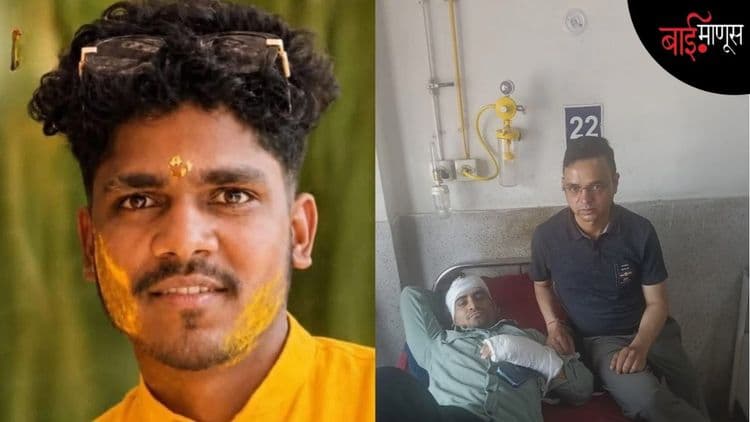
Narsingh Zare is a very hardworking and creative worker for Gopal society. Narsingh accurately discerned the talent of Gopal Samaj and set to work. Govind Maharaj Gopal Samaj Vikas Parishad through Bhatke Vimukt Vikas Parishad has been launched by Narsingh at Ansarwada in Nilanga Taluka, a very ambitious project. For this project, Narsingh prepared the youth of the Gopal community for the band team, brought instruments, trained them. The children were brilliant at playing. It got a touch of modernity and within a short time, the fame of Gopal Samaj's troupe band spread throughout the district. A few years ago, the Gopal community, which used to beat the drum for begging, is today beating the drum with great enthusiasm on the eve of marriage. Today, at least fifteen band teams of Gopal society have been formed from one or two teams and each team has a lot of money...
What is the difference between Ramdev Baba and Vaidu Samaj?
The Vaidu community used to practice medicine. Based on traditional knowledge, no one will hold their hand in searching for medicinal plants in the forest and accordingly going from village to give accurate medicine. However, due to the Magic and Drugs Act, the Vaidu community became starved. Today, for sustenance, the people of the Vaidu community have turned to the business of repairing stoves, repairing umbrellas, making paper boxes, selling items like needles, baskets, combs, etc. Now, due to modernization, stoves, paper boxes disappeared, everything was available in cutlery stores and Vaidu society began to literally turn to wage labor. But if this Vaidu community has a good knowledge of herbs, why shouldn't their traditional knowledge be properly utilized in various Ayurvedic colleges of Maharashtra? If the government buys raw materials from the Vaidu community, how well can the Vaidu community be rehabilitated…!

A small example in this context is Dr. working in Gadchiroli. Satish Gogulwar and his wife Shubda Deshmukh can be given could. The health of the tribals living in the forest depends on the Vaidus. Initially, Dr. Dr. The Gogulwars were suspicious of the traditional knowledge of the Vaidus. However, after studying the treatment of Vaidu, he came to understand its truth. Doctors have not only gained the trust of the Vaidus and organized them, but also established an organization 'We for our health' with the aim of preserving their knowledge and using it to solve health problems in rural areas. At first, the Vaidu was unwilling to impart his knowledge to a townsman. But the doctors took their camp, called in the Ayurvedic experts of the city and, under their guidance, the traditional knowledge of the Vaidus got scientific recognition for the first time.
Baba Ramdev is a modern Vaidu. His 'Patanjali' has crossed the oceans. In the middle ages, Baba Ramdev's Ayurvedic medicines were alleged to contain animal and human bones. What happened next is not known. But still, today, people take Baba Ramdev's medicine with closed eyes. No matter how hypocritical Baba Ramdev is, his Ayurvedic medicines are in great demand in the market. While this is the case, it is important to consider the mentality behind why the Vaidu community, whose business has been going to the forest to collect herbs for years, whose traditional knowledge has received scientific addition, is immediately accused of being a hypocrite.
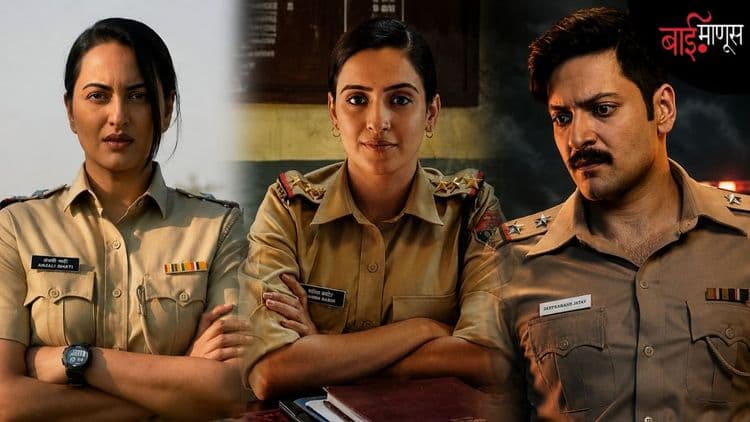
Pardhyas are attracted to becoming police officers
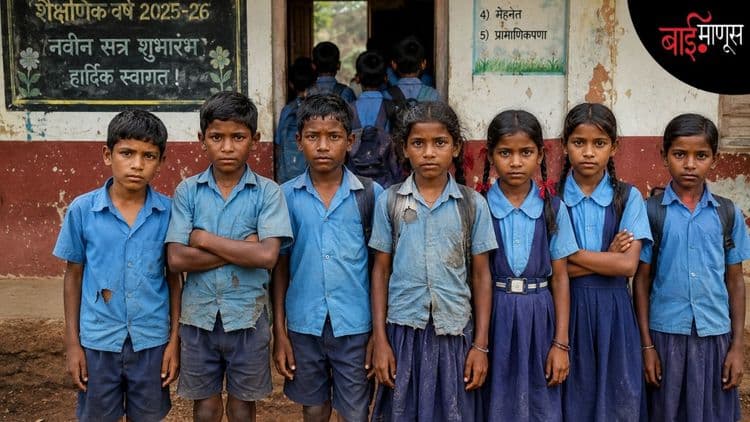
In 'Three Idiots' we saw the innovative school started by Phunsukh Wangdu on screen. But even before that, a similar innovative project is going on in Osmanabad for the children of nomads. Today, around 400 students from the nomadic community are trying to shape the future of tomorrow with the strength of their traditional knowledge in Yamgarwadi. People of the Pardhi community have extraordinary agility and intelligence. Also, Pardhi children are very attracted to the police... The Pardhi community has been a victim of police brutality for years, maybe that's why. Observing these natural qualities in Pardhi boys, Yamgarwadi decided to recruit Pardhi boys into the police department… not only decided but trained them in such a way. Today, three Pardhi students of Yamgarwadi have joined the police department. Due to the closure of traditional occupations and incomplete education, children from the nomadic community are more inclined towards occupations like scavenging. However, Yamgarwadi started a successful experiment for such 'dropout' children.

Keeping in view the boom in the construction industry, these students were given minimum skill-based technical training in plumbing, electrician, masonry work. Every child who has received such training has a job to do today. It should remain as it is kept forever, it should be satisfied! This theory is the root of nomadic society.
On the one hand, progressive churches who say that such laws are necessary to get out of the yoke of superstition, have no answer as to what can be done to rehabilitate them. While it is true that caste-based occupations keep them enslaved, and they end up in the same hell again and again, many people in India have shown how traditional knowledge can be used positively. Such innovative projects have given a new impetus to nomadic society. Of course, these efforts are proving to be just as much as connecting Satranji. It needs to be comprehensive. Rehabilitation of the nomadic community is possible only by keeping such small and big projects at the center.