Sanjana Khandare
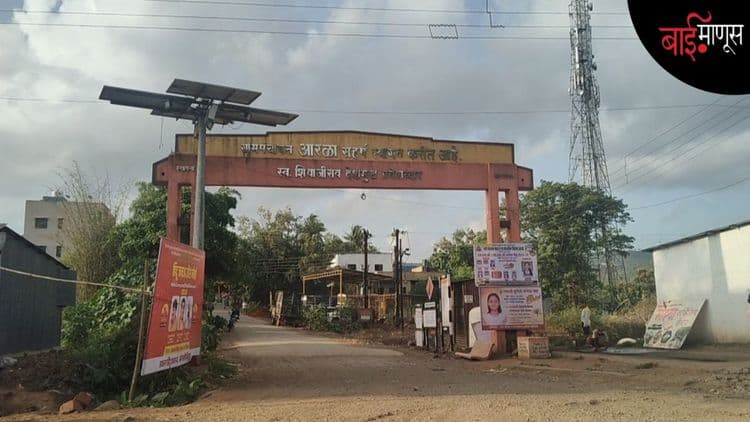
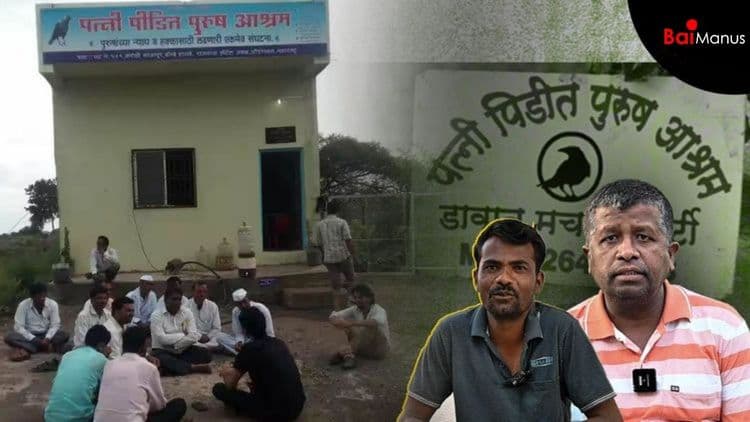
- 20 km from Chhatrapati Sambhajinagar, in the Korodi area, there is a small office with a large board that reads - “Patni Pidit Purush Aashram” which is a unique organization working for the rights of men.
- Domestic violence is not limited to women alone; many men also face mental, financial, and physical abuse. Society and the system often fail to acknowledge their pain, and as a result, they struggle to get justice.
- Complaints raised by men often go unheard because laws like IPC 498A and the Domestic Violence Act, 2005 are primarily designed to protect women.
Every evening, men who are mostly above the age of 30 gather at this Aashram. There are no monks, no godmen, and no sermons here. Yet, they come regularly. They talk, support each other, and share their pain.
To understand what these men are going through, Team BaiManus visited the Aashram on one such evening.The moment they realized that someone had come to listen to them, they began opening up one after another.
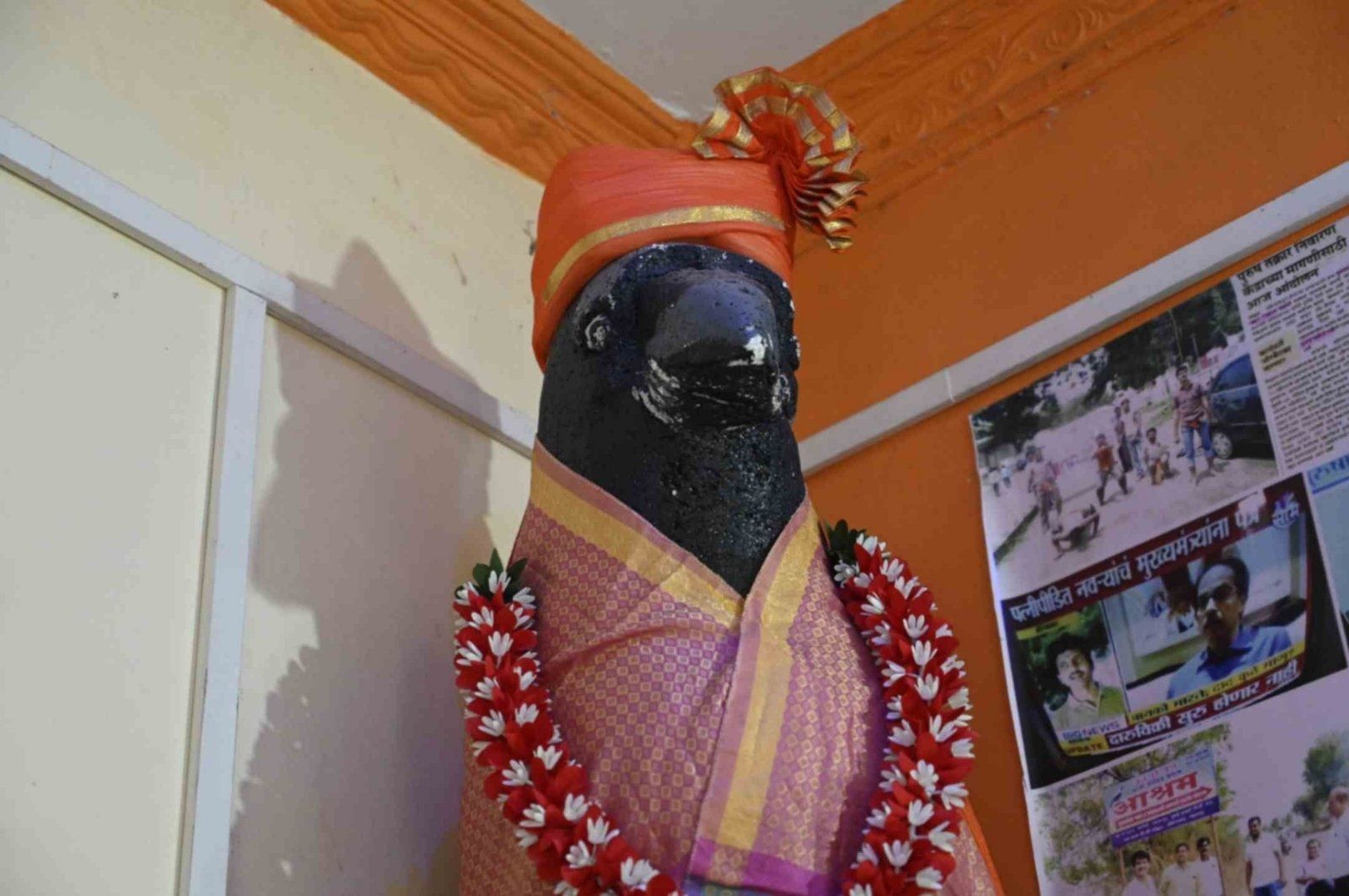 The image of a crow kept in the ashram - a symbol of faith for men whose wives are abused (Image Credit - Komal Thombre)
First person: “My wife got my death certificate issued while I am still alive, just to take over my property. For the past four years, I’ve been struggling to prove that I am alive. I even went to the Mantralaya in Mumbai, but I still haven’t received justice. Who do I even ask for justice?”
Second person: “The mental harassment that men face at home is invisible to everyone. My wife takes my entire salary and doesn’t allow me to spend even a single rupee. After coming back from work, she makes me wash utensils. She abuses me daily and sometimes even beats me with a belt.”
Third person: “I’ve been beaten not just by my wife, but also by my mother-in-law. When I went to the police station to file a complaint, the officers laughed at me and said, ‘What kind of man are you, you can’t even handle your wife?’ When I tried to talk to my friends, they mocked me, saying my wife can be controlled with just two slaps and called me weak.”
In Korodi, 20 km from Chhatrapati Sambhajinagar, stands this small office with a large board that says “Patni Pidit Purush Aashram… the only organization fighting for men’s rights.” “Patni Pidit Purush” translates to “men suffering due to their wives.” These men gather here every evening.
The Aashram's logo features a crow, and there is also a crow statue at the office. The men here believe in this symbol. According to them, after laying eggs, the female crow leaves, and the male crow raises the offspring alone. They see their own lives reflected in this...”Men carrying responsibilities alone and enduring silent suffering.”
For them, the crow is not superstition but a symbol of their struggle and emotional support.
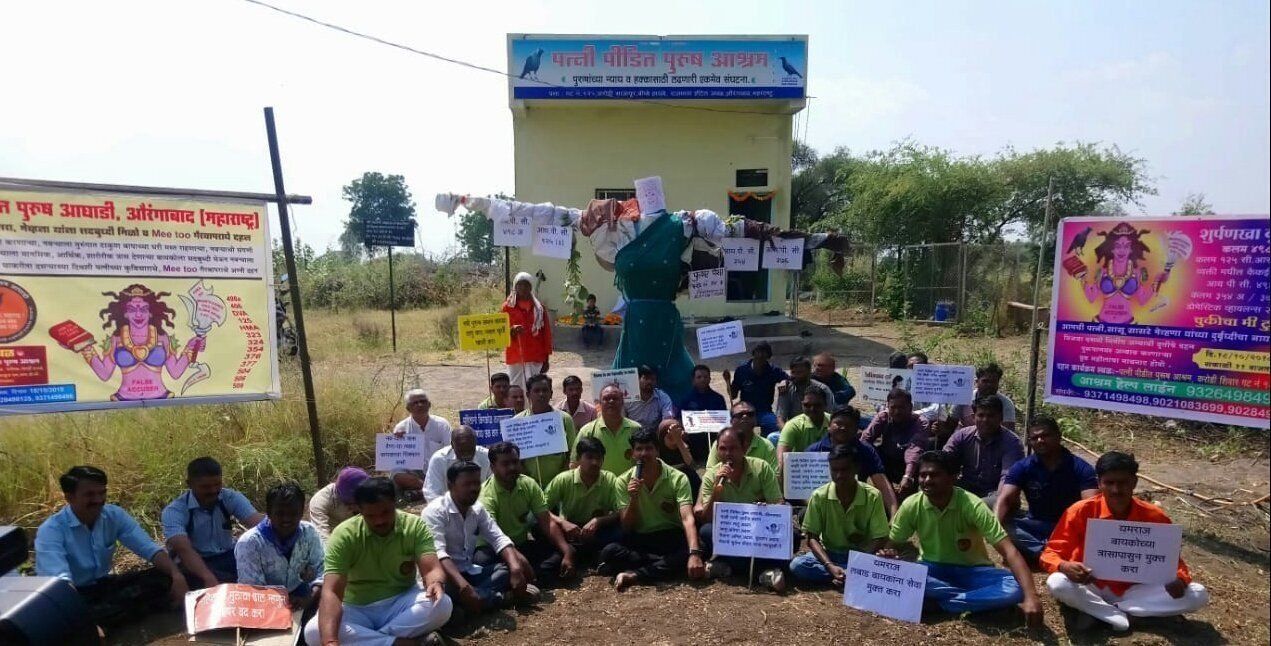 Unique movement of husbands who are abused by their wives - 'Pimpal Pournima' celebrated instead of Vat Pournima
Why did the Issue Reach the Chief Minister?
After witnessing these incidents, an important question arises : How serious has the issue of violence against men and misuse of laws become?
This concern was recently raised in the Maharashtra Legislative Assembly. While laws exist to protect women, several legislators pointed out that men facing similar situations lack legal protection and demanded laws against atrocities on men. leaders including Bhaskar Jadhav (Shiv Sena – Shinde faction), Jitendra Awhad (NCP – Sharad Pawar faction), and Aslam Shaikh (Congress) participated in the discussion.
Bhaskar Jadhav emphasized that laws should not be one-sided. “Women must be protected, but protecting men’s rights is equally important,” he said. Jitendra Awhad raised concerns about action being taken without sufficient evidence. “Women must get justice, but safeguards are necessary to prevent misuse of the law,” he noted. Aslam Shaikh also stressed the need for proper verification before taking action. Responding to the discussion, Chief Minister Devendra Fadnavis stated that the government is sensitive to this issue. He assured that justice for women would not come at the cost of injustice to men and announced the formation of a special study group to examine misuse of laws and suggest reforms.
The Need for this Aashram
Against this backdrop, Team BaiManus visited the Aashram to understand men’s issues firsthand. Speaking about why he started this initiative, Advocate Bharat Fulare said,
Many men get trapped in domestic disputes, mental harassment, and false complaints, yet there is no structured support system for them. I went through the same. My wife filed over 150 false FIRs against me and took over my house. I somehow managed to come out of it by studying law myself. Then I realized, how many men must be out there with no one to even listen to them? When men express pain, they are often mocked.That’s exactly why I started this Ashram to provide a safe space, counselling, and legal guidance. The reality we see here is not just legal, but also deeply mental and social. This issue needs serious attention.
He started the Aashram in November 2017 with a few colleagues. Over the past nine years, it has helped men dealing with domestic disputes. Around 9,000 complaints have been recorded here, many from outside the state of Maharashtra.
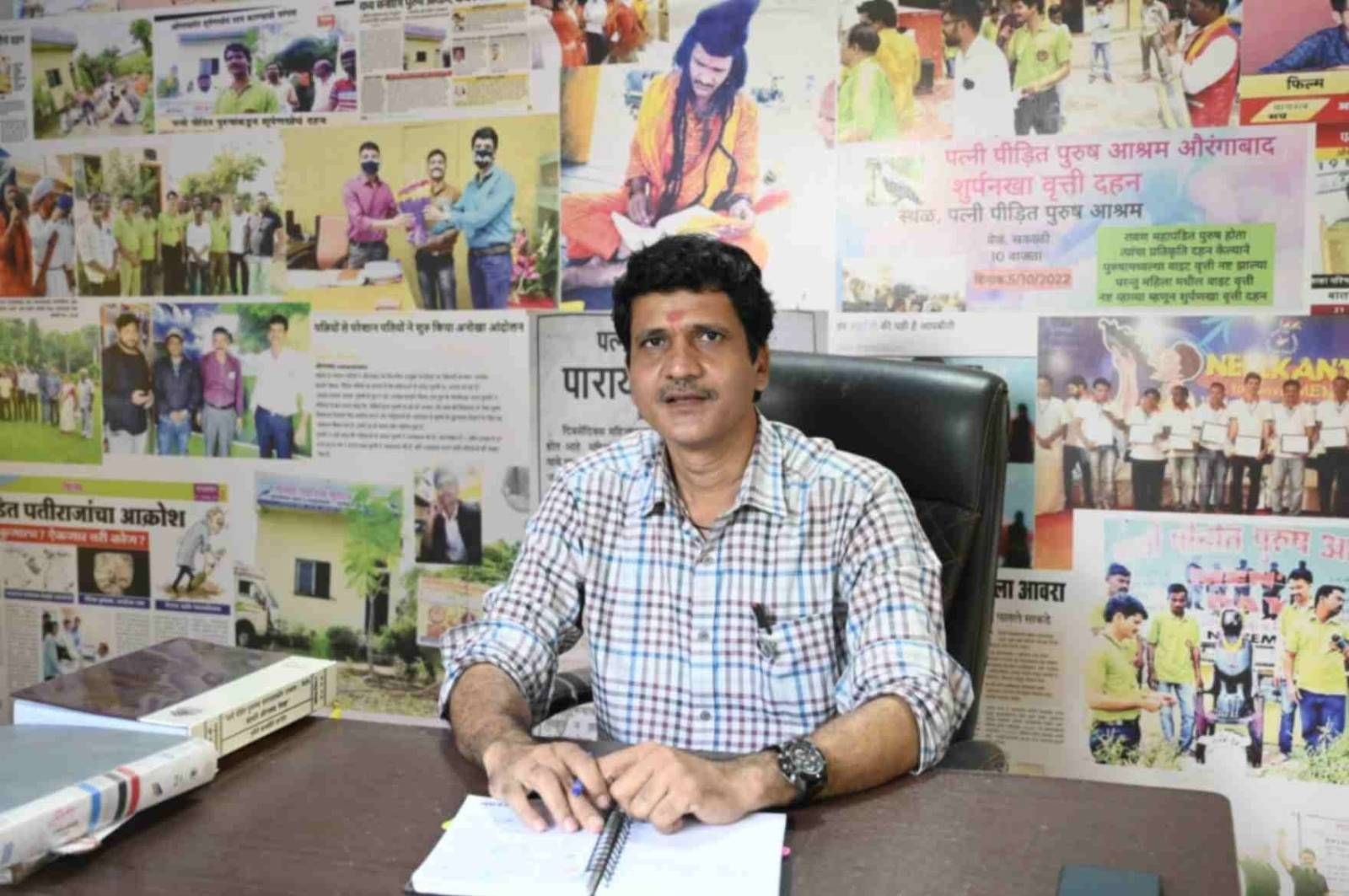 Adv. Bharat Phulare, who provides legal and psychological support to the male victims (Image Credit - Komal Thombre)
A Personal Story
Karbhari Kulare, a member of the Aashram, shared his experience saying,
“For four years, I have been trying to prove that I am alive. My wife got my death certificate issued while I was still alive. She even tried to poison me and my children because she wanted to remarry. She separated me from my children. Neither does she live with me nor grant me a divorce. I used to constantly think about suicide, but I gathered strength. After coming here, Fulare sir gave me emotional support. Otherwise, I wouldn’t be alive today.”
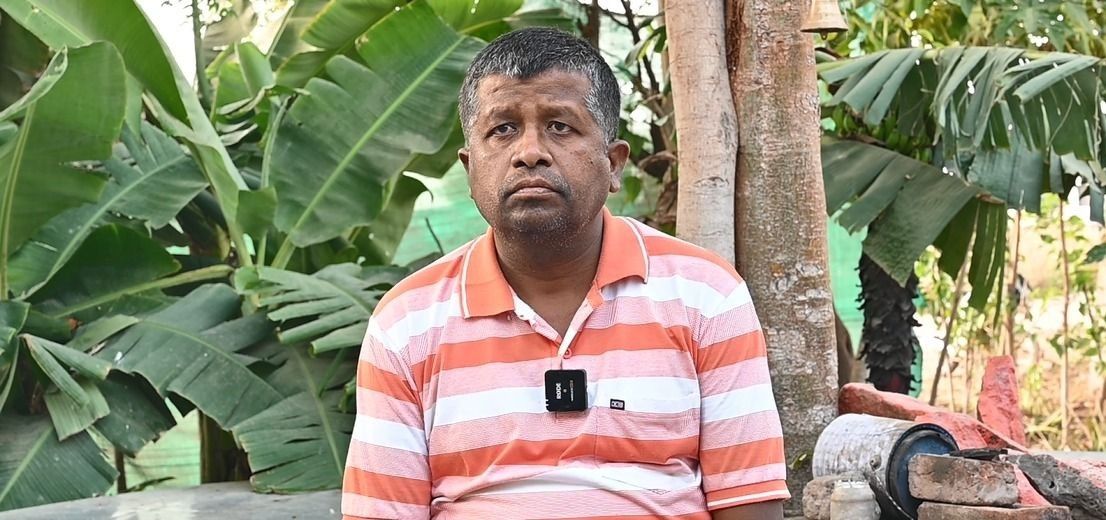 "My wife made my will while I was alive” - Karbhari Kulare (Image Credit - Komal Thombre)
Strict rules of the Aashram
The Aashram has strict admission criteria. To stay here, a person must have at least 20 legal cases related to domestic disputes, he must be financially unable to pay alimony, he may have lost their job or home due to disputes, he should have decided not to remarry due to trauma. These rules exist to ensure that only genuinely affected individuals are joined. Fulare explains that it’s also important to verify whether the man is truly a victim or the perpetrator. Additionally, those in very early stages of conflict may not be mentally stable enough to stay in such an environment.
“Men need to be heard too” – Adv. Sandhya More
Advocate Sandhya More, who has been counselling these men for three years, says, “If men simply get a space to express themselves, many would not even think of suicide. Their only wish is to be heard.” She adds that some men are so afraid of their wives that they hesitate to go home. Legally too, she says, the system often leans towards women. This issue is now being studied academically as well. Research by Gusinge Charansingh Harsing highlights that mental, social, and legal harassment of men is not rare but an overlooked social problem.
Claims VS Counter-Claims
Santosh Tribhuvan, another member, alleges,
“My wife takes my entire salary, doesn’t let me spend anything, makes me do household work, abuses me, and isolates me. That’s why I approached the court.”
However, his wife, Deepali Tribhuvan, denies all the allegations. When Team BaiManus reached out to her to verify the claims, she said that he had withdrawn ₹40,000 from her account and given it to another woman. She also alleges physical abuse and says she is under financial and emotional stress while raising their two children. She further adds,
“My husband once tried to kill me. Not only that, he also beat me in front of the entire neighbourhood. He didn’t stand by me even when my father passed away; instead, he took my jewellery and ran away. For the past 9–10 months, he has not been living with me. I filed a case against him because I need alimony, but he is neither giving me a divorce nor paying alimony. Now he has a loan of ₹10–12 lakh, why would I accept him again?”
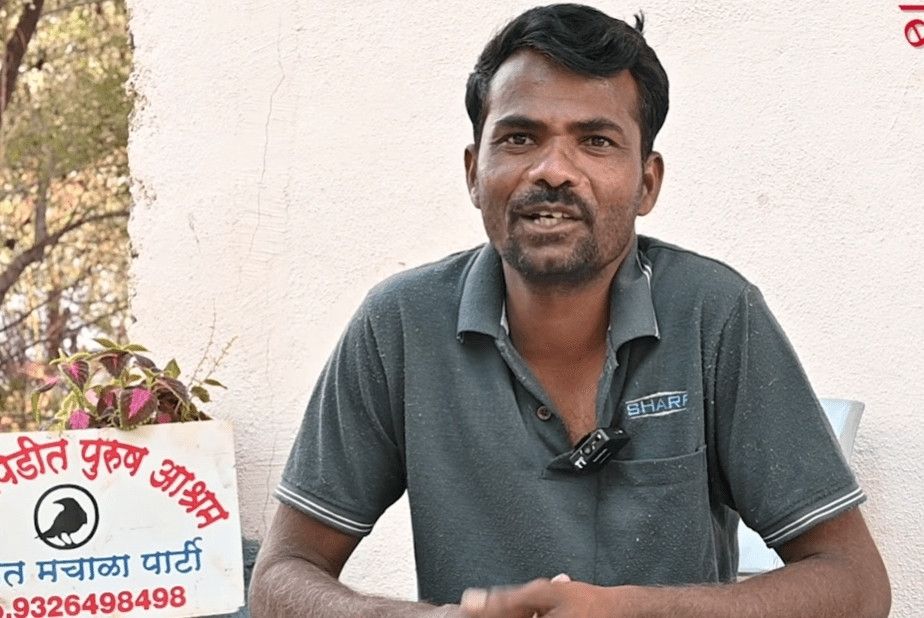 Santosh Tribhuvan (Image Credit - Komal Thombre)
Need for Gender-Neutral Laws
At present, laws such as IPC Section 498A, the Protection of Women from Domestic Violence Act, 2005, and CrPC Section 125 are primarily designed to safeguard women. Courts, too, have in several cases acknowledged the potential misuse of these provisions and have stressed the need for thorough verification of complaints before initiating action. However, a clear and independent legal framework offering protection to men remains limited.
While men can seek legal recourse under general criminal provisions of the Bharatiya Nyaya Sanhita in cases of assault, threats, or fraud and can approach family courts for divorce or child custody however, there is no direct legal protection available to them in cases of domestic violence. This gap has intensified calls for gender-neutral laws. a legal framework that ensures equal and balanced protection for all. The need of the hour, experts argue, is to develop a system that is evidence-based, sensitive, and inclusive, ensuring justice without bias.
“I am not a victim of my wife, but of my mother-in-law…”
Dattatray Warpe, who has been associated with the Aashram for the past eight years, says his struggle is not with his wife, but with his mother-in-law. He states,
My marriage was destroyed by my mother-in-law. I have never raised my hand against my wife. But my mother-in-law insists that I either transfer all my property in my wife’s name or agree to separation and start paying alimony. Multiple false cases have been filed against me. Sections like IPC 498A and the Domestic Violence Act, 2005, meant to address physical and mental cruelty are not just being used against me, but against thousands of men associated with this Ashram. What are men supposed to do in such situations? My mother-in-law demands that I pay ₹12,000 per month to her daughter. I am already managing my child’s education and taking care of my parents. How much more am I expected to handle? There must be some legal protection for men against false cases.
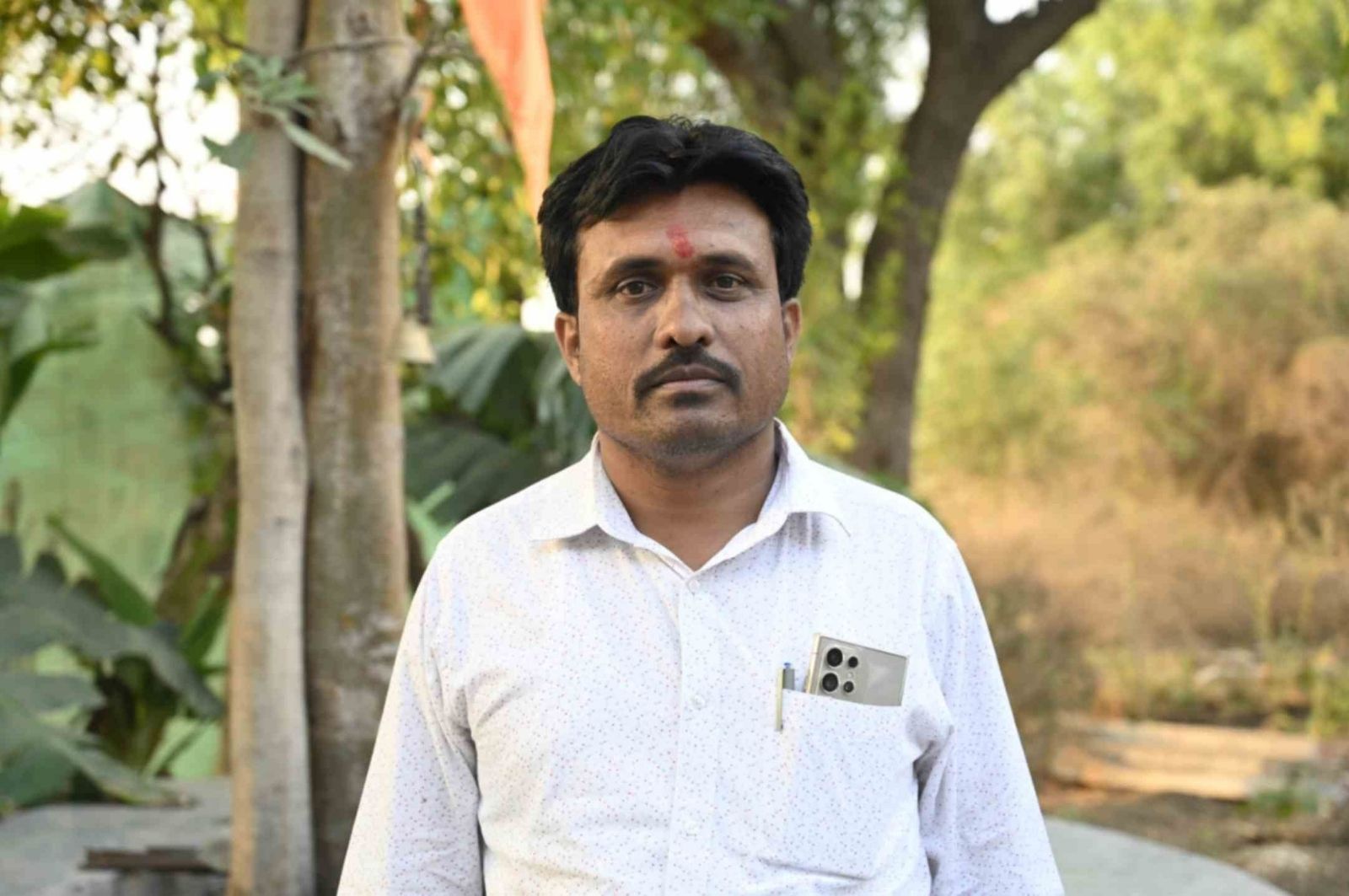 “It is men who get caught up in false cases, financial stress and family pressure” - Dattatray Varpe (Image Credit - Komal Thombre)
Warpe further adds,
At some point, society needs to look at issues from a man’s perspective too. From a young age, we are told, ‘You are a man, you must handle everything.’ We accept these responsibilities. But at least give us some mental peace in return. A man takes responsibility for his mother, sister, wife, and daughter. Shouldn’t someone take responsibility for his emotional well-being too? That’s all we ask. Otherwise, men break down, and sometimes, death begins to feel like the easier option.
“The Aashram has even been attacked by women.” - Adv. Bharat Fulare
Speaking about the challenges faced by the Aashram, founder Advocate Bharat Fulare says,
On several occasions, women have vandalised the Aashram after finding out that their husbands were coming here for help. They have damaged property and even torn legal documents related to ongoing cases. I usually encourage men to fight their cases themselves. The idea is to help them present their side effectively in court and avoid further financial burden, as hiring lawyers repeatedly can push them deeper into economic distress.
I have seen many cases being dismissed. In one such instance, a man named Dnyaneshwar Gaikwad died by suicide on Bhagsi Mata hill, allegedly due to harassment by his wife. A case was registered against the wife under domestic violence laws. However, since there was no one to represent the man’s side, the case was eventually closed. This is not an isolated incident, there are many such cases. Ultimately, the legal system tends to tilt in favour of women.
From Vat Purnima to ‘Pimpal Purnima’: Unique Protests by the Aashram
To draw attention to their issues, members of the Patni Pidit Purush Aashram often resort to unconventional forms of protest. On the occasion of Vat Purnima, when women traditionally worship the banyan tree praying for the same husband across lifetimes, these men present a contrasting narrative. Instead of celebrating the ritual, they observe what they call ‘Pimpal Purnima’. Their message is stark: “Not seven lifetimes, we don’t even want quarrelsome wives for seven seconds.” Explaining the symbolism, Bharat Fulare says,
If Vat Purnima ensures the same husband for seven lifetimes, then we worship the Banyan Tree a day before and pray to the ‘Munja’ spirit,’ Instead of giving us such quarrelsome wives and a life of suffering, keep us unmarried forever.
The Aashram has also marked International Men’s Day in unusual ways. Once, members performed headstands as a symbolic act. The organisation has also carried out symbolic ‘Shoorpanakha Dahan’, representing what they describe as ‘Destructive Tendencies.’

Drawing a parallel with Dussehra, where effigies of Ravana are burnt to signify the end of evil, members argue that if burning Ravana who is a male figure, symbolizes the destruction of men’s negative traits, then addressing negative traits among women should also be equally acknowledged.
The Numbers Tell the Story: Rising Male Suicides
Data from the National Crime Records Bureau (NCRB) highlights a stark reality. suicide rates among men in India remain significantly higher. In 2021, out of a total of 1,64,033 suicides, nearly 81,063 were married men, compared to 28,680 married women. The data further reveals that around 33.2% of men died by suicide due to family-related issues, while nearly 4.8% cited marital problems as the primary cause.
More recent estimates from 2022–23 indicate that men now account for nearly 72–75% of all suicide cases, underlining a growing and deeply concerning trend. Amid this backdrop, on December 6, 2025, Member of Parliament Dr. Ashok Kumar Mittal introduced a private member’s bill in the Rajya Sabha, the “National Commission for Men Bill, 2025.” The proposed legislation aims to address issues related to men’s rights and justice.
If enacted, the bill could pave the way for a dedicated commission for men and initiate discussions around gender-neutral legal frameworks. However, it is important to note that the bill remains a private member’s proposal and has not yet been passed.
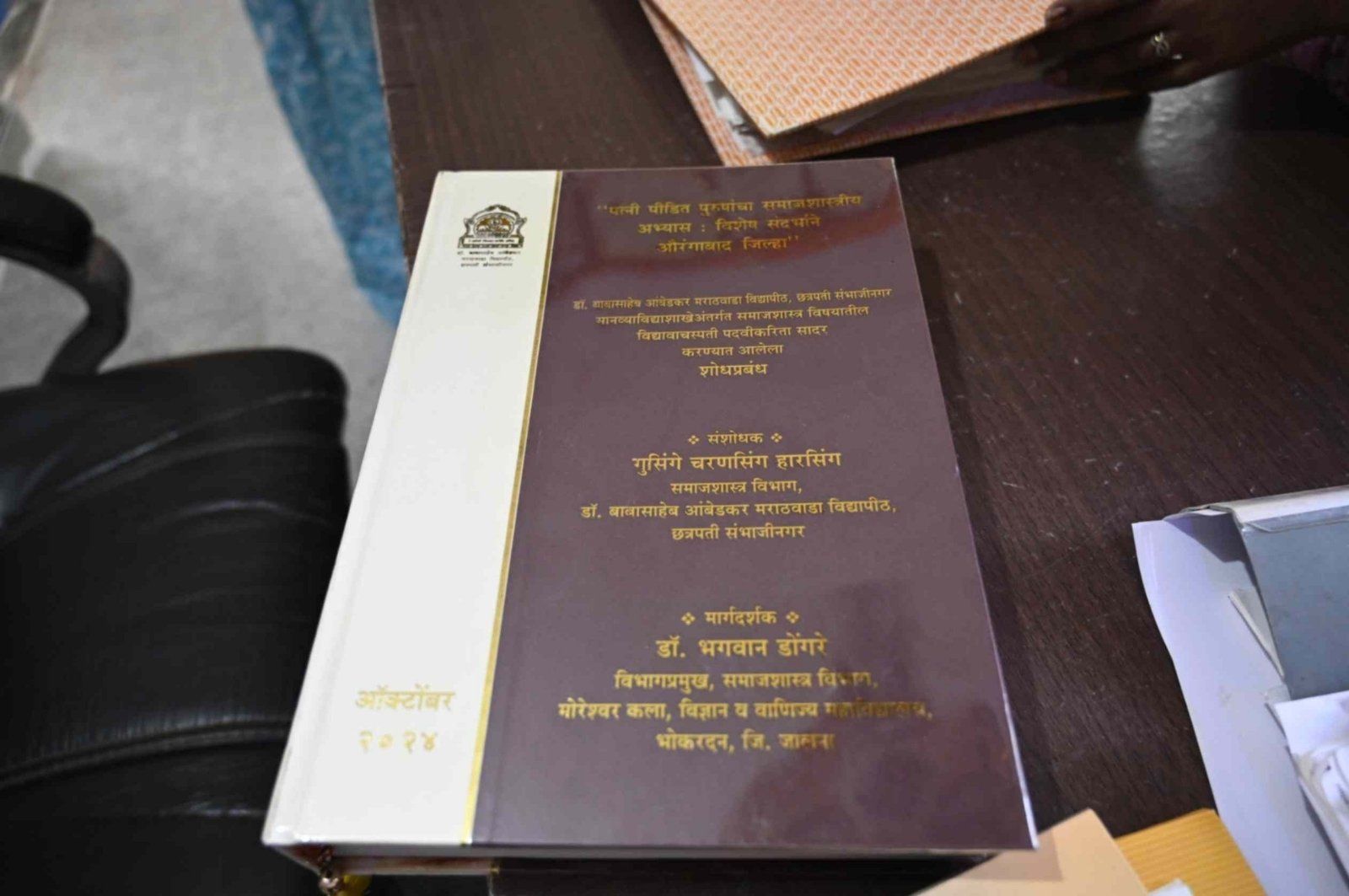 PhD research paper based on the problems of men who are abused by their wives. (Image Credit - Komal Thombre)
A Broader Perspective on Men’s Issues : Harish Sadani
Founded in 1993, ‘Men Against Violence and Abuse’ (MAVA) works towards promoting positive behavioural change among men, building sensitivity, and fostering dialogue around gender equality and a violence-free society. Speaking to BaiManus, founder Harish Sadani offered a nuanced perspective on the issue,
The conversation around violence against men is often presented in a one-sided manner. Some groups tend to directly blame women while advocating for ‘men’s rights,’ but this approach is incomplete and misleading. The real issue lies in the social expectations placed on men to earn, to constantly succeed, and to be the provider and protector of the family. These expectations themselves become a major source of mental stress. The challenges men face are not caused by women, but by roles shaped by a patriarchal system.
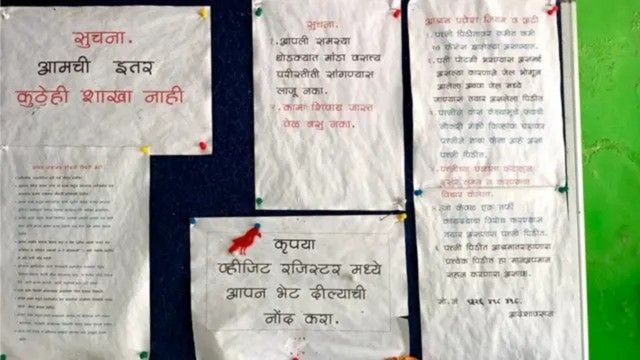 There are some rules of this ashram. Which are immediately noticeable upon entering the ashram. (Image Credit - Komal Thombre)
He further adds,
Men are not given safe spaces to express emotions or accept failure. As a result, many slip into depression, and in some cases, even take extreme steps like suicide. However, it is not correct to directly blame women for this. While there may be individual cases where men face injustice, each situation must be viewed independently and within a broader social context.
At the same time, it cannot be denied that men still hold certain privileges in society. Therefore, instead of framing this issue as ‘men versus women,’ there is a need for a more balanced approach, one that understands both sides and encourages conversations.
Will India Move Towards Gender-Neutral Laws?
The stories emerging from this Aashram in Chhatrapati Sambhajinagar, the debates in the Assembly, and expert opinions all point towards one pressing question, “Will the issue of violence against men and the alleged misuse of laws finally be taken seriously? And more importantly, will India move towards gender-neutral laws?”
At present, in cases of domestic disputes, the legal framework is largely seen as being tilted in favour of women. Members of the Aashram, along with founder Bharat Fulare, argue that this imbalance often results in injustice against men. They have consistently demanded reforms in existing laws, alleging that provisions like IPC 498A are, at times, being used as a tool rather than a shield.
While the legal framework protecting women remains crucial and necessary, the experiences shared by some men cannot be entirely overlooked.
The larger question, then, remains, “Can a system be created that balances both sides and ensures justice for all? Or will this debate continue to remain confined to discussions alone?”