Shantanu Khuje
- Why is silver so important than gold in tribal society?
- How is the rise in silver prices directly impacting marriages in the tribal community and tribal customs?
- Is the use of bullion increasing due to the continuous rise in silver prices?
- What is the impact of the increase in silver prices on artisans?
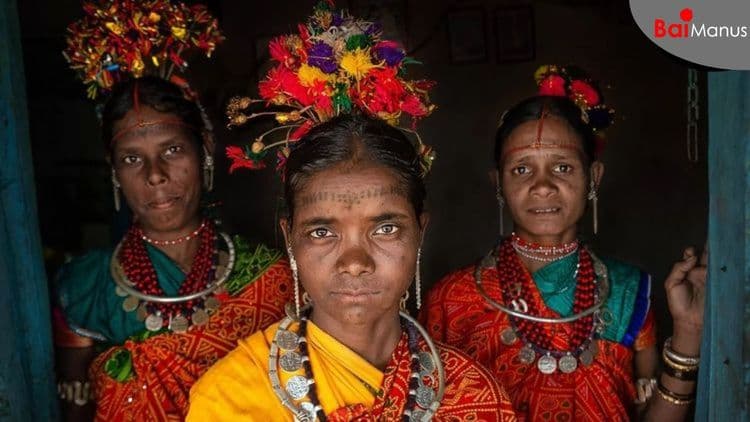
The diverse tribal communities of Maharashtra, including the Warli, Bhil, Madiya, Gond, Korku, and Mahadev Koli, have inhabited the Sahyadri, Satpura, and Konkan regions for centuries, each maintaining a unique culture and distinct traditions. Within these societies, silver ornaments hold exceptional cultural importance, particularly in wedding ceremonies. Unlike other cultures where gold is paramount, silver is deeply valued in tribal life. It transcends mere decoration, symbolizing prosperity, social standing, and protection for the wearer.
The recent sharp increase in silver prices has directly affected the traditional exchange of silver during tribal weddings. This rise is leading to a decline in the demand for silver jewelry, consequently impacting both established tribal customs and the livelihoods of jewelry makers.
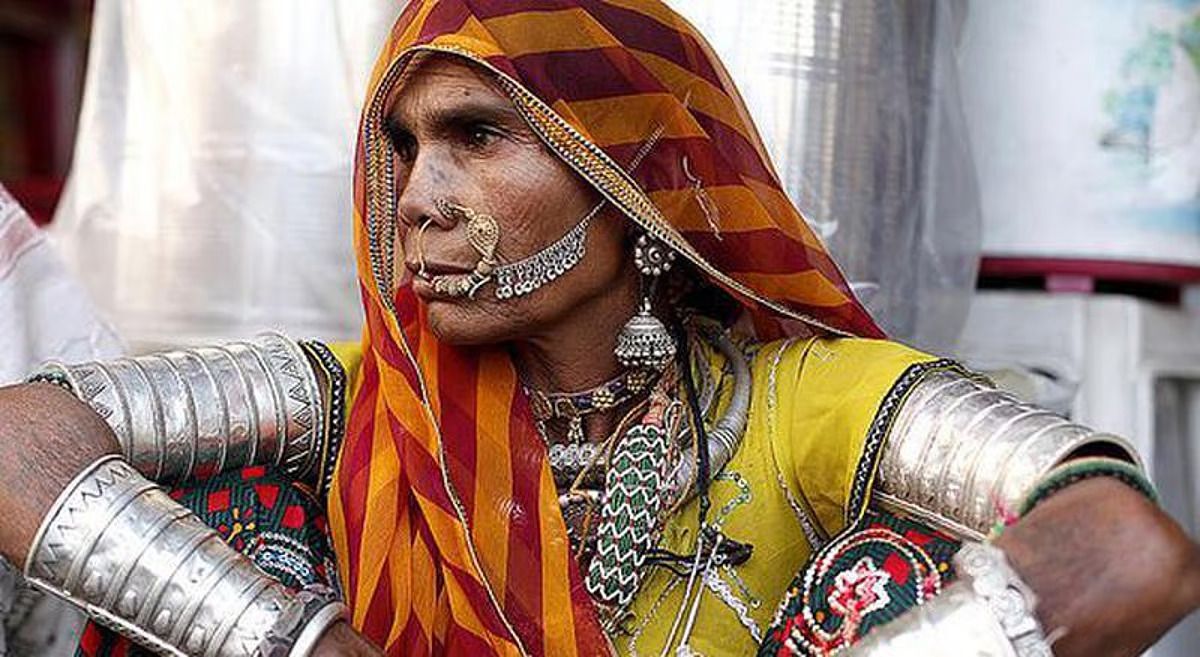
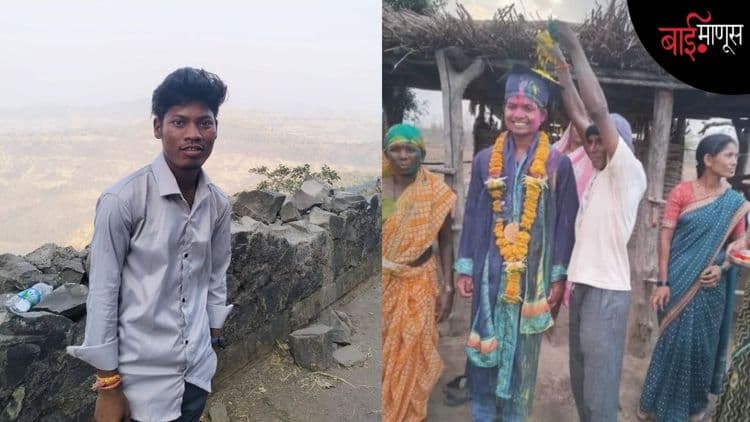
“Due to the increase in the price of silver, our wedding tradition in Melghat has come into trouble. The Panchayat has a rule that at least five pieces of silver jewellery should be given to girls while giving dowry. Now, due to the skyrocketing price of silver, it is becoming difficult to give these jewellery. A few days ago, when a marriage took place in our family, we gave five pieces of jewellery, but then the price increased, so we reduced its weight. Earlier, we used to give one and a half kilos of silver, but now we have to make five pieces of jewellery in five to six hundred grams. So, if the situation is so bad now, then how will we get married, how will we carry out all our customs, is a big question,” says Sushila Dhande of the Korku tribal community in Melghat.
The historical foundation of tribal traditions of ornamentation
Human societies have long practiced body adornment, initially using materials readily available in nature. Ancient tribal groups, for example, crafted ornaments from seeds, flowers, bird feathers, conch shells, mussels, bones, and wood. Evidence from Indus Valley Civilization excavations confirms that the tradition of wearing ornaments in the Indian subcontinent dates back millennia. As metalworking advanced, materials like copper, brass, and eventually silver became part of tribal life. The increased adoption of silver within tribal societies was influenced by significant social and economic shifts. Historically, tribes such as the Gonds possessed their own kingdoms and substantial gold reserves. However, evolving political landscapes and economic conditions led to silver gradually replacing gold as the dominant metal for adornment.
The 'Dej' method in tribal weddings…
The tribal tradition of 'Dej,' which contrasts sharply with the Hindu dowry system, mandates that the groom's father provide the bride's father with a specified sum of money or goods. Silver jewelry is a particularly significant component of 'Dej,' serving as the bride's personal, financially secure asset for difficult times. Among the Mahadev Koli and Bhil tribes, the weight of the silver jewelry given at the wedding is a direct reflection of the family's financial standing and prestige.
In tribal societies, the dowry system operates as a symbol of a woman's inherent value and dignity, starkly contrasting with other cultures where it can render a girl's birth a financial burden. Here, the practice elevates a woman's position. The dowry, composed primarily of silver jewelry, is not merely a display of wealth or a cosmetic acquisition; it represents the woman's rightful, personal estate and provides her with a sense of self-respect, security for her future, and recognition of her hard work. Unlike urban settings where the girl's family often incurs debt to pay dowry, this system is inverted. It serves as a way for the groom's family to formally acknowledge the worth of the girl and welcome her into their home with honor.
Unprecedented increase in silver prices
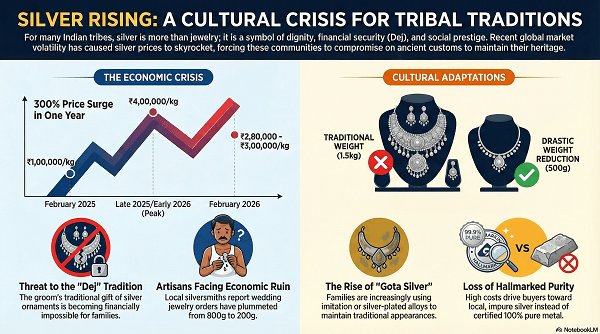
The period from February 2025 to February 2026 has witnessed a historic and unprecedented surge in silver prices. Starting at approximately Rs 1 lakh per kg at the beginning of the year, the price climbed steadily, driven by robust industrial demand and global market instability. This upward trajectory was particularly sharp in the latter half of 2025 and early 2026, when silver broke the historic Rs 4 lakh mark. However, a sharp correction in February 2026 has brought the price back down to the Rs 2.80 lakh to Rs 3 lakh range.
This volatility and sustained high price are now directly impacting silver purchases, especially those made by the tribal community. Silver, particularly in the form of ornaments, holds profound cultural and traditional importance for tribal people, especially during significant events like wedding ceremonies. Consequently, the continuous, months-long price increase is creating significant financial strain for tribal families, threatening the customary use of silver in their traditions.
Due to the price hike, tribals are having to use 'Gota silver'
Sushila Dhande, a journalist from 'Baimanus' in the tribal area of Melghat, says, "We haven't had any weddings this year yet, but when the weddings start after Holi, we will definitely see the impact of the increase in silver prices. Earlier, when the prices were low, silver was given and received by the kilo at weddings, but now I don't think that will happen."
Urban influence is also beginning to affect tribal culture. Due to the rising prices of silver, many tribal youth are now turning to gilt or gold-plated jewellery instead of silver. Sushila says that due to the continuous price hike, many have now started using gota silver instead of silver. “Just as there is an alternative to gold with Bentex jewellery, we are now doing it with silver. That is, we are using gota silver that looks like silver, because the prices have increased so much that we cannot afford to buy silver jewellery. We want to preserve tradition, so we have to use this gota silver to do something.”
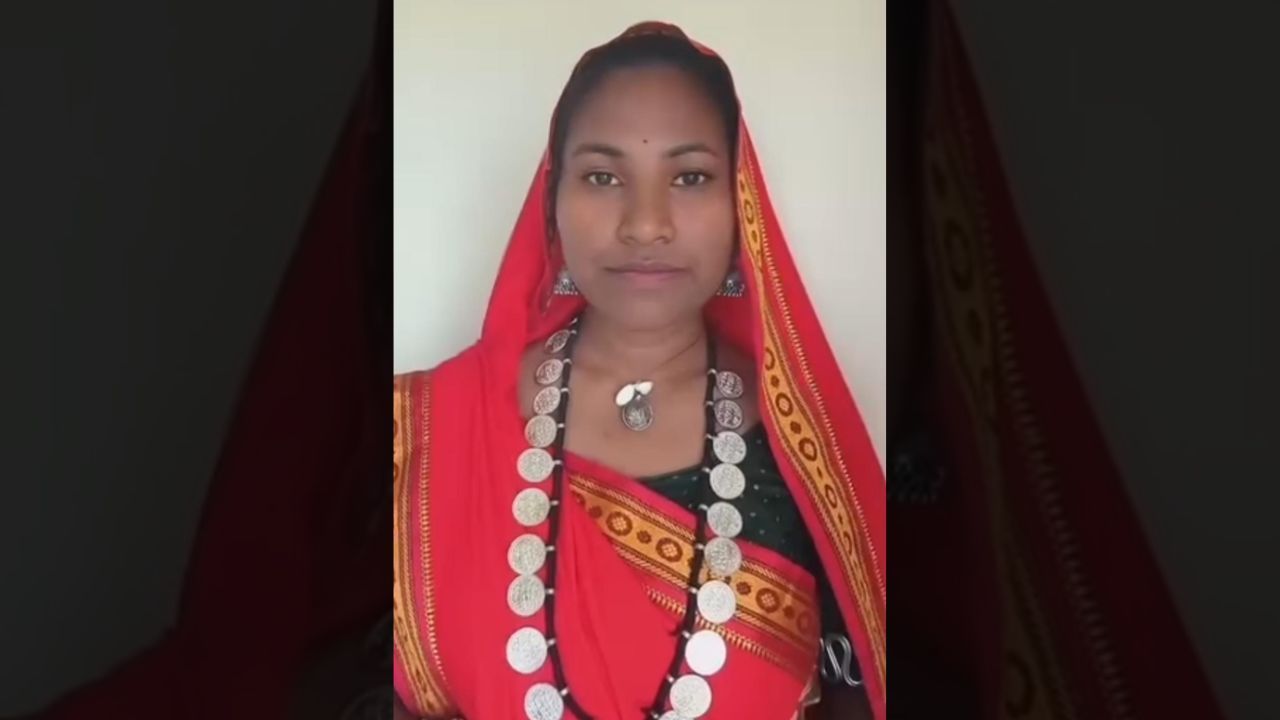 Sushila Dhande (Baimanus Reporter, Melghat)
“Either because of this price hike, people in our area have stopped buying hallmarked jewellery. They cannot afford 100% pure silver, so they buy silver from locals. But that silver is not completely pure. Now when there are weddings etc. after Holi, everyone will buy silver from locals,” says Sushila Dhande.
Sumitra Vasave of Nandurbar, also a member of 'Baimanus', shares that in our Satpura, the price of silver has skyrocketed, making it difficult to buy jewellery. The result is that the traditional attire of the Pawar community is also disappearing. That is, nowadays no one wears silver jewellery and even prefers to wear that attire. Currently, only families with a slightly affluent situation are buying silver, but even that is in small quantities.
The increasing prices are also Impacting Artisans
To find out how the increase in silver prices is affecting artisans, 'Baimanus' contacted Suresh Mongate, an artisan from Gadchiroli. He says, "People are not even visiting us because of the increase in silver prices in the last few months. So far, no one has come to get wedding jewellery made. In fact, people may not have started buying silver because paddy is being sold in our area. But still, people will hesitate to buy silver due to this increase in prices."
"Earlier, we used to make an average of 800 grams of silver jewelry for a wedding during the wedding season, but looking at the current situation, it seems that people will only get 200 grams of jewelry made by us at most because the price hike has gone so high that it has ruined all budgets," says Mongate.
Silver Jewellery in Indian Tribal Weddings: Traditions and Significance
The use of silver jewellery is deeply interwoven with the wedding traditions of various Indian tribes, each community imbuing it with unique cultural significance.
Warli - Known for their simple lifestyle, the Warli community incorporates silver jewellery with great sensitivity in their weddings. The Garsoli, a necklace of silver or black beads, is paramount. Given by the groom to the bride, it symbolizes her status as a good wife. Warli women typically wear thick silver bangles and chains on their feet, with designs often featuring geometric shapes—triangles, circles, and squares—representing the sun, moon, and nature.
Bhils - A large and colorful tribe, the Bhils integrate silver deeply into their wedding attire. Partners are often chosen during the annual 'Bhagoriya' pilgrimage. The bride, accompanied by friends, personally selects her jewellery from a silversmith. The most vital piece is the tagli, a heavy neck ornament believed to protect the bride's neck. Other essential items include the basta kada (a necklace worn on a stick) and pajaniya (heavy anklets). Bhil men also frequently wear silver bracelets and rings.
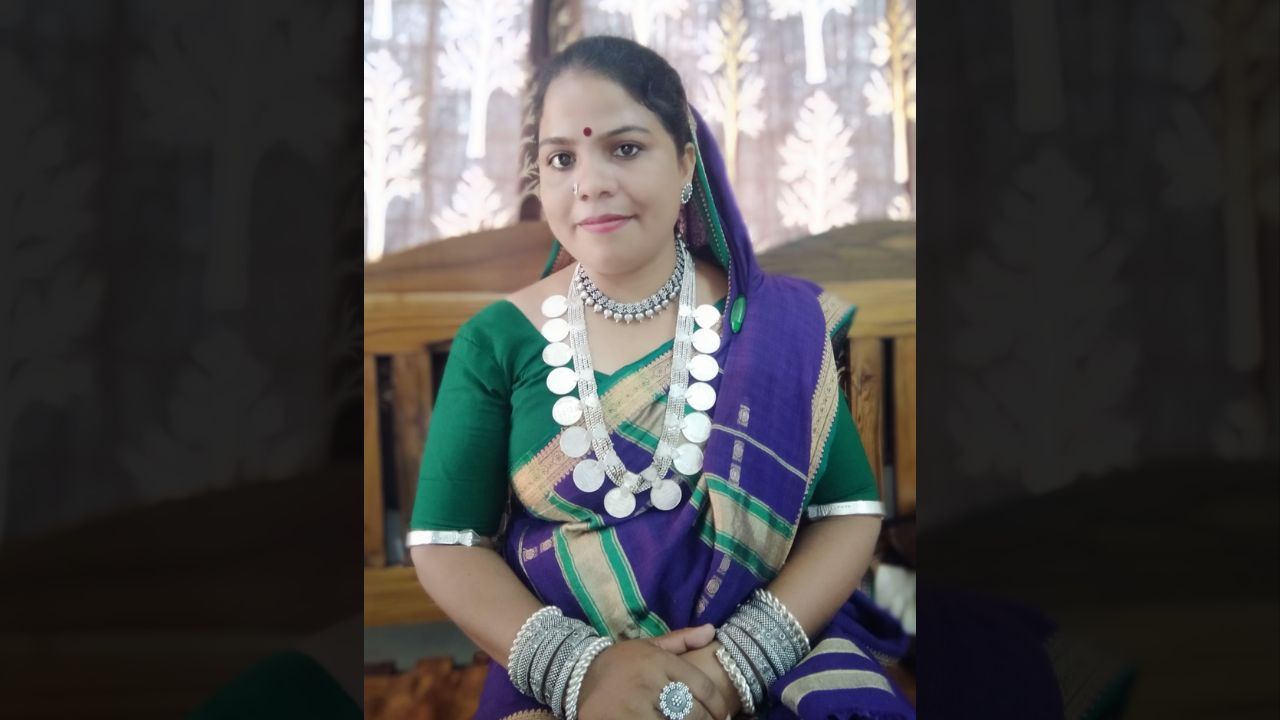 Sumitra Vasave (Baimanus Reporter, Nandurbar)
Mahadev Koli - Primarily residing on the Konkan coast and relying on the sea for their livelihood, the Mahadev Koli community's jewellery reflects their profession. The silver worn by the bride is often adorned with motifs of fish or waves. Key items include a silver girdle and the silver flower ketak, which is placed in the hair bun to enhance the bride's beauty. For Koli men, wearing silver bangles during the wedding symbolizes strength, believed to aid them in rowing their boats at sea.
Gond - Reflecting their royal history, the Gond tribe's jewellery is characterized by its grandeur. A Gond bride may wear up to two kilograms of silver on her wedding day. The heavy necklace and waist belt, known as Sakri, signify their traditional splendor. In Gond culture, this jewellery is a cherished heirloom, passed down through generations, carrying the memories and blessings of ancestors.
Silver Jewelry with Embroidery
The designs of tribal silver jewellery are not just for artistic purposes, but have a deeper meaning behind them. The images carved on these jewellery are related to various elements of nature.
- Tiger Face - There is a tradition of wearing tiger face bangles among the Bhil and Gond communities. They believe that wearing these bangles gives a person the courage of a tiger and protects him from wild animals.
- Fish - Among the Koli and other water-related tribes, fish is considered a symbol of fertility. Having a fish image on wedding jewelry is a blessing that the bride's family will continue to grow.
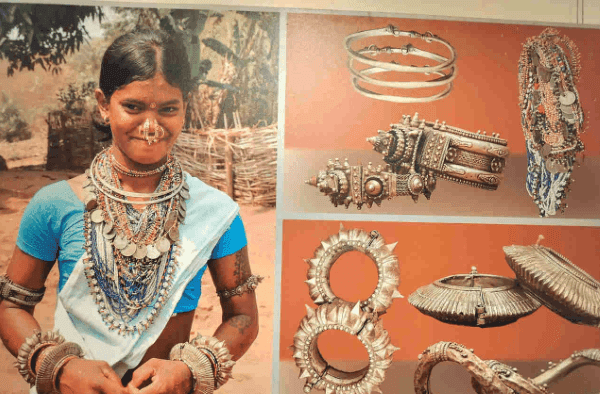
- Leaf Shape - Many necklaces feature a leaf or peepal leaf design. This symbolizes the unbreakable bond with nature and the greenery that comes into life.
- The Sun and Moon - are considered to be the witnesses of the universe. Wearing jewelry with the images of the Sun and Moon in sacred rituals like marriage means being bound by the laws of the universe.
Various rituals and use of Silver in Marriage
- Sakharpuda - In the first stage of marriage, the bride and groom are presented with a silver ring. This is the first step in the ritual of tying the knot. In some tribes, it is customary to go to the bride's house and give her a silver coin, also known as Poragi Panjan or Naral Daan.
- Haldi Ceremony - During Haldi, the bride is given silver shoes and silver chains on her feet. It is believed that turmeric and silver brighten the bride's skin and keep her away from infections.
- Main wedding rituals - During the wedding, the hands of the bride and groom are joined together. At this time, the silver bracelets on their hands touch each other, which is considered a symbol of the union of the energies of the two souls. The ritual of tying the mangalsutra is the culmination of the wedding, where a silver medallion or bead is important.
- Griha Pravesh - When the bride first visits her in-laws, she is gifted a silver ornament by her mother-in-law. This is a symbol of her welcome into her new family and her authority.
Silver is more than mere decoration in tribal culture; it is fundamental to their social, economic, and cultural identity. Traditionally, silver ornaments signify prosperity and are crucial heirlooms, exchanged during weddings and religious rites, thus passing down heritage through generations. Yet, this cherished tradition is now under threat due to the dramatic, unprecedented surge in silver prices over the last year.
With the current price of silver reaching over Rs 2.5 lakh per kg, the budget of the common man in the tribal community has collapsed. As a result, families are having to compromise while observing important customs like Dej. The use of gota silver has increased in place of pure silver and people are showing a tendency to reduce the weight of jewellery. This has also directly affected the local artisans and has had a major impact on their income.
Although the current price hike is a result of global economic developments, the cultural change it is causing at the local level is significant. This tug of war between tradition and economic reality is forcing the tribal community to look for new alternatives. This traditional heritage can only survive in its original form if the price of silver stabilizes in the future, otherwise it is inevitable that it will undergo further changes over time. The resilience and adaptability of the tribal community will help them to maintain their culture during this time of change.
Translated By- Ritesh Shisode