Ritesh Shisode
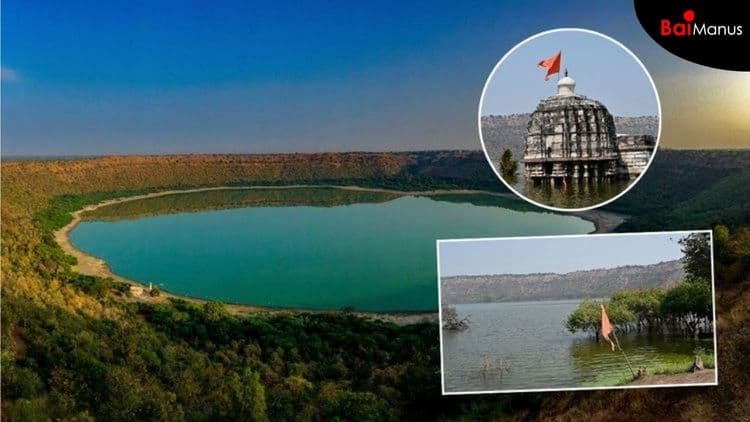
Lonar Lake in the Buldhana district is currently experiencing a significant rise in its water level, a change primarily attributed to the heavy rainfall during the 2024-25 season. This increased rainfall led to a boost in the groundwater table, which, in turn, has revitalized the lake's natural freshwater springs. Consequently, the continuous flow from all surrounding streams is now feeding into the lake.
The rising water has submerged 12 of the 13 temples situated near the lake. The Kamalja Devi Temple has been particularly impacted. Despite being under the jurisdiction of the Archaeological Survey of India (ASI), the department has consistently neglected these temples. 'Baimanus' team arrived at Lonar village, drawn by the significant concern over the rising water level of Lonar Lake. This environmental change is causing a serious problem in the area, specifically the submergence of 12 of the 13 local temples.
Ecological Marvel of Lonar Lake
Tucked away in the Buldhana district of Maharashtra, Lonar Lake is a geological marvel born from a massive cosmic event. Around 52,000 years ago, a meteor weighing over two million tons crashed into the earth, carving out a crater 1.8 kilometers wide and 150 meters deep. What makes Lonar a global rarity is that it is the only known hyper-velocity impact crater in basaltic rock anywhere on Earth. This striking composition mirrors the craters found on the Moon, making it an invaluable site for planetary scientists and transforming a quiet corner of India into a physical record of deep-space history.
Beyond its explosive origins, the lake has evolved into a highly unique ecological laboratory, characterized by water that is simultaneously saline and alkaline. Recognized globally as a Ramsar wetland site of international importance, Lonar is also steeped in cultural heritage, Ancient Hemadpanti temples and dense forests teeming with wildlife. However, this delicate ecosystem now faces modern threats from agricultural runoff and unpredictable climate shifts, highlighting the urgent need for conservation to protect one of India's most extraordinary natural wonders.
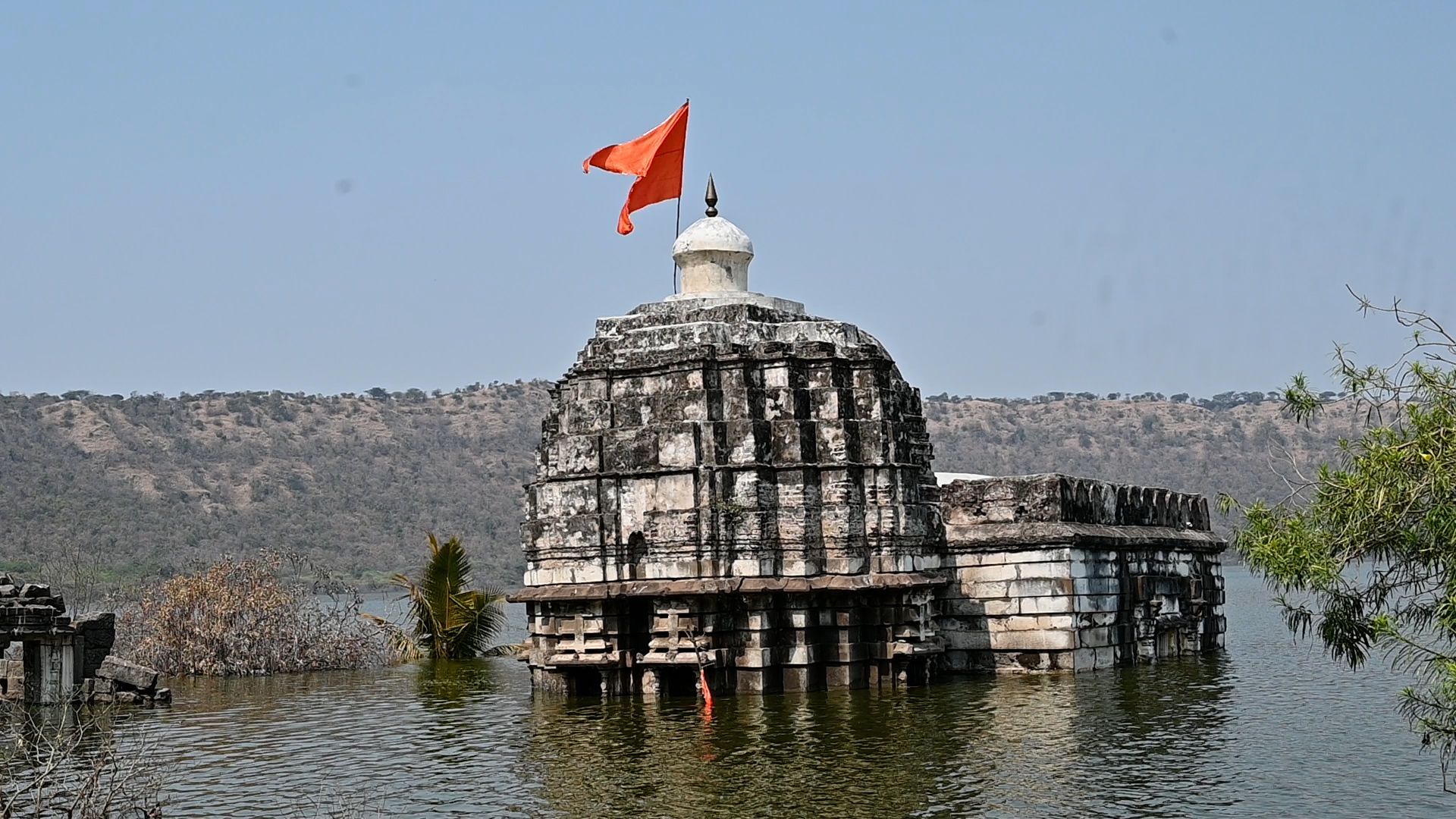 Submerged temple in the Lonar Lake (Image credit: Ritesh Shisode)
Lonar Water level is Rising; but Why?
Sachin Kapure, representative of "Me Lonarkar" organization says,
This water level is rising, recently water has reached near a temple, which is the Vishnu temple. At that time, we have repeatedly told the government and administration to take note of this, saying that one day this water will rise a lot and our natural lake will be in danger. But no such steps have been taken.
Sachin Kapure further says,
The water level of the lake has been rising for the last five years. We first brought this matter to everyone's attention in 2021. As the 'Me Lonarkar Team', we have always been working for the conservation of the lake. Recently, water came near a temple, which is the Vishnu temple. At that time, we have repeatedly told the government and administration to take note of this, saying that one day this water will increase a lot and it will pose a threat to our natural lake. But no such steps have been taken.
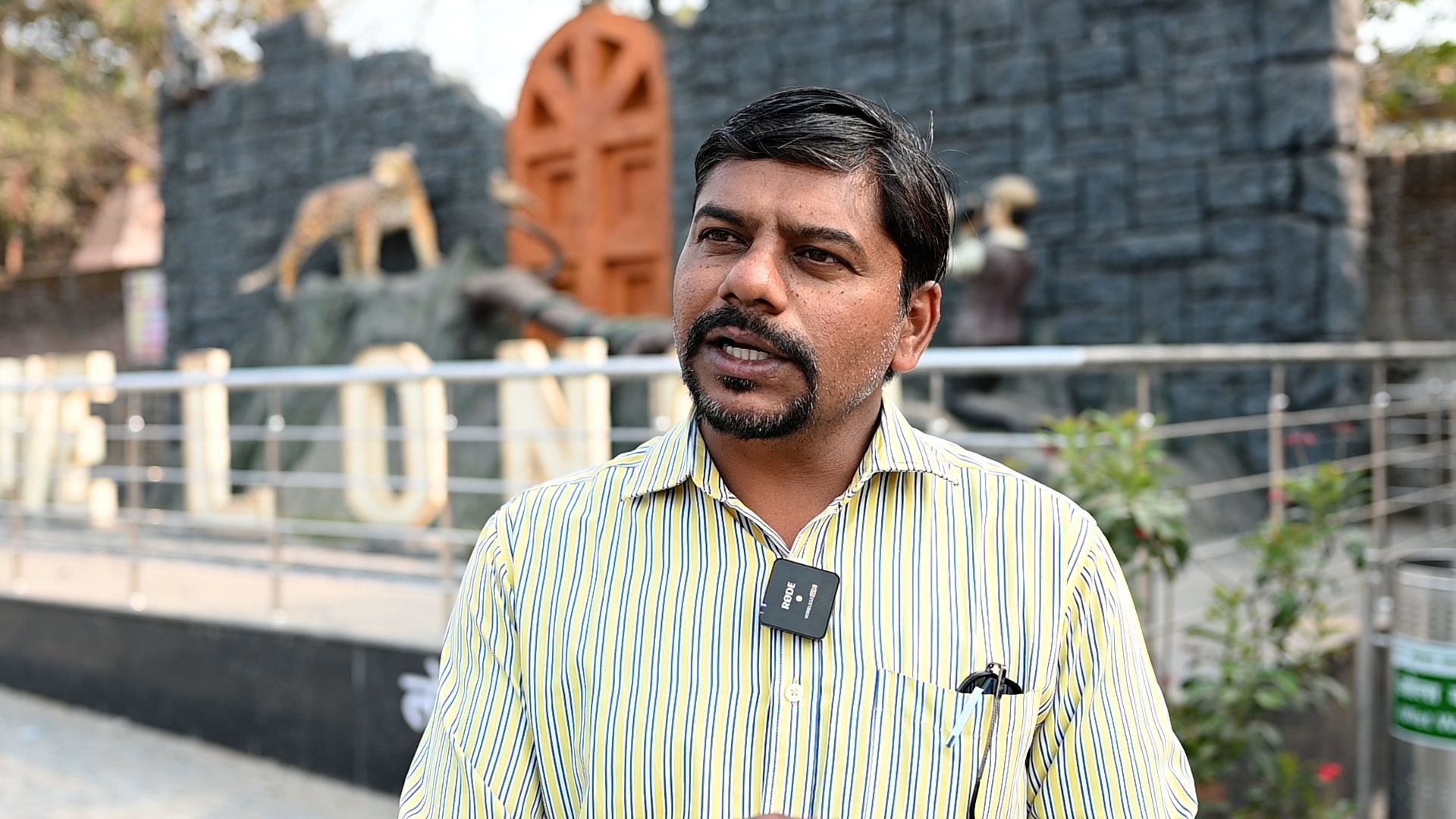 Sachin Kapure (Representative I Lonarkar Sanstha) (Image credit: Ritesh Shisode)
The lake's water level is continually rising because various types of excavation machinery are currently being used and human interference in the area has increased, leading to water entering the lake from multiple sources. Adding to this Kapure says,
A road has been built on the upper side of the lake. There was no need to build this road. Because a lot of soil was dumped for that road. That soil has completely rotted away due to the rain. There were already some acacias and prosopis. But the government made a big effort to remove them and bring them up. So when the prosopis were being removed, the capacity of that plant to draw water was very high. They removed them, so the soil that was crumbly below became even more crumbly and due to the rain, that soil also went into the lake. The part of the lake that was so deep before, is no longer deep, but has become like a pan, like a saucer. So now that the water comes, it will definitely spread here and there.
While talking to Wildlife conservationist Dr. Kishor Pathak says,
Lonar has been given the status of a 'Ramsar' site, it is a globally important wetland. This lake was formed due to a meteorite impact and its water is very salty and alkaline. But currently, the water level of the lake has increased and the temples are going under water, which is actually a warning sign. No matter how much rain there was earlier, this never happened, but now the situation has changed. This level should have decreased in summer and the temples would have been exposed, but that does not seem to be happening.
Declining Alkalinity and Appearance of New Species
The biodiversity of the lake is currently endangered by rising water levels. Historically, the lake was highly alkaline, with a pH ranging from 10.5 to 11. This distinct chemical environment supported the proliferation of rare microorganisms capable of breaking down methane and plastic.
However, recent years have seen a rapid decline in alkalinity, with the pH dropping to between 7.5 and 8, primarily due to increased inflows of freshwater. This dilution is drastically altering the lake's natural structure. The decrease in alkalinity is proving detrimental to the formerly thriving, beneficial microorganisms. Simultaneously, fish species never before observed are now appearing in the water. The emergence of aquatic life foreign to the lake's history is considered a significant warning sign for the integrity of the original ecosystem.
“The most shocking thing is that freshwater fish have now started appearing in this brackish water. This is a warning sign for the lake, because there were never any fish in the original lake. If this continues, the sewage will cause aquatic plants to grow in the lake and completely cover the water surface. In the meantime, the water had turned pink due to bacteria, all these changes are dangerous for the existence of the lake," says Dr. Pathak.
Ineffective Sewage Project and Unnecessary Tree Planting
The Lonar lake's vital biodiversity preservation effort, a sewage project implemented by the NEERI (National Environmental Engineering Research Institute) at a cost of approximately Rs 2.50 crore, is currently ineffective. Although the project was necessary to prevent city sewage from contaminating the lake directly, it has failed due to technical flaws. Sachin Kapure on NEERI says,
The 'Neeri' sewage project, which appears to be complete, is unlikely ever to become operational. The lake's rising water level is partly attributable to the substantial inflow of water, including both village sewage and stormwater runoff, which currently flows directly and rapidly into Lonar Lake.
He also states that a large number of trees were planted in the sanctuary, an action they believed was unnecessary. The planting process involved heavy machinery, specifically a large JCB, and a team of people to clear the ground, resulting in the planting of eight thousand trees. Subsequently, the cleared soil was washed away by rain, which contributed to a rise in the water level.
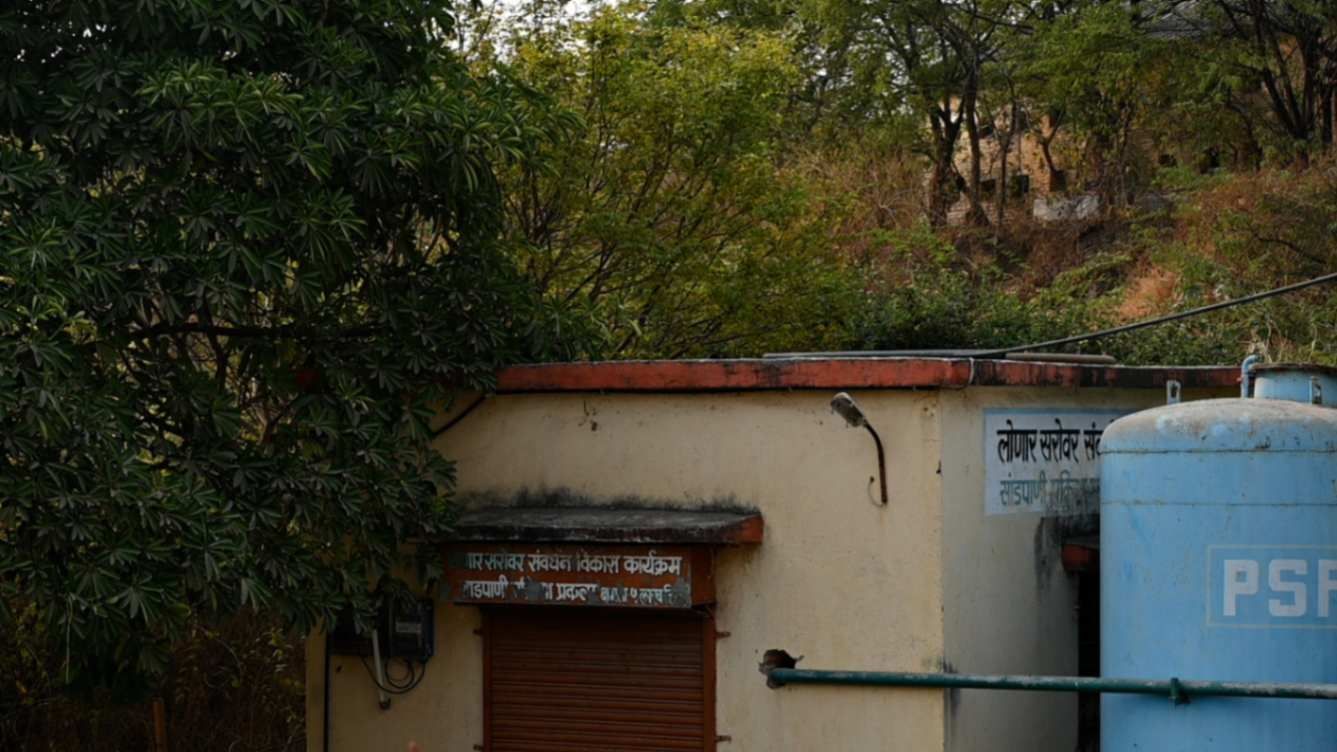 'Niri' sewage project (Image credit: Ritesh Shisode)
Formation and Management of the Lonar Sanctuary
The Lonar Sanctuary was created on June 3, 2000, with the aim of conserving Lonar Lake and its surrounding area by managing human activity. This initiative proved largely successful. In 2018, control of the sanctuary was transferred to the Wildlife Department.
The sanctuary was initially managed by the regional forest department before being transferred to the wildlife department. However, the subsequent large-scale development under the wildlife department's management has negatively impacted the lake. Kapure says,
Whatever machinery and JCB work was done in this sanctuary, wherever towers were erected, this lake is not wanted. This should remain an eco-sensitive zone. Whatever development of the lake you want to do, do it within 1 kilometer of the lake. This is the demand of all the citizens.
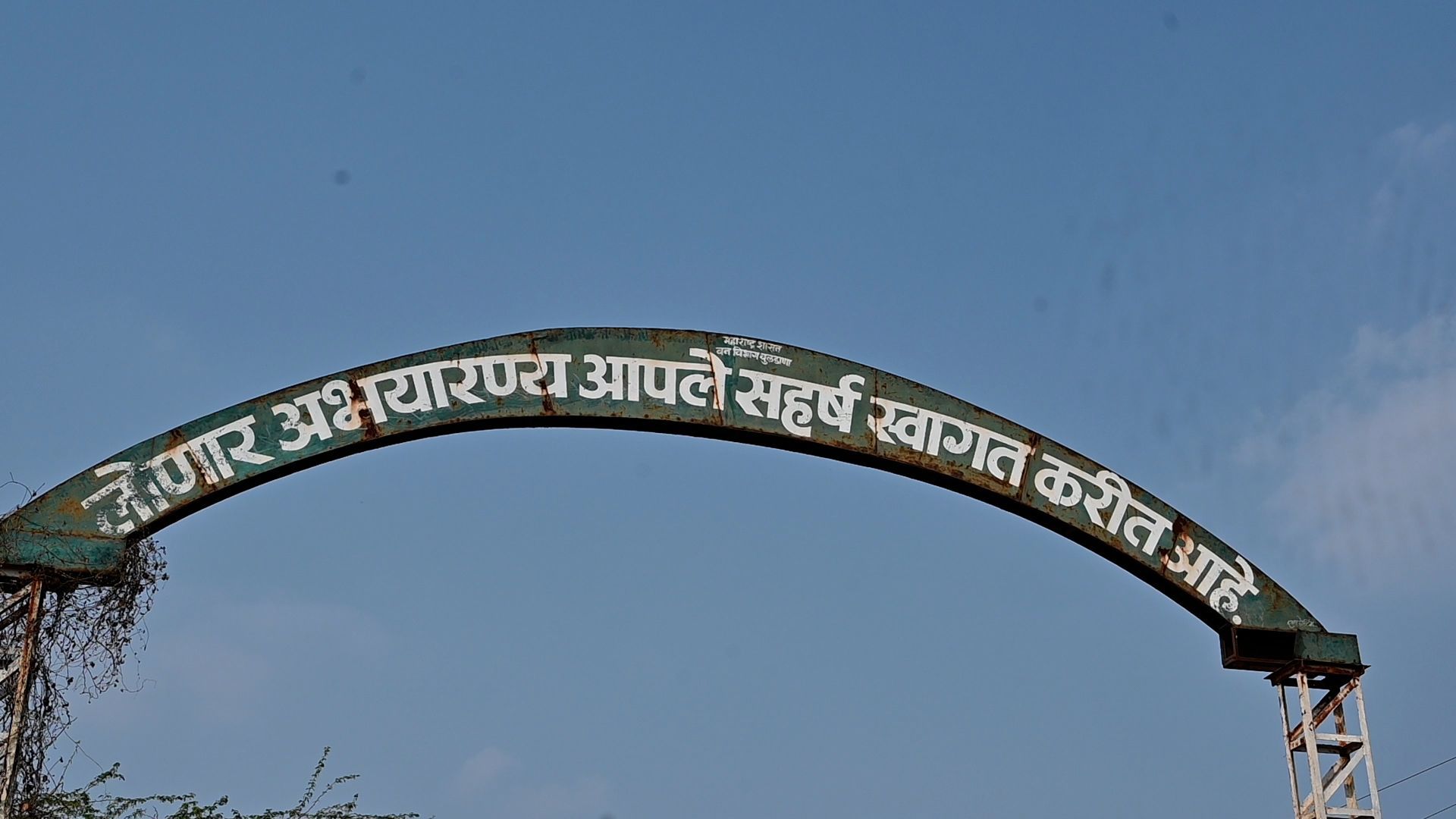 Lonar Wildlife Sanctuary (Image Credit: Ritesh Shisode)
The rising water level of the lake is attributed to both historical and geographical factors. Historically, extensive agriculture and plantations in the lower areas utilized water from natural springs, preventing it from flowing directly into the lake. However, since the administration acquired these lands, the spring water now flows unimpeded into the lake, significantly and rapidly contributing to the increased water level. Additionally, some experts propose a geographical explanation: the drilling of over 700-foot-deep borewells in the vicinity may have disrupted the groundwater balance, potentially causing upward seepage of water, which could also be a factor in the rising lake level.
Despite the allocation of substantial government funds for Lonar's development over the past two decades, the expected progress has not materialized.
Fund Allocation Summary
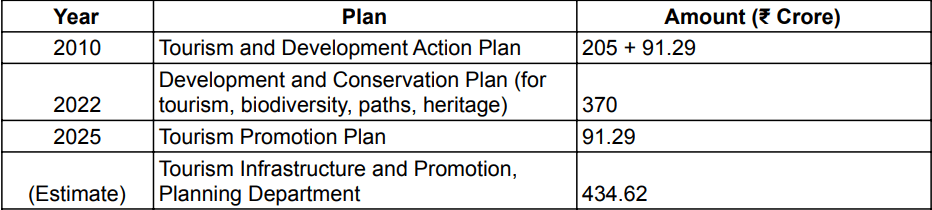
Funds were reportedly spent on projects like tourism development, beautification, roads, ghat construction, protective walls, lighting, and parks.
The harsh reality is that the actual development of Lonar falls short of what was anticipated. Furthermore, the completed works are often of poor quality, leading to rapid deterioration within a few years due to subpar workmanship. Evidence of this neglect includes:
- Torn-up ghat pavement.
- Soil wash away during the monsoon.
- Inadequate drainage systems.
- Partial facilities.
- Unmaintained tourist spots.
This signifies the current, disappointing state of Lonar's development.
Rising Water Level Hits Local Tourism
According to local businessman Sheikh Muzammil, the number of tourists has decreased as a result as he mentioned,
Since the water level rose, the number of tourists here has decreased a lot, which has also reduced our business. Also, news of the water level rising is coming up frequently in the media and social media. So people think the situation here is bad.
 Sheikh Muzammil (Local Vendor) (Image Credit: Ritesh Shisode)
Sachin Kapure says.
Due to the increase in water, people are afraid to go inside now, because there are some predators inside, earlier the water was very low and everything was visible. But now we have to go through the entire sanctuary, so tourists are a little scared and the number of people coming here has decreased a little.
Although the increase in water level has aroused curiosity among tourists, the number of tourists is low. This is because tourists are facing difficulties in reaching the temples. Kuldeep Laitbar, a tourist from Partur, has a similar experience. He says,
Due to the increase in water level, the previous roads have now gone under water, so it is very difficult to reach the temples from above and below, and since there is water in the middle, you have to take detours, which takes more time.
Water Level Crisis and Proposed Solution
There is a growing urgency for development work in the vicinity of Lonar Lake, though at a safe distance from the lake itself. The current concern stems from a significant rise in the lake's water level, which has now reached the face of the idol in the Kamalja Mata temple. Immediate action is crucial to manage this rising water, as a failure to do so could lead to a serious situation.
A viable, cost-effective solution has been identified to address this issue. According to local villagers, the problem can be resolved by effectively harnessing natural freshwater springs such as Ramgaya, Papeshwar, and Dhar. The proposed solution involves collecting water from these springs at a central point and then pumping it directly into the municipal water supply system.
This initiative is not anticipated to incur major expenses or require any special no-objection certificates. Significantly, the scheme will tackle the severe, long-standing drinking water shortage currently faced by Lonar village. Furthermore, it will help manage the lake's water level by preventing excessive water inflow.
Experts are looking to the administration to implement measures concerning the rising water level in the lake, as noted by Dr. Pathak.
The administration and the forest department should now pay serious attention and divert the sewage of tourists elsewhere. Whatever water goes into the lake, it should not be released without being purified by installing an STP (Sewage Treatment Plant) plant. Maintaining a specific pH of the water in the lake is the biggest challenge. If we cannot save this natural cycle, the original splendor of Lonar will be in danger. Therefore, it is necessary to take concrete steps for the conservation of the lake, not just considering tourism.